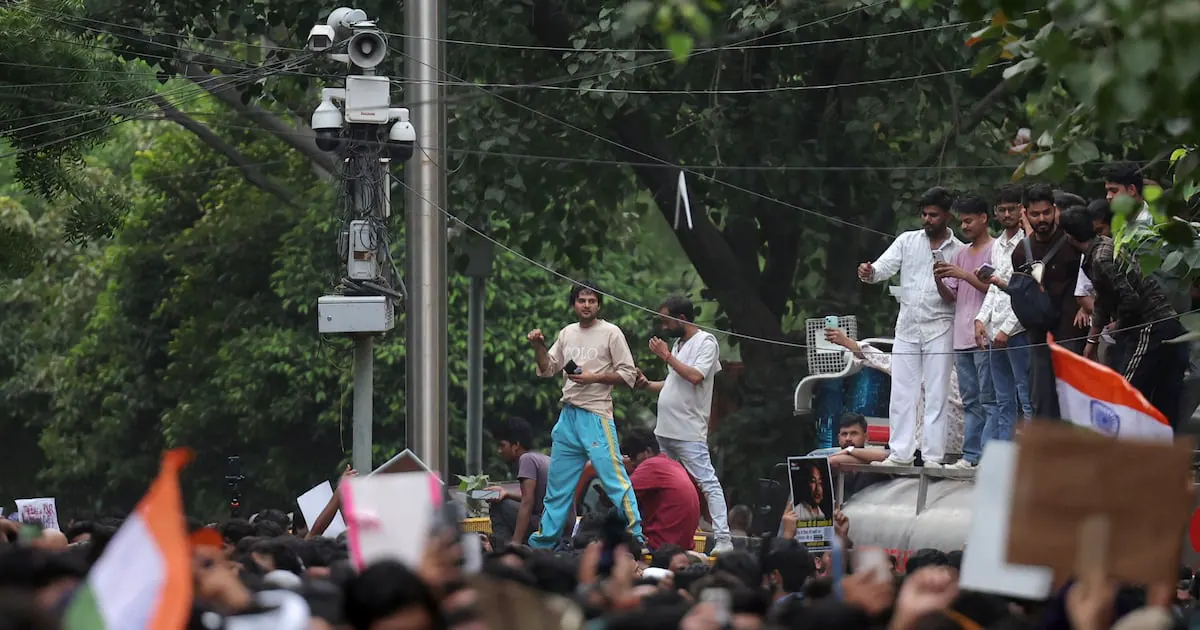
India's Election Commission (ECI) is facing severe public scrutiny over its drive to verify the eligibility of nearly a billion voters, with opposition parties accusing the poll body of manipulating voter rolls and excluding millions of people. The controversy has sparked nationwide protests, with the opposition Congress party demanding the resignation of ECI head Gyanesh Kumar.
A report by the Indian Express newspaper revealed internal divisions within the ECI over voter lists and registration procedures, fueling concerns about the poll body's neutrality. According to the report, two top election commissioners expressed concerns to Kumar at least 14 times in 10 months, but these concerns were not taken into consideration.
The voter verification drive, which began last year, has resulted in around 130 million people being excluded from the first draft list, with many required to prove their credentials before being enrolled. In Bihar, about 6.5 million voters were excluded from the draft rolls during the revision exercise last year.
The ECI has defended itself against allegations of political bias, with Kumar asking the opposition to submit their allegations under oath during a rare press conference last year. The poll body has also announced revisions to the process, including home visits by officials to collect verification documents and an extension of the deadline for final verification in some states.
The controversy has raised concerns about the impact on upcoming elections, with at least seven Indian states set to hold elections next year, including Uttar Pradesh, a bellwether state in national politics. Verification in Uttar Pradesh began in October 2025 and saw 13% of names being deleted, according to local media reports.
The ECI has stated that names are only removed from voter lists when a voter has died, is mentioned more than once on the rolls, has moved to another region, or is untraceable. However, opposition parties argue that arbitrary deletions and lengthy appeals prevented millions in Bihar and West Bengal from voting and could be used as a weapon in future elections.
India's Supreme Court has also raised concerns, saying notices to prove eligibility sent to some voters appeared to have been "machine generated" without human intervention. The court has not made a final ruling on the matter.
Key points
- Opposition parties allege that the voter verification drive benefits Prime Minister Narendra Modi's Bharatiya Janata Party (BJP).
- The ECI has announced revisions to the voter verification process, including home visits by officials and an extension of the deadline for final verification.
- The controversy has sparked nationwide protests, with the opposition Congress party demanding the resignation of ECI head Gyanesh Kumar.