As India celebrated 80 years of independence in August, the concept of press freedom has come under scrutiny. The traditional role of journalists as gatekeepers of information is evolving, with citizens, students, influencers, and comedians increasingly taking on this responsibility. This shift was evident in May when the chief justice of India referred to unemployed young people as "cockroaches," sparking widespread outrage.
The "cockroach" remark was seen as a slight against a generation struggling with unemployment and lack of opportunities. In response, Indian student Abhijeet Dipke created the Cockroach Janta Party, a satirical meme page that quickly gained over 22 million followers. The page became a platform for people to express their frustration and anger, which was further fueled by a leaked medical entrance exam paper that led to at least 17 student suicides.
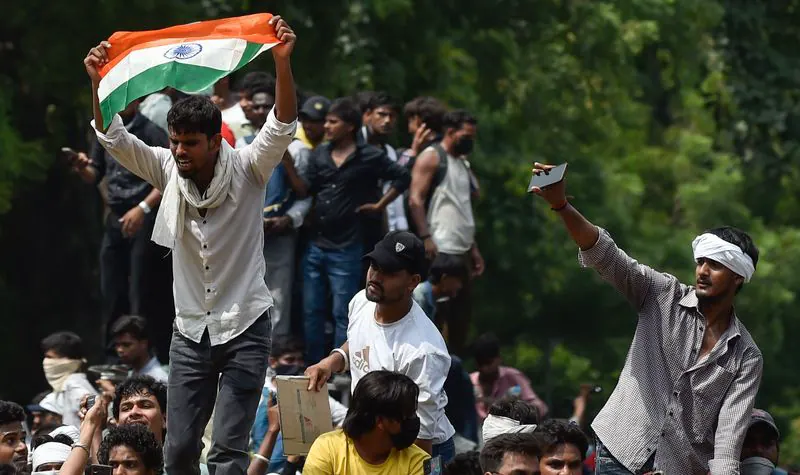
The grief and anger over the exam paper and other issues, such as irregularities in school board-exam revaluations, led to a seven-week protest at Jantar Mantar in Delhi. Students went on hunger strike, and the internet was cut off, but the protests continued. On July 20, protesters demanding the education minister's resignation tried to march towards Parliament, leading to clashes with police, who fired tear gas shells and pellets.
The protests highlighted the challenges faced by journalists in India, particularly those working for independent newsrooms. Large legacy broadcasters and publishers, which rely heavily on government revenue, branded the protesters as "stone-pelting goondas" (thugs). In contrast, young influencers and reporters from small independent newsrooms documented the protests, often facing backlash from the government and its supporters.
The Indian government's response to the protests included the use of Section 69A of the Information Technology Act, which gives the government sweeping powers to order social media platforms to take down content deemed threatening to "sovereignty" and "national security." According to reports, the government sent one blocking order every minute to social media platforms from March to July.
The erosion of press freedom in India has significant implications for journalists and the public. The Right to Information Act has been weakened, making it harder for journalists to access government records. Surveillance has also become a major concern, with many journalists and sources fearing that their calls and messages are being monitored. This has led to a situation where many students studying journalism do not want to become journalists due to concerns about job security and safety.
To achieve true press freedom, India needs independent newsrooms that can survive without government support or censorship. Journalists should be able to report without fear of reprisal or financial dependence on the government. The Cockroach Janta Party and other citizen-led initiatives have shown that fear has a shelf life, but a free press requires more than just viral moments of dissent – it needs a robust infrastructure of journalism that can hold power to account.
Key points
- Indian students are leading the charge for press freedom and education reform.
- Journalists in India face growing challenges, including censorship, surveillance, and financial dependence on the government.
- True press freedom requires independent newsrooms that can survive without government support or censorship.