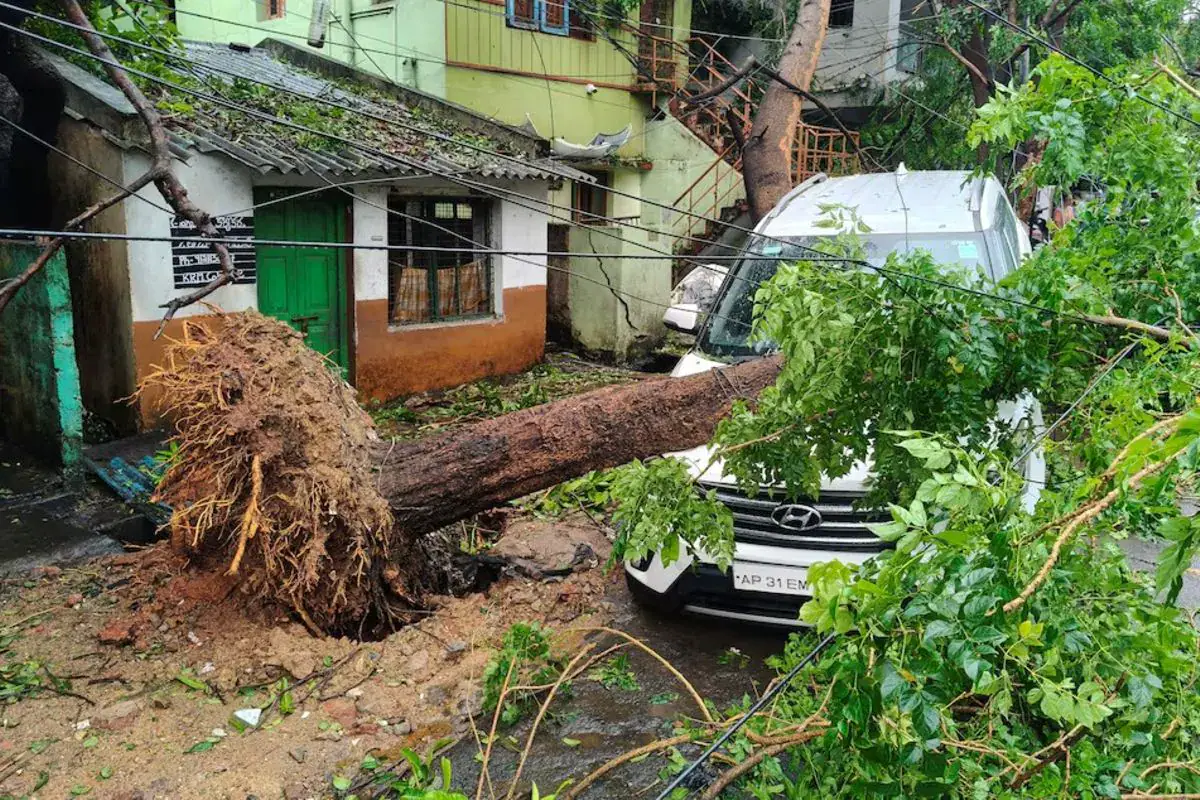
Cyclone Arnab, a powerful storm classified as a very severe cyclonic storm, made landfall on India's east coast on Wednesday morning. The India Meteorological Department reported that the cyclone's centre moved fully inland after making landfall on the Andhra Pradesh coast. The storm brought strong winds and heavy rainfall, causing trees to crash onto highways and electricity poles to be uprooted. Thousands of people took shelter ahead of the cyclone's arrival.
Over 180,000 people were evacuated in the states of Andhra Pradesh and Odisha ahead of the cyclone's arrival. Authorities reported no loss of life in either state, but power supplies were disrupted, and trees were uprooted. Some schools were closed, and train and flight services were cancelled. The cyclone's impact was felt across the region, with fishermen advised against venturing into the sea.
The India Meteorological Department warned of strong winds and storm surges, with winds of 125-135 kph and gusts of up to 150 kph forecast. A storm surge of 1 to 1.5 metres above normal tide was likely to inundate low-lying areas of Andhra Pradesh. The weather department anticipated loss to crops, thatched houses, and communication lines.
The cyclone's impact was not limited to India, with neighbouring Nepal also affected. Authorities suspended issuing trekking permits to high mountain areas for three days due to the risk of rains and blizzards. Tourists were warned against venturing into high-altitude areas due to fears of torrential downpours, snowstorms, and avalanches.
Cyclone Arnab formed over the Bay of Bengal, a major region for tropical cyclones that has spawned deadly storms on India's east coast. A super cyclone that killed nearly 10,000 people when it hit Odisha in October 1999 remains one of the country's deadliest natural disasters.
India has developed early-warning systems and preventive measures to minimise loss of life over the years. The country's civil aviation ministry suspended operations at three Andhra Pradesh airports. Workers in rain gear worked to clear roads of branches and leaves, with visuals on television showing trees fallen on highways.
Residents in affected areas described the devastating impact of the cyclone, with one resident, Nagi, saying that trees had fallen, houses had been damaged, and belongings, including books, had been destroyed. The government and authorities continue to work to restore power and services to affected areas.
Key points
- Over 180,000 people were evacuated ahead of the cyclone's arrival.
- The cyclone caused significant disruptions, including power outages and cancelled flights.
- India has developed early-warning systems to minimise loss of life from natural disasters.