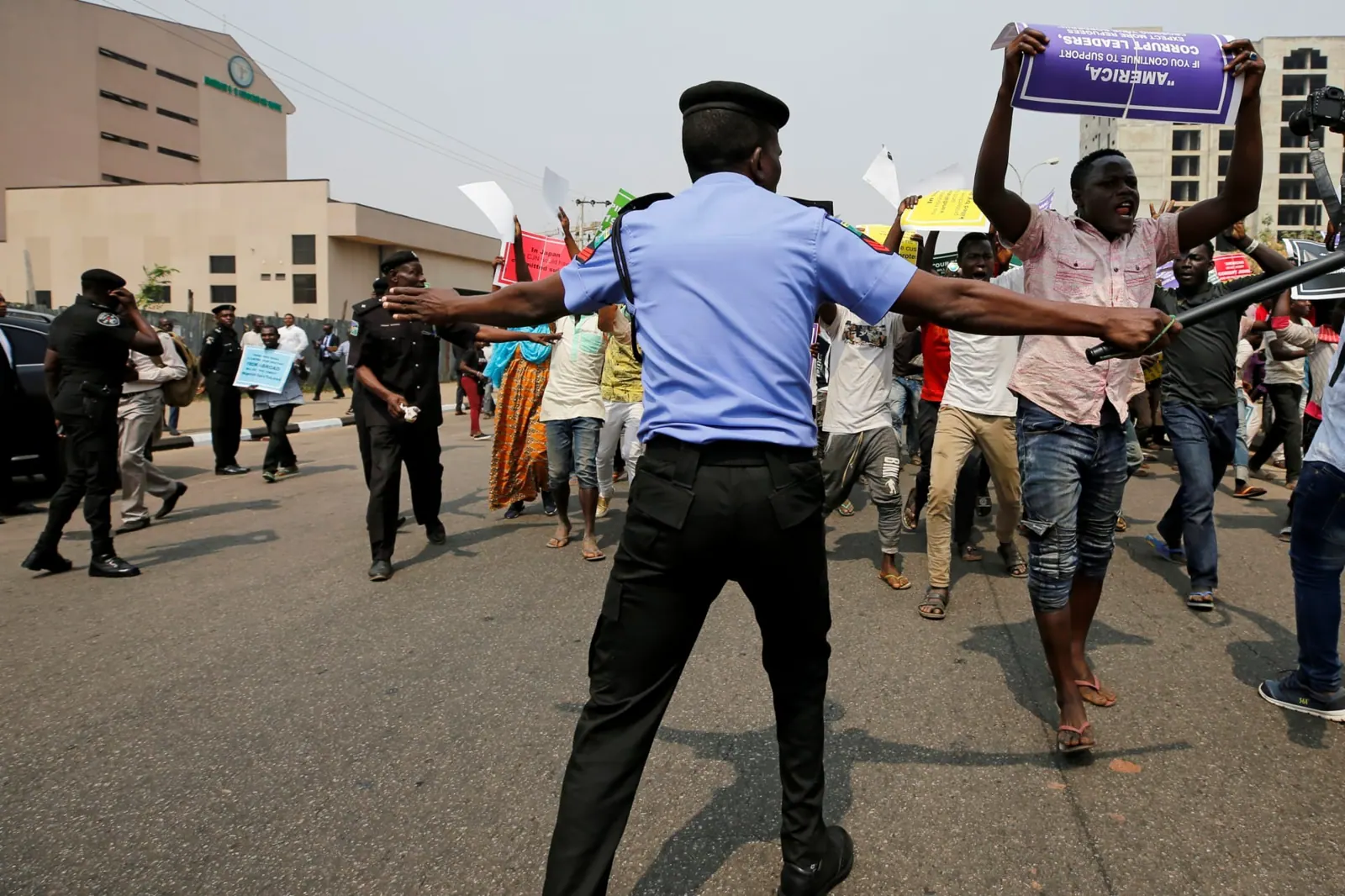
A recent video clip showing a police officer greeting armed men on motorcycles sparked widespread skepticism online. The Nigeria Police Force clarified that the men were registered members of the Vigilante Group of Nigeria and local hunters participating in a joint security operation. However, the explanation was met with doubt, reflecting a broader crisis of trust in official institutions. The 2026 Nigeria Social Cohesion Survey reported that 72% of Nigerians expressed little to no trust in the government.
The public's skepticism towards official institutions is also reflected in low trust levels across key institutions. The survey found that 77% of Nigerians expressed little to no trust in the National Assembly, while 73% expressed little to no trust in the judiciary. Comparatively, 49% expressed little to no trust in religious leaders and 55% expressed little to no trust in traditional leaders. These figures provide context for why official statements can face immediate resistance online.
A similar pattern of denial and later acknowledgment of serious allegations was seen in Kaduna State in January 2026. Armed bandits abducted 177 Christian worshippers during morning services, but the Kaduna State Police Command and local government officials initially denied the reports. It wasn't until church leaders and the Christian Association of Nigeria provided evidence that security forces treated the situation as an active mass-abduction incident.
This pattern of denying serious allegations before later acknowledging them also occurs in military affairs. The cancellation of Nigeria's 65th Independence Anniversary parade was allegedly due to a coup plot against President Bola Tinubu's administration, but defence spokespersons dismissed the reports as malicious falsehoods. However, within months, authorities formally inaugurated a court-martial in Abuja to try implicated officers.
The consequences of such episodes create a credibility problem that goes beyond the individual incident. Once an official account is contradicted by subsequent evidence, future statements from the same institution are likely to be viewed with suspicion, even when they are accurate. This breakdown in public trust is driven not only by official misstatements but also by a disconnect between authorities and the public.
Communications scholar Kabir Lawanti explains that when an official denial collapses, the institutional damage extends far beyond the specific event. He argues that transparency does not require exposing sensitive information, but rather providing basic accountability. Caleb Ijioma, Executive Director of Roundcheck, emphasizes that protecting tactical assets differs fundamentally from withholding basic operational accountability.
The public's skepticism towards official institutions can have grave consequences for security agencies. If the public loses faith, official accounts, warnings, and appeals for cooperation can be dismissed as misinformation. To rebuild trust, security agencies must prioritize transparency and accountability, providing clear and accurate information to the public.
Key points
- The 2026 Nigeria Social Cohesion Survey reported that 72% of Nigerians expressed little to no trust in the government.
- The pattern of denying serious allegations before later acknowledging them erodes trust in Nigeria's security agencies.
- Rebuilding trust requires prioritizing transparency and accountability in official statements.