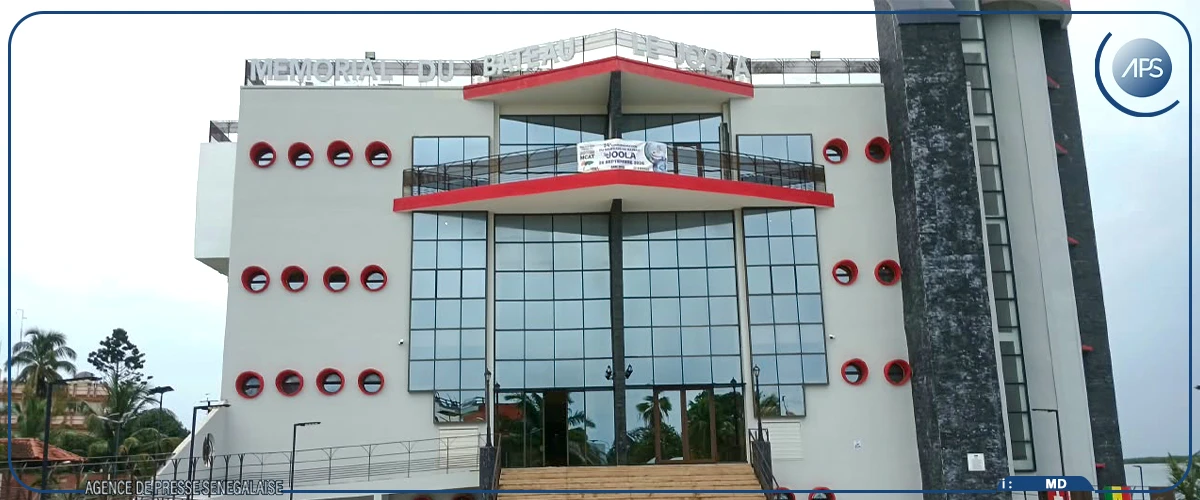
Located on the banks of the Casamance River in Ziguinchor, Senegal, the Joola Memorial Museum was inaugurated in 2024 to commemorate the 2002 ferry disaster that claimed 1,863 lives. The museum, a three-story building, showcases a collection of artifacts, including a child's clothing, a watch, and pearl necklaces, recovered from the wreckage. The museum's construction was a collaborative effort between the Senegalese government and associations representing the families of the victims.
Initially, the museum was planned for the Boudody site, near the Ziguinchor fishing quay, but the project was relocated after authorities determined the site was part of the maritime domain. A stèle was erected on the new site, but it was later deemed unsuitable for the museum's purpose. The project was revived through a national architectural competition, which was won by architect Seynabou Diop Ndiaye. The museum's administrator, Sokhna Gaye Fall, oversaw the project's development over ten years.
The museum features a digital and virtual exhibition, allowing visitors to explore the wreckage through special glasses and interactive displays. The exhibits include artifacts from the ship, as well as accounts from survivors and information about the ship's history. The museum aims to serve as an educational resource, working with local schools, youth groups, and researchers to promote its mission.
The Joola ferry disaster occurred on September 26, 2002, when the Senegalese ferry, which was severely overcrowded, capsized off the coast of Gambia. The tragedy was one of the deadliest maritime disasters in history, with 1,863 confirmed fatalities, including 971 people from Ziguinchor and citizens of 14 other nationalities.
The museum's collections include two massive ship propellers, weighing 900 kg each, which were recovered from the wreckage in August 2023. The propellers are displayed outside the museum and serve as a poignant reminder of the tragedy. The museum also features exhibits on the ship's history, including its role as a floating city, and the impact of the disaster on local communities.
According to Fall, the museum's development involved extensive consultations with local communities, experts, and stakeholders to ensure that the project was sensitive to the needs and concerns of all parties involved. An anthropological study was conducted to assess the museum's acceptability and impact on the local population.
The Joola Memorial Museum is a significant addition to Senegal's cultural and historical landscape, providing a poignant reminder of the country's maritime history and the importance of commemoration and remembrance. The museum serves as a testament to the resilience of the Senegalese people and a tribute to the victims of the Joola ferry disaster.
Key points
- The Joola Memorial Museum was inaugurated in 2024 to commemorate the 2002 ferry disaster that claimed 1,863 lives.
- The museum features a digital and virtual exhibition, allowing visitors to explore the wreckage and learn about the ship's history.
- The museum's development involved extensive consultations with local communities, experts, and stakeholders to ensure that the project was sensitive to the needs and concerns of all parties involved.