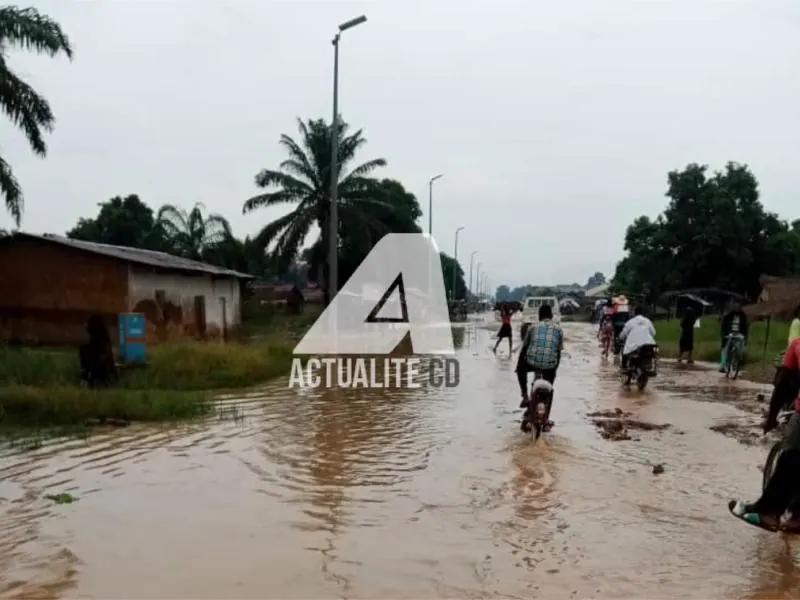
A recent UNICEF report has revealed that in 2025, at least 68,165 students in the Democratic Republic of Congo faced disruptions to their education due to floods. This figure encompasses students from preschool to secondary school levels. The report defines a disruption as any event that interrupts, limits, or alters a student's normal access to education, including school closures, reduced class hours, delayed start dates, or difficult access to schools.
The UNICEF report highlights that floods were the primary climate-related hazard associated with disruptions in the RDC in 2025. However, the report does not specify which provinces were affected, the number of schools impacted, or the duration of the disruptions. The organization notes that the consequences of climate-related events on education are particularly challenging to measure in countries affected by conflicts and humanitarian crises, such as the RDC.
The Democratic Republic of Congo is among 21 countries identified by UNICEF as facing crises with a high potential impact on education in 2025. The report estimates that globally, approximately 171 million students across 106 countries and territories experienced school disruptions due to climate-related events in 2025. Three out of four of these students lived in low- or lower-middle-income countries.
Floods affected at least 70 million students worldwide, while storms impacted around 109 million students, and heatwaves affected about 50 million students. A single student may have been exposed to multiple events or forms of disruption. The report also notes that 66% of students globally experienced class suspensions, and 21% had their return to class delayed due to damaged or repurposed schools.
UNICEF warns that school disruptions can lead to reduced learning time, irregular attendance, and an increased risk of dropping out, particularly in already fragile education systems. The organization presents its estimates as cautious, acknowledging that the actual number of affected students may be higher.
The report emphasizes that measuring the impact of climate-related events on education is particularly difficult in countries like the RDC, where insecurity, population displacement, and destruction of infrastructure can complicate the tracking of student enrollment and attendance.
The situation in the RDC is further complicated by the fact that some schools may already be closed due to insecurity, and the country's education system is likely to be affected by the ongoing humanitarian crisis.
Key points
- At least 68,165 students in the Democratic Republic of Congo experienced disruptions to their education due to floods in 2025.
- The disruptions were primarily caused by floods, which are a significant climate-related hazard in the RDC.
- The UNICEF report estimates that globally, approximately 171 million students across 106 countries and territories experienced school disruptions due to climate-related events in 2025.