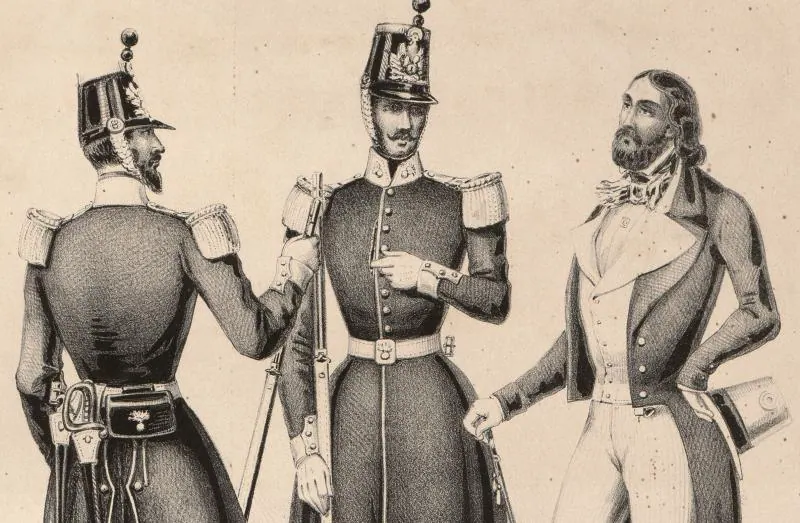
Historian Arnaud-Dominique Houte has studied the evolution of citizen policing over the past two centuries. The concept of citizen policing dates back to the French Revolution, where citizens claimed the right to ensure their own safety and maintain order. This idea was met with resistance, and the status of the national guard was uncertain. The Marquis de La Fayette was appointed to command the national guard, which was initially seen as a bourgeois militia.
Throughout the 19th century, there were two competing visions for the national guard. One vision saw it as a bourgeois militia that would maintain order and stability, while the other envisioned it as a people's police force. The latter vision prevailed in 1792, during the "spring of nations" in 1848, and during the Paris Commune of 1871. During these periods, the national guard was transformed and opened up to all male citizens.
The concept of citizen policing also involved groups of "friends of order" who sought to maintain social order. These groups, such as the Gourdins réunis, were often made up of individuals from aristocratic backgrounds who were opposed to popular uprisings. They were active during periods of social unrest, but their impact was limited. The "friends of order" were often satirized in the media, and their attempts to maintain order were seen as elitist.
During the Belle Époque, amateur detectives became increasingly popular. This phenomenon reflected a growing dissatisfaction with the police, which was seen as ineffective or corrupt. Many citizens saw themselves as better equipped to maintain order and solve crimes. This idea was reflected in popular literature, such as the detective novels of Maurice Leblanc.
The period of World War II and the occupation of France saw the emergence of various groups of citizen policemen. These groups often had competing interests and legitimacy, and some were involved in exactions and trafficking. The Milice, a notorious group, imposed its power in 1944. However, this period also saw a reorganization of citizen policing from below.
Arnaud-Dominique Houte's work highlights the complexities of citizen policing and its evolution over time. The concept of citizen policing has been shaped by historical events, social unrest, and competing visions of order and stability. Understanding the history of citizen policing can provide insights into contemporary debates about policing and security.
The history of citizen policing in France and beyond is complex and multifaceted. It involves the interplay of various groups, interests, and visions of order and stability. As societies continue to grapple with issues of security and policing, understanding the evolution of citizen policing can provide valuable lessons and insights.
Key points
- The concept of citizen policing has evolved over the past two centuries, shaped by historical events and competing visions of order and stability.
- The national guard was initially seen as a bourgeois militia, but its role and composition changed over time, reflecting competing visions of citizen policing.
- Amateur detectives and groups of "friends of order" have played a significant role in the history of citizen policing, often reflecting dissatisfaction with the police and a desire for greater security.