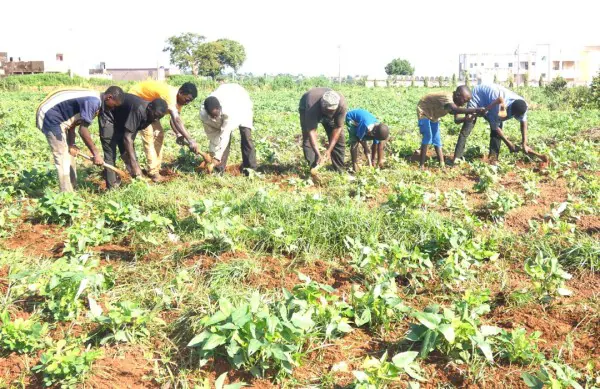
In the city of Sikasso, Mali, a Quranic master named Lassina Keïta is taking a different approach with his students, known as talibés, by having them work to earn a living instead of begging. This approach is in line with the Malian government's new initiative to combat begging, particularly among children. Keïta's students work in the fields during the rainy season, performing tasks such as weeding, sowing, and harvesting.
According to Keïta, his students work from 8am to 2pm and are paid 1,500 Fcfa (approximately $2.50 USD) per day. He gives them 500 Fcfa and keeps 1,000 Fcfa, which he uses to manage their food and other expenses. This system allows the students to earn a living and save some money. Keïta's approach has been praised by his students, who say that it has allowed them to preserve their dignity and support their families.
One of Keïta's students, Mamadou Traoré, a 19-year-old from the village of Danka, has been studying with Keïta for six years. Traoré says that working in the fields has allowed him to eat well and earn some money without having to beg. He encourages his fellow talibés to follow Keïta's example. Another student, Alpha Keïta, from the village of Kambalé, also praises Keïta's approach, saying that it has given him the autonomy to buy his own necessities and support his family.
Aboubacar Diarra, another of Keïta's students, is a married man from Danka. He says that Keïta's approach has allowed him to support his family and save some money. Diarra appreciates Keïta's initiative and says that it has been a positive experience for him and his fellow students. Keïta's students live together in a family-like setting, with some of them being married with children.
Keïta's approach is in contrast to that of many other Quranic masters in Mali, who encourage their students to beg for alms. Keïta believes that it is essential to teach his students the importance of working hard and being self-sufficient. He says that his students learn the Quran from 6am to 8am, 3pm to 6pm, and 8pm to 10pm, and work in the fields from 8am to 2pm.
The Malian government has recently adopted a strategy to combat begging, particularly among children. The strategy aims to provide support to vulnerable children and encourage them to attend school or learn a trade. Keïta's approach could serve as a model for other Quranic masters in Mali. The government could use Keïta's example as a way to encourage other masters to adopt similar approaches.
Keïta is calling on other Quranic masters to follow his example and provide their students with the opportunity to work and earn a living. He believes that this approach will help to reduce begging and promote self-sufficiency among young people in Mali. Keïta is also seeking support to acquire a field to cultivate with his students, which would help to ensure their autonomy and provide them with a sustainable source of income.
Key points
- A Quranic master in Sikasso, Mali, is providing an alternative to begging for his students by having them work to earn a living.
- The Malian government has adopted a strategy to combat begging, particularly among children.
- The Quranic master's approach could serve as a model for other educators in Mali.