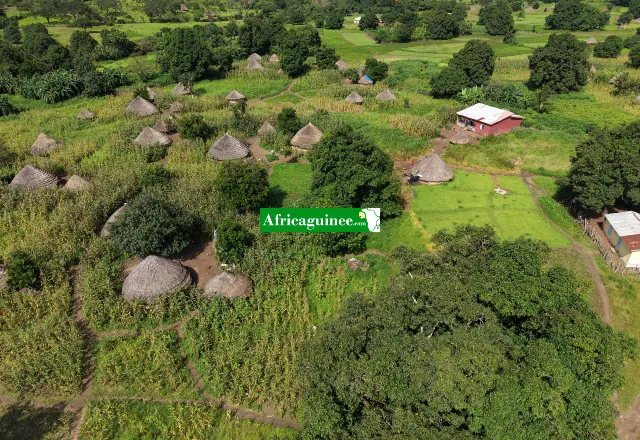
The district of Idia, located in the urban commune of Tougué, Guinea, is one of many areas in the region that suffers from a complete lack of mobile network coverage. This has resulted in residents being cut off from the rest of the world, with no access to national news or updates from loved ones. To make a call or send a message, residents must travel long distances to find a signal. This isolation is not unique to Idia, as many neighboring villages, including Labha, Balagandè, and Tougui, face similar challenges.
The absence of mobile network coverage has significant impacts on daily life in Idia. Residents often gather under mango trees to share information and conduct community meetings, as there are no alternative means of communication. This lack of connectivity also affects the ability of residents to access healthcare services, with pregnant women and those in need of medical attention often facing significant challenges in getting the help they need. Thierno Aïssatou Camara, a resident of Idia, expressed frustration with the situation, highlighting the difficulties of communicating with family members or accessing healthcare services.
In the absence of mobile phones, residents of Idia have turned to using the mosque's loudspeakers to pass messages to one another. This system is not always reliable, and messages may not reach their intended recipients. Thierno Amadou, a local leader, uses the mosque's loudspeakers to call meetings or pass messages to residents. However, this method is not effective for communicating with those who are not in the village or for emergency situations.
The lack of mobile network coverage in Idia also poses significant risks to residents, particularly in emergency situations. Hadja Bintou Diallo, a mother of seven, highlighted the challenges of accessing healthcare services or alerting others in the event of an emergency. The situation is further complicated by the limited availability of transportation, with residents often having to walk long distances to access healthcare services or communicate with others.
Residents of Idia are calling for assistance from telecommunications companies and the government to address the lack of mobile network coverage in the area. Mamadou Kaly Baldé, a resident who has installed a makeshift antenna in his yard, highlighted the importance of reliable communication for the community. The antenna allows residents to receive calls, but the signal is weak and unreliable.
The lack of mobile network coverage in Idia and surrounding villages is a long-standing issue that has significant impacts on daily life. Residents are forced to rely on traditional methods of communication, such as the mosque's loudspeakers, or travel long distances to access mobile network coverage. This isolation has serious consequences, particularly in emergency situations, and residents are calling for urgent action to address the issue.
The situation in Idia highlights the need for investment in telecommunications infrastructure in rural areas of Guinea. The lack of mobile network coverage in the region is a significant barrier to economic development, social connectivity, and access to essential services. Residents of Idia and surrounding villages are hopeful that their situation will improve soon, with the installation of mobile network coverage or alternative communication solutions.
Key points
- Residents of Idia and surrounding villages in Guinea's Tougué district face significant challenges due to a lack of mobile network coverage.
- The lack of mobile network coverage poses significant risks to residents, particularly in emergency situations.
- Residents are calling for assistance from telecommunications companies and the government to address the issue.