The heavy rainfall season in Guinea's Mamou region has brought significant challenges to residents of Dounet, particularly those living in districts surrounding the Bafing river. As the river overflows its banks, access roads become inundated with water, cutting off communities and forcing residents to take long detours to transport goods and livestock. This situation affects five districts: Hindhé, Diatabaya, Bassambaya, Soumbalako, and Haadji, where agriculture and livestock are crucial to the local economy.
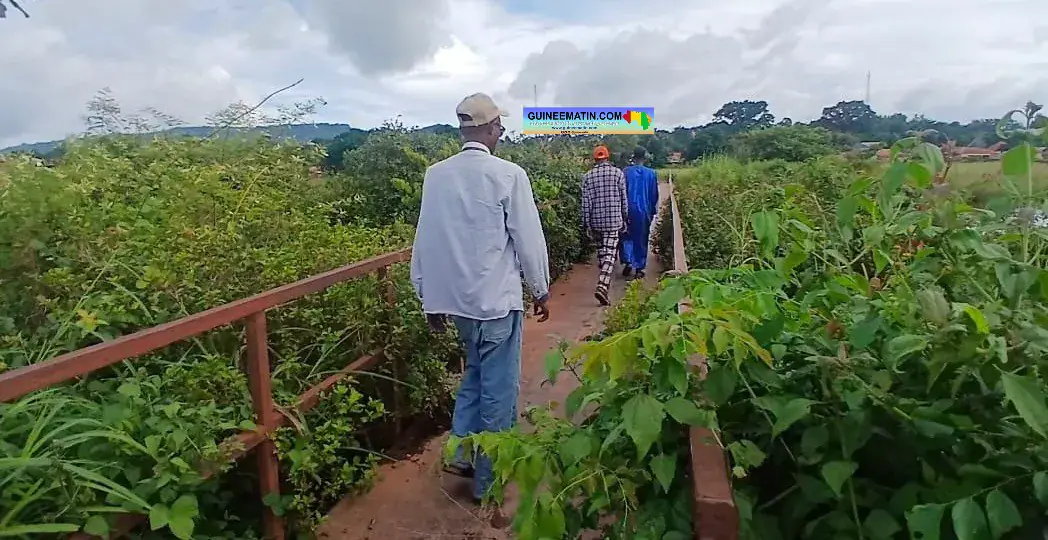
Mohamed Diaby, a resident of Diatabaya and member of the local Islamic league, highlighted the difficulties faced by residents during this period. He explained that the flooded roads make it impossible for vehicles to pass, and the only available option is a fragile pedestrian bridge that allows people to cross the river with great difficulty. This situation forces farmers and herders to carry heavy loads on their heads or shoulders over long distances, often up to 25-30 kilometers, to reach the town center.
The situation is further complicated by safety concerns, as the overflowing river and surrounding areas become habitats for wild animals such as hippos, crocodiles, and snakes. These animals have been responsible for several attacks on residents, resulting in fatalities, injuries, and disabilities. Diaby recounted several instances of people being bitten by these animals, with some victims losing limbs due to severe injuries.
The isolation and danger faced by Dounet residents during the rainy season have prompted calls for infrastructure development to alleviate their plight. Mohamed Diaby appealed to national authorities and development partners to construct a bridge that would facilitate safe passage across the Bafing river. He emphasized that a bridge would not only ease access but also boost economic activities in the region, which is an important agricultural hub.
According to Diaby, a bridge would have a significant impact on the daily lives of residents, enabling them to transport goods and livestock easily and safely. He noted that the current pedestrian bridge is insufficient, as it only allows people to cross on foot, and even then, with great difficulty. A new bridge would also connect the region to the national road network, facilitating travel to nearby towns such as Porédaka, Boulliwel, Dalaba, and Labé.
The need for a bridge in Dounet is further underscored by the region's economic importance. The area is known for its agricultural production, and a bridge would facilitate the transportation of goods to markets, thereby boosting local economic activities. Residents are hopeful that their appeals will be heard, and a bridge will be constructed to alleviate their suffering during the rainy season.
In conclusion, the situation in Dounet highlights the need for infrastructure development in Guinea's rural areas. The construction of a bridge across the Bafing river would greatly improve the lives of residents, enhancing their access to markets, healthcare, and other essential services. It is hoped that authorities and development partners will take note of the situation and provide the necessary support to address this pressing issue.
Key points
- Residents of Dounet, Guinea, face isolation and danger during the heavy rainfall season due to flooding of the Bafing river.
- A bridge is needed to facilitate safe passage and boost economic activities in the region.
- The construction of a bridge would alleviate the suffering of residents and enhance their access to essential services.