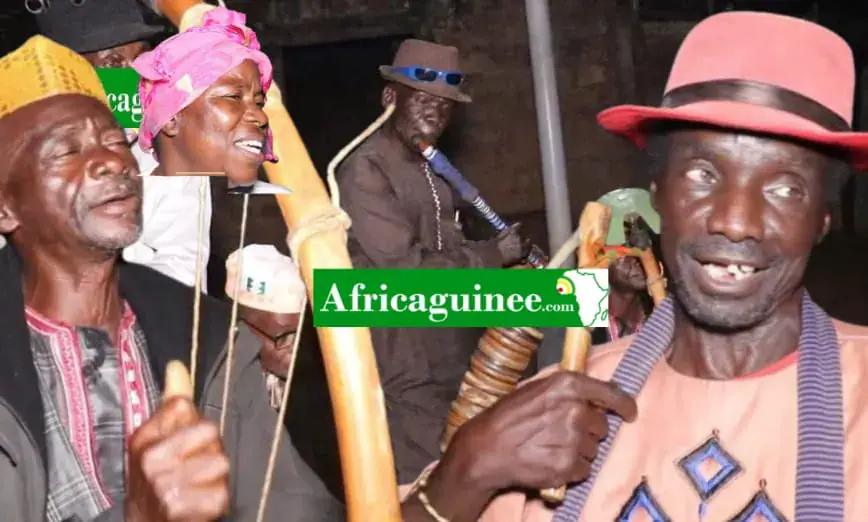
In the village of Kébaly, located in the prefecture of Dalaba, Guinea, a group of nine elderly artists from the Diaby Sané troupe are fighting to keep their ancestral traditions alive. These sexagenarians, armed with kora, flutes, and castagnettes, are the last guardians of a rich cultural heritage that is slowly fading away. Despite their efforts, the younger generation seems uninterested in learning and preserving this traditional art form. The troupe's leader, Diaby Sané, expressed his concerns about the future of their folklore, stating that without proper support and recognition, this tradition may disappear after their generation.
The Diaby Sané troupe has been a cornerstone of Peul folklore in the Fouta region for years, but the group's aging members are now facing significant challenges. With limited financial resources and a lack of recognition from authorities, these artists struggle to make a living from their craft. Moreover, the rise of modernity and urbanization has led to a decline in demand for traditional music, making it even harder for the troupe to survive. As a result, the group's members are worried that their life's work may be lost forever if no one is willing to take over and carry on their legacy.
Alseny Kouyaté, a skilled kora player, shared his personal story of how he took up the instrument to honor his father, a renowned griot. For Kouyaté, the kora is more than just a musical instrument; it is a connection to his family's heritage and a way to provide for his loved ones. Despite his efforts to pass on his knowledge to his children, they seem uninterested in following in his footsteps. Kouyaté remains hopeful that one of his eleven children will eventually take up the kora and continue the family tradition.
The threats to Peul folklore go beyond just a lack of interest from young people. Mamadou Diouma Big-Man, a flutist with the troupe, reported that in some localities, they are prevented from performing during ceremonies. Instead, they are asked to simply sit and listen, with the promise of being paid on the condition that they do not play. This worrying trend is a significant blow to the artists, who rely on their music to make a living. The situation is further complicated by the fact that some people view traditional music as old-fashioned and incompatible with modern life.
In an effort to keep their traditions alive, the Diaby Sané troupe occasionally gathers in the streets of Kébaly for impromptu performances. These informal events allow the artists to share their music and stories with the community, often evoking a sense of nostalgia among the older residents. Dioumayatou Kanté, a member of the community, praised the troupe for preserving the cultural heritage of the region. However, she also acknowledged that many people no longer value traditional music, instead favoring modern forms of entertainment.
Mariama Ciré Sow, a local resident, expressed her concerns about the future of Peul folklore. According to Sow, if local artists are no longer supported, the region will be plunged into a cultural silence. She attributed the lack of interest in traditional music to the allure of urban life, which draws young people away from their cultural roots. As the nights in Kébaly prepare to lose their last melodic echoes, the question of preserving this aspect of Guinea's cultural identity remains unanswered.
The Diaby Sané troupe's struggle to preserve Peul folklore serves as a warning about the importance of cultural preservation. As the group's elderly members continue to fight against oblivion, their story highlights the need for recognition and support for traditional artists. Without proper efforts to safeguard this cultural heritage, the rich traditions of the Peul people may be lost forever.
Key points
- The Diaby Sané troupe's efforts to preserve Peul folklore are being hindered by a lack of interest from young people and limited financial resources.
- The troupe's members are worried that their life's work may be lost forever if no one is willing to take over and carry on their legacy.
- The situation highlights the need for recognition and support for traditional artists to preserve Guinea's cultural heritage.