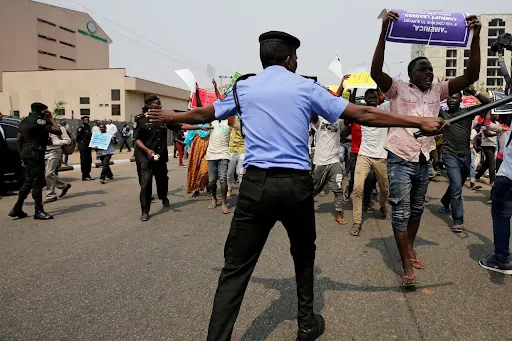
A video recently surfaced showing a police officer in Nigeria greeting people on a motorcycle while armed men passed by. The Nigerian Police Force quickly clarified that the armed men were not bandits but members of the Vigilante Group of Nigeria participating in a joint security operation. However, the explanation was met with widespread skepticism on social media, with many users questioning the police's account. This reaction is not isolated, as a recent survey by the Africa Polling Institute found that 72% of Nigerians expressed distrust or low trust in the government.
The survey also revealed that 77% of respondents had low trust or distrust in the National Assembly, while 73% expressed similar sentiments towards the judiciary. In contrast, 49% of respondents had low trust or distrust in religious leaders, and 55% had similar feelings towards traditional leaders. These statistics highlight the significant challenges facing Nigerian security agencies in regaining public trust. Experts warn that when officials make statements that are later found to be false, it can have severe consequences, including the dismissal of future warnings and advice from authorities.
A recent incident in Kaduna State illustrates the consequences of such mistrust. In January 2026, bandits abducted 177 Christians from three churches during a morning service. Initially, the police and local authorities denied the incident, calling it a baseless rumor. However, as evidence emerged, including a list of abducted individuals and their families, the authorities were forced to acknowledge the attack. The incident highlights the dangers of denying verified information and the importance of transparency in building trust with the public.
Similar incidents have occurred in the past, including the 2018 revelation that 167 police officers had fled their training camp in Yobe State to avoid deployment against Boko Haram militants. The police initially denied the report, but were later forced to confirm it. Such incidents have contributed to a growing perception that Nigerian security agencies are prone to making false or misleading statements, which can have severe consequences for public trust.
The legacy of past incidents, such as the #EndSARS protests and the Chibok abductions, continues to influence public perceptions. In 2020, the Nigerian military denied involvement in the killing of protesters during the #EndSARS movement, but subsequent investigations by Amnesty International and CNN found evidence of military involvement. Similarly, in 2014, the military initially claimed to have rescued most of the Chibok abductees, only to later admit that they were still in captivity.
Communication experts argue that such incidents have a lasting impact on public trust. According to Kabir Lawanti, a lecturer at Ahmadu Bello University, when officials make statements that are later found to be false, it can lead to a decline in trust and skepticism about future statements. "It creates what communication experts call a credibility gap, and the public may start questioning what else have the authorities told us that is not true," he said.
The consequences of such mistrust can be severe, particularly in the context of national security. When the public loses faith in the authorities' ability to provide accurate information, it can undermine efforts to build trust and cooperation. As Nigeria continues to grapple with security challenges, experts stress the importance of transparency and accountability in regaining public trust and building a more effective security apparatus.
Key points
- Misinformation and contradictory statements from Nigerian security agencies have eroded public trust.
- A recent survey found that 72% of Nigerians expressed distrust or low trust in the government.
- Experts warn that denying verified information can have severe consequences for public trust and national security.