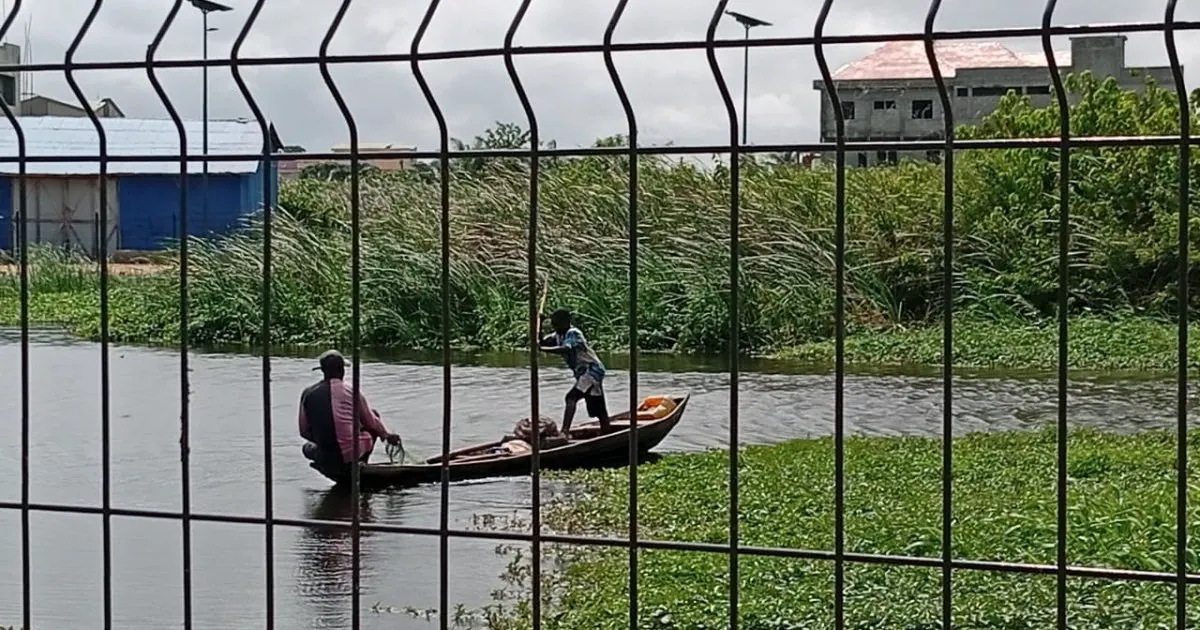
In Cotonou, the economic capital of Benin, stormwater basins built to drain water and prevent flooding have taken on an unexpected use. Several retention basins and outlets have been converted into informal fishing grounds by some individuals, particularly those from lacustrine communities. These makeshift fishing spots have become a source of supplemental income for those involved.
The Cotonou Stormwater Drainage Program (PAPC) implemented measures to preserve the ecosystems in the wetlands where the program was carried out. The presence of fish in some basins and water bodies has encouraged informal fishing activities. Fishermen use various equipment such as nets, hooks, and lines to catch species like carp, tilapia, and catfish. For Bienvenu, a revender of smuggled gasoline, fishing is a secondary activity that helps him improve his income.
Bienvenu and others like him often fish in the basins and sell their catch. Some fishermen, such as Athanase, Léon, and Jacob, fish near the outlet close to CEG Le Nokoué. They usually start early in the morning and finish by midday, catching enough fish to feed their families and sometimes sell to buyers. For these young men, fishing is not only an economic necessity but also a tradition inherited from their lacustrine communities.
Faustin, a young man in his twenties, relies on fishing as his primary source of income. He and his younger brother, Honoré, spend their mornings fishing in the basins. With the income from fishing, Faustin manages to cover his daily needs. Other fishermen, like A. K., use different techniques, such as line fishing, to catch fish. A. K. sells his catch, sometimes earning up to 1,000 CFA francs per fish.
While the stormwater basins have become a source of income for some, they also pose risks to the fishermen. Warning signs prohibiting bathing, fishing, and hunting are often ignored. Furthermore, there are health concerns related to consuming fish caught in waters exposed to waste and pollution. Despite these risks, many continue to fish in the basins.
The transformation of stormwater basins into informal fishing grounds highlights the resourcefulness of some residents in Cotonou. However, it also underscores the need for authorities to address the potential health and safety risks associated with this activity. As the city continues to grow and develop, finding sustainable solutions to manage its water resources and provide livelihood opportunities for its citizens will be crucial.
The situation in Cotonou's stormwater basins reflects a broader challenge faced by many urban areas in Africa, where rapid urbanization and limited resources can lead to innovative but potentially risky uses of urban infrastructure. As urban populations grow, finding ways to balance economic development with environmental protection and public health will be essential for creating sustainable and resilient cities.
Key points
- Stormwater basins in Cotonou have become informal fishing grounds, providing a source of income for some residents.
- The fishing activity in stormwater basins poses health and safety risks to those involved.
- The situation highlights the need for sustainable solutions to manage urban water resources and provide livelihood opportunities.