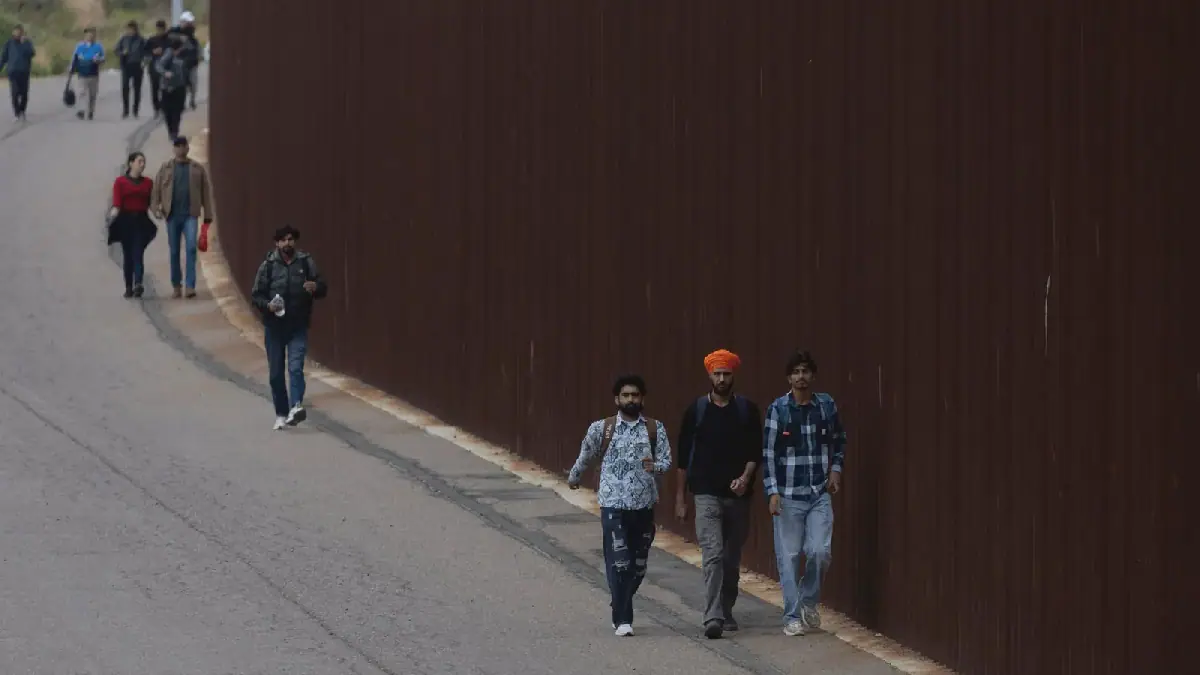
The debate over US immigration policies and border control measures is intensifying, with far-reaching implications for the country's electoral landscape. As the US presidential election approaches, the issue of immigration has become a critical factor in shaping voter priorities. In the state of Arizona, the construction of a border wall with Mexico has been a contentious issue, with some residents viewing it as a necessary security measure and others seeing it as an excessive and ineffective response.
The border wall has become a symbol of the polarized debate over immigration in the US. For some, like John Ladd, a fourth-generation farmer from Arizona, the wall represents a necessary step to protect his property and prevent undocumented immigrants from crossing into the US. Ladd supports the policies of former President Donald Trump, who implemented stricter immigration controls and initiated the construction of the border wall. However, others, like David Hathaway, a local security official in the border town of Nogales, argue that the wall has transformed the region into a militarized zone and damaged community relations.
The impact of stricter immigration policies extends beyond the border region, affecting the daily lives of immigrants and their families. Katherine, a Mexican immigrant who arrived in the US at the age of 11, has lived in the country for over three decades. Despite her long residence, her legal status remains uncertain due to her reliance on the Deferred Action for Childhood Arrivals (DACA) program. The program provides temporary protection from deportation and work permits, but Katherine's future remains uncertain, reflecting the precarious situation faced by many DACA recipients.
In Minneapolis, Minnesota, a city with a large Somali-American population, the tightening of immigration policies has contributed to a climate of fear and mistrust. Local business owners and community leaders report a decline in customer traffic and economic activity due to the increased presence of immigration and customs enforcement agents. Some Somali-American residents, like Mahmoud, a local business owner, are urging their community to vote early, citing concerns that immigration enforcement efforts may intimidate voters and suppress turnout.
The intersection of immigration policy and electoral politics is complex, with multiple factors influencing voter priorities. In Minneapolis, voters are concerned about issues like the economy, rising prices, and public safety, which intersect with the debate over immigration. Some voters, like Maria, express concern about the treatment of immigrants and the need for a more humane approach to immigration policy. Others, like Ann, prioritize economic issues but also recognize the importance of addressing immigration in a way that balances security concerns with humanitarian considerations.
The impact of immigration policies on voter turnout and electoral outcomes remains to be seen. However, it is clear that the issue of immigration has become a critical factor in shaping the US electoral landscape. As voters head to the polls, they will be weighing competing priorities and perspectives on immigration, border control, and the treatment of immigrants. The outcome of the election will depend on how these issues are prioritized and addressed by policymakers.
Ultimately, the debate over immigration policy reflects deeper questions about the values and identity of the United States. As the country continues to grapple with the complexities of immigration, voters will be seeking candidates and policies that reflect their priorities and values. The 2026 election will be an important test of how these issues are prioritized and addressed by policymakers, with significant implications for the future of US immigration policy and its impact on communities across the country.
Key points
- US immigration policies are influencing voter choices in the upcoming election.
- The debate over immigration policy reflects deeper questions about US values and identity.
- Stricter immigration policies have had far-reaching impacts on immigrant communities and the broader electoral landscape.