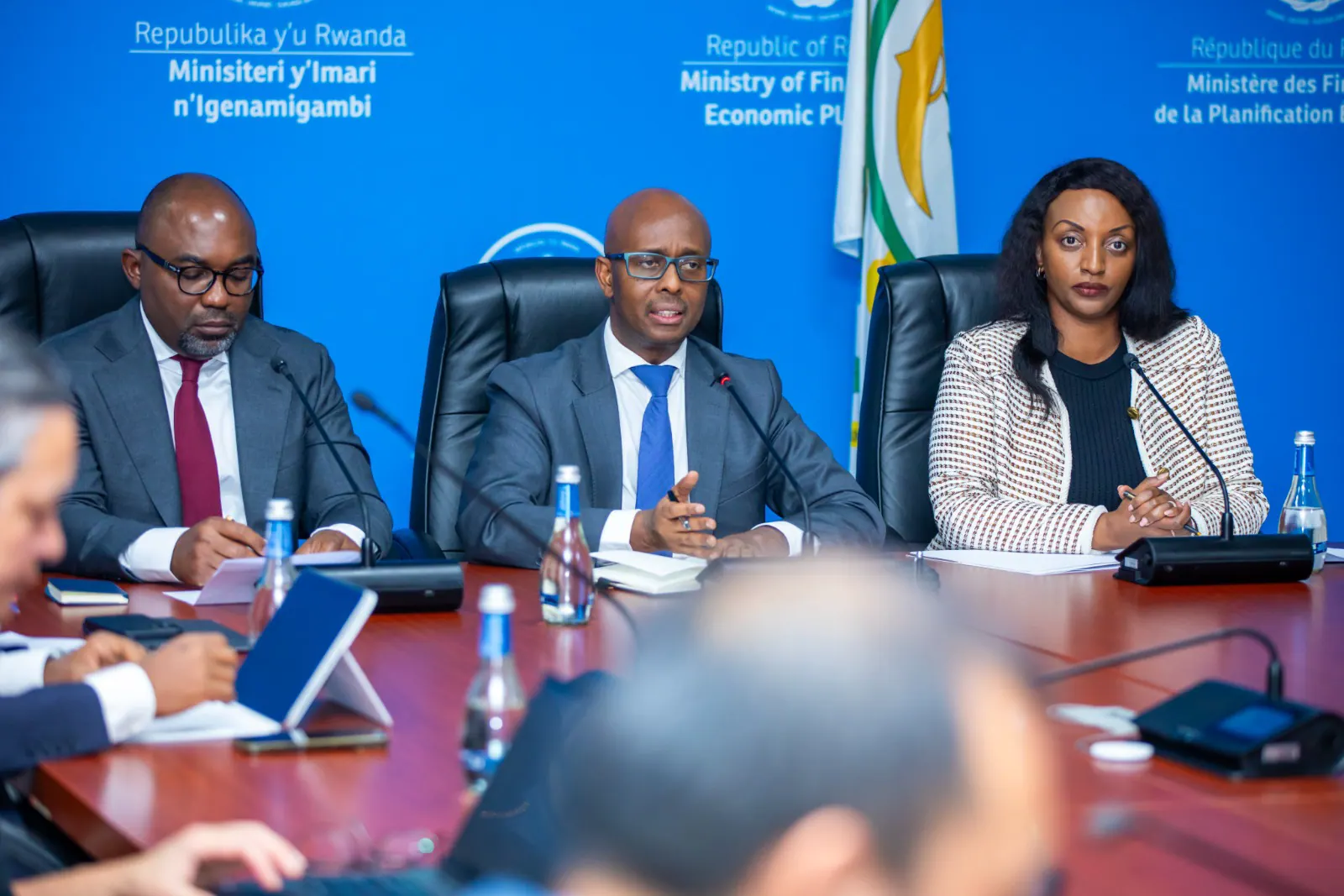
The IMF has reached an agreement with Rwanda on the first review of the country's program to receive a low-interest loan. This agreement allows Rwanda to access approximately $52 billion, or $35.7 million, pending approval from the IMF's Executive Board. This development comes after Rwanda's economy showed strong growth, expanding by 9.7% in the first half of 2026.
The agreement follows Rwanda's successful implementation of economic reforms, which have led to significant growth. The loan is part of a 38-month Extended Credit Facility (ECF) arrangement approved by the IMF in June 2026, providing a total of $250 million in financing. The IMF's Executive Board is expected to review the first review in December 2026, after which the funds will be disbursed.
According to Albert Touna Mama, head of the IMF's Rwanda mission, the agreement is based on Rwanda's strong performance under the ECF arrangement. He noted that the government has demonstrated commitment to implementing fiscal and economic policies that prioritize macroeconomic stability and debt sustainability. The IMF also reported that Rwanda's economy grew by 9.7% in the first half of 2026.
However, inflation in Rwanda has been a concern, reaching 15.7% in August 2026, significantly above the central bank's target of 5%. Mama attributed the high inflation to external pressures and increases in global commodity prices. He emphasized that the National Bank of Rwanda's monetary policy should continue to focus on bringing inflation back to target.
The fiscal deficit in Rwanda decreased to 4.8% of GDP in the 2025/26 fiscal year, driven by increased tax collection and improved public financial management. Finance Minister Murangwa Yusuf highlighted that reforms are underway to strengthen public financial management, revenue mobilization, and debt management. These efforts aim to support sustainable economic growth.
Yusuf emphasized that the agreement with the IMF marks a significant milestone in Rwanda's economic development. The program, typically spanning three years, will be reviewed twice a year. He stressed that the government is committed to achieving its development goals while maintaining macroeconomic stability and debt sustainability.
The IMF's loan will support Rwanda's efforts to achieve its economic goals, including reducing poverty and promoting sustainable growth. The government has set ambitious targets to increase domestic revenue mobilization by 2030. With this loan, Rwanda aims to strengthen its economic resilience and achieve long-term development objectives.
Key points
- The IMF has approved a $52 billion loan for Rwanda to support its economic development and reform efforts.
- Rwanda's economy grew by 9.7% in the first half of 2026, driven by strong growth in various sectors.
- The country aims to achieve sustainable economic growth and reduce poverty by 2030.