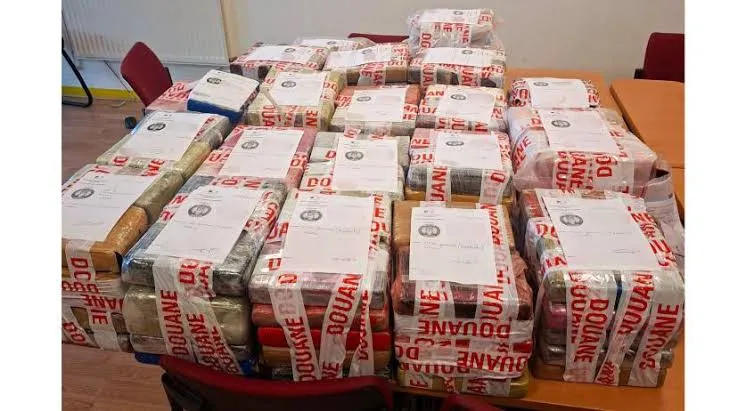
Policy think tank IMANI Africa has proposed solutions to address the cocaine scandal in Ghana, following a recent arrest of cocaine shipped out of the country. In a statement, IMANI noted that the culprits in narcotics busts are international organized criminals, and that Ghana is undoubtedly a transit point for cocaine. The think tank emphasized that systemic failures, rather than political failures, are to blame for the issue.
IMANI Africa's statement, titled "The Last Word on Cocaine Politics – Wise words from an IMANI Sage," highlighted that the beneficiaries of the cocaine trade are international organized criminals. The think tank suggested that the focus should be on addressing systemic issues rather than politics. IMANI also noted that the United States consumes more cocaine than the rest of the world, and that the fight against cocaine is what clears the coast.
To address the issue, IMANI Africa suggested making it difficult for the network to operate the supply chain. The think tank proposed that when cocaine is arrested anywhere in the world, it should bring lessons to Ghana. IMANI also noted that any cocaine arrested in any part of the world is linked to Ghana, and that the country should begin to look from within at how to keep the network running.
IMANI Africa also suggested that cocaine is often kept within high walls in affluent communities, and that intelligence should profile these high walls. The think tank noted that the Ghana Card is the first sign of identification. Additionally, IMANI proposed that uniformed NACOC personnel should be removed from ports, as they are not foot soldiers but rather intelligence personnel.
The think tank also raised concerns about the presence of off-duty security service personnel at ports and airports. IMANI suggested that all service personnel, on duty or off duty, should clock in, and that this clock should be triggered at their headquarters. This, IMANI argued, would help to prevent organized crime.
IMANI Africa also warned that the issue of cocaine will likely resurface during election periods, when there are distractions and a low-level security posture. The think tank noted that this usually occurs when one government is getting in and another is getting out, and that it has nothing to do with any particular political party.
In conclusion, IMANI Africa's proposals aim to address the systemic issues that contribute to the cocaine trade in Ghana. The think tank's suggestions emphasize the need for a comprehensive approach that goes beyond politics and focuses on disrupting the network of international organized criminals.
Key points
- IMANI Africa emphasizes that systemic failures, not political failures, are to blame for Ghana's cocaine issues.
- The think tank proposes removing uniformed NACOC personnel from ports and improving intelligence gathering.
- IMANI Africa warns that the issue of cocaine will likely resurface during election periods.