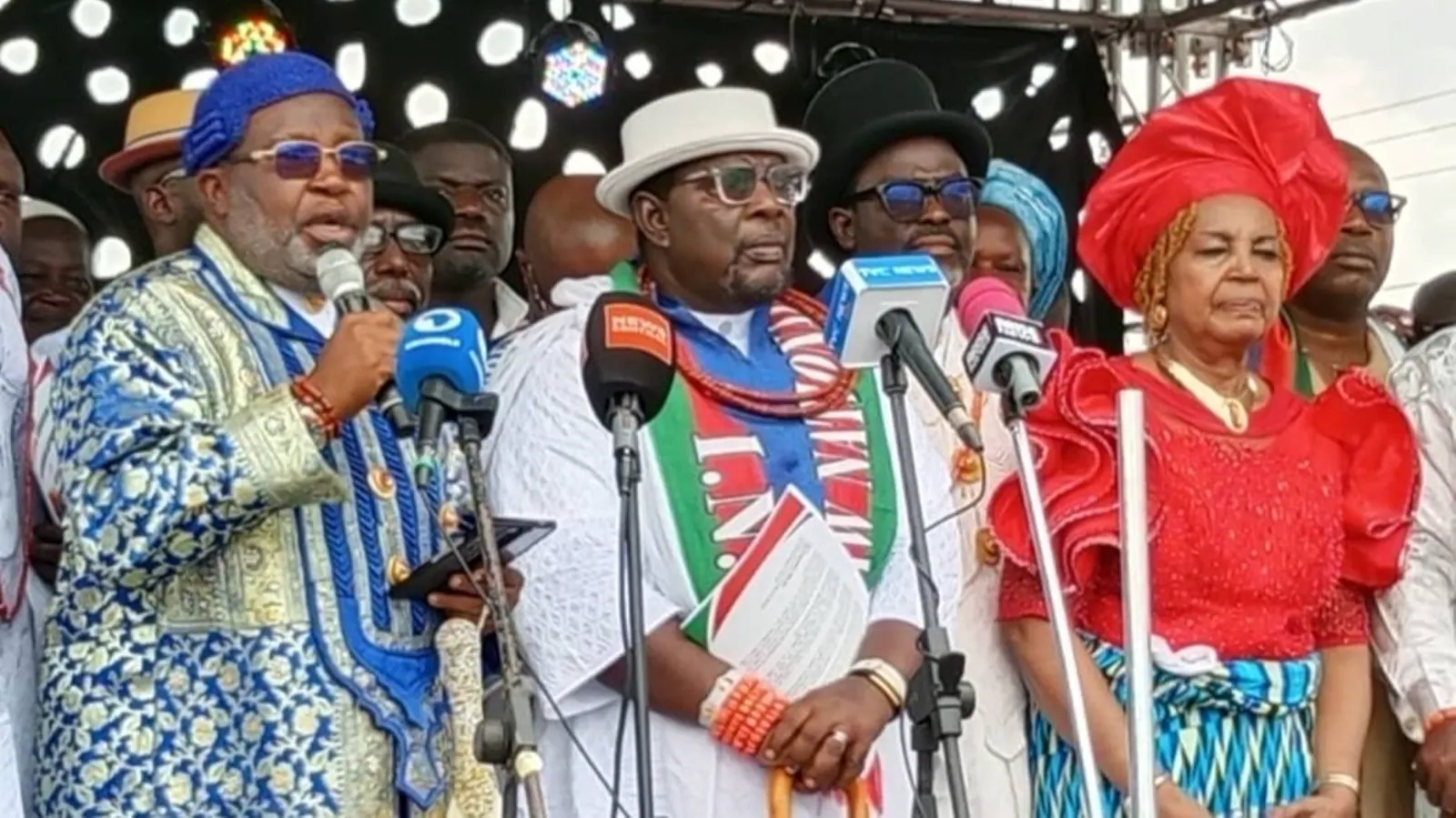
The Ijaw-speaking ethnic group in Edo State has called for recognition of their kingdoms, comprising Furupagha, Egbema, Okomu, Gbaran, and Olodiama kingdoms. They also demand the creation of three indigenous Ijaw Local Council Development Areas in the state. This appeal follows a long-standing crisis between the Ijaw and Benin communities, exacerbated by a recent dispute where the Ijaw were referred to as tenants, slaves, and strangers.
High Chief Robinson Ogunkoruwei, reading a statement on behalf of the five kingdoms, emphasized that the Edo State Government's refusal to grant distinctive recognition has led to their demand for boundary adjustments. This, they believe, would facilitate better assimilation and development, as well as alleviate the persistent crisis between the Binis and Ijaws. The statement was endorsed by representatives of the five kingdoms, including Elder Edmund Douyah Tiemo and Dr. Freedom Atigbi.
The Ijaw community expressed grievances over inhumane treatment by their Bini neighbors, citing instances of marginalization and exclusion. They accused past and present governments of Edo State of perpetuating this mistreatment. The community's demands are aimed at achieving equitable recognition and addressing historical injustices.
In response to the allegations, Edo State Commissioner for Information and Strategy, Prince Kassim Afegbua, denied claims of government-backed marginalization. He pointed out that Governor Monday Okpebholo has appointed Ijaw individuals to political offices as a gesture of recognition. However, Afegbua clarified that granting the Ijaw request for independent kingdoms within the Benin Kingdom is not feasible.
The Ijaw Youth Council (IYC) and other stakeholders have been involved in the push for recognition. The community's leaders, including High Chief Daniel Agagha and Chief Edwin Deinmene, have endorsed the statement. The Ijaw people are seeking a resolution to the long-standing crisis through dialogue and recognition.
The crisis between the Ijaw and Bini communities has been ongoing, with tensions escalating in recent times. The Ijaw community feels that their rights and interests have been neglected, leading to calls for greater autonomy and recognition. The Edo State Government's response to these demands will be crucial in determining the future of Ijaw-Bini relations.
The outcome of this situation remains uncertain, with the Ijaw community awaiting a response from the Edo State Government. The government's stance on the creation of indigenous Ijaw Local Council Development Areas and boundary adjustments will be critical in resolving the crisis. Key stakeholders, including Governor Monday Okpebholo and the Ijaw leadership, will play a significant role in shaping the future of Ijaw-Bini relations.
Key points
- The Ijaw community in Edo State demands recognition of their kingdoms and creation of indigenous Ijaw Local Council Development Areas.
- The community accuses the Edo State Government of aiding the inhumane treatment of Ijaw people by the Bini community.
- The government denies allegations of marginalization, citing appointments of Ijaw individuals to political offices as evidence of recognition.