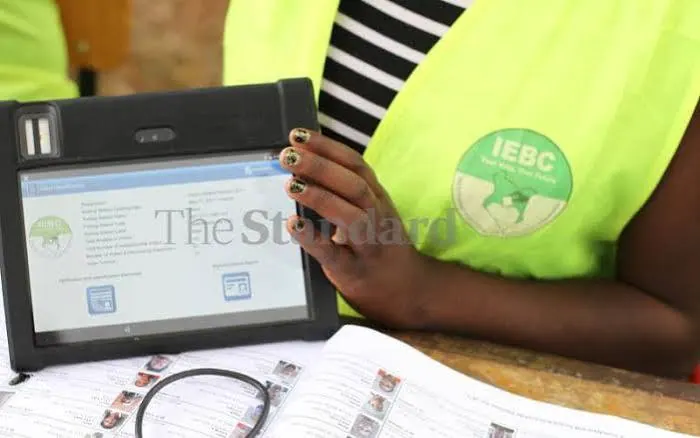
The controversy surrounding voter registration and eligibility ahead of Kenya's 2027 General Election has been reignited following allegations of Ugandan nationals acquiring Kenyan identification documents and registering as voters. Uganda's First Deputy Prime Minister, Rebecca Kadaga, has threatened to arrest her citizens for crossing into Kenya to register or vote in the upcoming election. This has raised concerns about the integrity of the electoral process and the need for the Independent Electoral and Boundaries Commission (IEBC) to clarify who is eligible to vote and where.
The issue of voter registration and eligibility is particularly sensitive in Kenya, given the country's history of electoral disputes and the fact that its borders cut through historically homogeneous communities. The IEBC allows voters to register outside their place of residence, which offers flexibility but also creates opportunities for manipulation. Election experts agree that determining who is eligible to vote is a major challenge, and that the IEBC must take steps to ensure the integrity of the electoral process.
The allegations of non-citizens being registered in Suam District and along the Kenya-Uganda border cannot be ignored, and the IEBC must take immediate action to address these concerns. The commission must also extend its vigilance to the other four countries that border Kenya, including Tanzania, Ethiopia, Somalia, and South Sudan. By doing so, the IEBC can help to build public confidence in the legitimacy of the election and prevent any potential manipulation of the electoral process.
To address these concerns, the IEBC must publish detailed registration and transfer statistics, facilitate public inspection of voter rolls, and conduct regular data-based audits. The commission must also strengthen voter transfer verification and ensure that only eligible citizens are registered to vote. By taking these steps, the IEBC can help to build trust in the electoral process and ensure that the 2027 election is free and fair.
The stakes are high, and the IEBC must go beyond the allegation-denial game to address the concerns of the public. The commission must be transparent in its dealings and provide regular updates on the voter registration process. This includes providing detailed statistics on voter registration and transfer, as well as facilitating public inspection of voter rolls.
In the recent voter registration drives, more than 39,000 new voters were added in each of the five counties along the Uganda border, including Busia, Bungoma, Trans Nzoia, West Pokot, and Turkana. Bungoma alone registered 73,599 new voters, which is a significant number that could potentially swing the election. The IEBC must ensure that these new voters are genuine citizens who are eligible to vote.
Ultimately, the IEBC must make it transparently clear who is eligible to vote and where. The commission must develop a rules-based playbook that is clear to all and ensures that only eligible citizens are registered to vote. By doing so, the IEBC can help to build public confidence in the legitimacy of the election and ensure that the 2027 election reflects the will of eligible Kenyan voters.
Key points
- The IEBC must publish detailed registration and transfer statistics to build public confidence in the electoral process.
- The commission must strengthen voter transfer verification to prevent manipulation of the electoral process.
- The IEBC must make it clear who is eligible to vote and where to prevent any potential disputes.