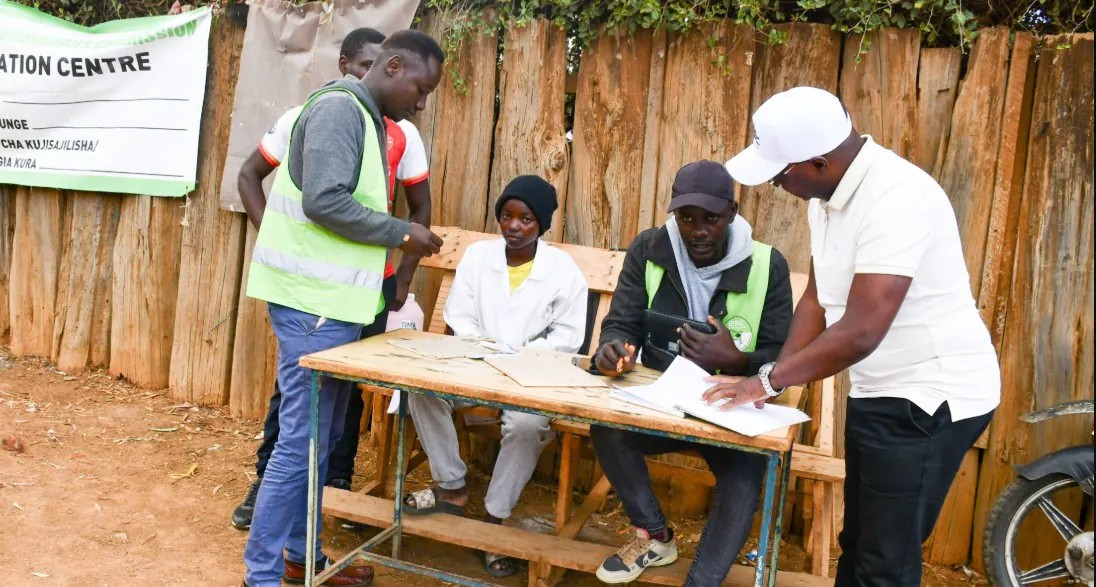
The Independent Electoral and Boundaries Commission (IEBC) of Kenya has issued a statement denying allegations of a scheme to transfer voters across the Kenya-Uganda border in preparation for the 2027 General Election. The commission described the claims as unsubstantiated and lacking credible evidence. According to the IEBC, voter registration is proceeding lawfully across all 290 constituencies, taking place at designated and gazetted centers overseen by trained officials under the supervision of Registration Officers.
The allegations in question focused on the Suam border area in Trans Nzoia County and were amplified by a KTN teaser suggesting that voter registration materials were being moved into Uganda. The claims have sparked concern among opposition figures, including Trans Nzoia Governor George Natembeya and Wiper Patriotic Front leader Kalonzo Musyoka. They have repeatedly expressed worries about the integrity of the registration exercise in counties bordering Uganda.
The IEBC has clarified that it does not issue national identity cards or passports, as these responsibilities lie with other state agencies. This clarification was made to refute claims that foreigners were being given Kenyan IDs to vote. The commission emphasized that voter registration is confined to designated centers and is overseen by trained officials, ensuring the integrity of the process.
Opposition figures have voiced concerns about the potential for Ugandan residents to be issued Kenyan identity cards to vote in 2027. At a rally in Busia County, Kalonzo Musyoka alleged that such a practice was linked to a recent cross-border meeting of Kenya Kwanza leaders in Uganda, although he provided no evidence to support his claims. Democratic Party leader Justin Muturi called for the IEBC to summon Interior Cabinet Secretary Kipchumba Murkomen over remarks concerning Kenyans living along the Uganda border.
The IEBC has assured the public that it has implemented administrative and technological safeguards to ensure the integrity of the voter registration process. These safeguards include KIEMS kits that operate only within authorized electoral environments and can be activated solely by Registration Officers or delegated clerks with unique passwords. The commission affirmed that no KIEMS kit has been misplaced, intercepted, or moved to unauthorized locations.
The IEBC also addressed concerns about Kenyans residing abroad, including in Uganda, who retain constitutional voting rights. The commission stated that diaspora registration is being progressively expanded, urging anyone with evidence of irregularities to submit it for investigation. This move aims to enhance transparency and build trust in the electoral process.
The voter registration exercise continues across Kenya, with the IEBC urging citizens to participate and ensuring that the process is conducted in a lawful and transparent manner. The commission's efforts aim to maintain the integrity of the electoral process and address concerns raised by various stakeholders, including opposition figures and the general public.
Key points
- The IEBC has dismissed allegations of cross-border voter transfers and foreign registrations as unsubstantiated.
- The commission has implemented safeguards, including KIEMS kits, to ensure the integrity of the voter registration process.
- Kenyans residing abroad, including in Uganda, retain constitutional voting rights and can participate in the electoral process.