The Institute of Economic Affairs (IEA) in Ghana has rejected a proposal to extend the country's presidential and parliamentary terms from four to five years. According to the IEA, the current four-year term is sufficient for any government to deliver on its promises. The proposal, which was put forward by the Prempeh Committee, aims to give governments more time to formulate and implement policies. However, the IEA argues that governments should be able to hit the ground running and implement their programmes immediately upon assuming office.
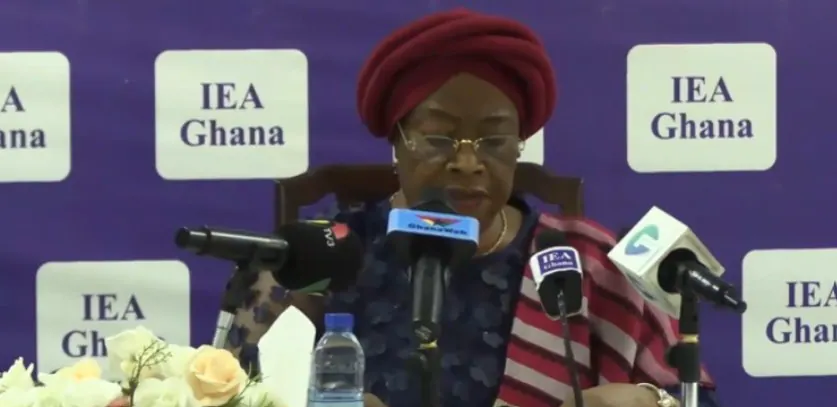
Former Chief Justice and IEA Fellow, Sophia Akuffo, stated that there is no compelling evidence to justify lengthening the current four-year mandate. She argued that political parties and prospective governments should complete their preparations long before taking office, rather than spending a significant amount of time settling in. Akuffo also criticized the slow pace at which some administrations have appointed ministers and other key officials in the past, saying that such delays eat into the time available for governments to execute their programmes.
The Prempeh Committee's proposal to extend the presidential term to five years is part of a broader package of constitutional reforms. The government has already accepted the proposal, arguing that an extra year would give administrations more breathing room to formulate, roll out, and evaluate policy before facing the electorate again. However, the IEA insists that governments should be sufficiently prepared to begin implementing their programmes immediately upon assuming office, without needing additional time built into the constitution.
This is not the first pushback against the proposal, with the NPP also opposing the extension of the presidential term to five years. Civil society groups have separately called for legislation to lock in whatever constitutional reforms are eventually agreed. Concerns have also been raised about other aspects of the reform push, including the underrepresentation of women in district assembly seats.
The length of the presidential and parliamentary term directly affects how often Ghanaians go to the polls and how long any single government's policies remain in force before voters can pass judgement. A shift to five years would mean fewer general elections over a given period, altering the rhythm of political accountability that Ghanaians have grown used to since 1992.
The IEA argues that policy discontinuity is not necessarily a result of the length of the electoral cycle, but rather weak institutions, poor planning, and the habit of successive governments scrapping or reshaping programmes started by their predecessors. The institute has suggested that strengthening the National Development Planning Commission (NDPC) could allow governments to achieve significant results within the existing four-year term while keeping the country on a common development path.
The IEA's objections to the proposal are set to be discussed further at a seminar examining the recommendations of the Prempeh Committee alongside the government's response to them. However, no timeline has been given for when a final decision on the term-length proposal will be made. The issue is likely to continue to be a topic of debate in Ghana's political landscape.
Key points
- The IEA argues that the current four-year term is sufficient for governments to deliver on their promises.
- The proposal to extend the presidential term to five years has faced opposition from various stakeholders, including the NPP and civil society groups.
- The length of the presidential and parliamentary term has significant implications for Ghana's democratic accountability and policy implementation.