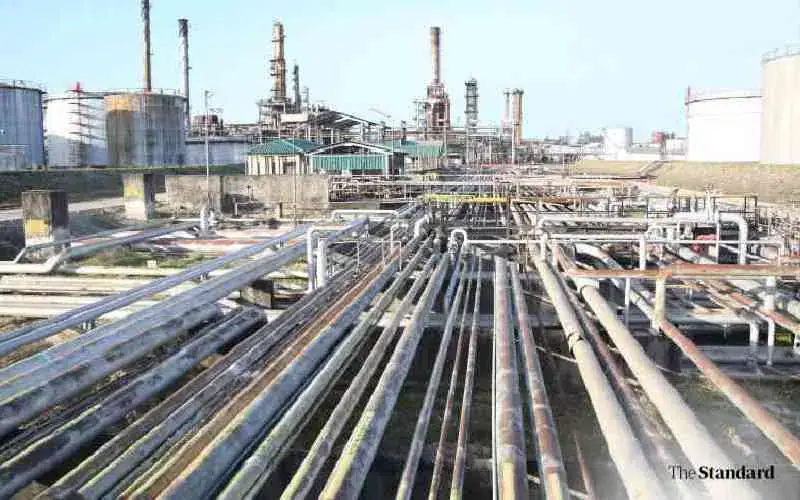
The Dangote refinery, set to be completed in Kenya, is expected to have a significant impact on the country's economy, with an estimated investment of Sh2.5 trillion, more than half the total investment at the Nairobi Stock Exchange. Listing 30% of the refinery will likely increase the NSE's capitalization, democratize wealth, and boost retail investor participation.
One of the refinery's key benefits will be reducing Kenya's costly refined petroleum import bills, which currently stand at approximately Sh628 billion annually, putting pressure on the country's foreign exchange reserve. In Nigeria, a similar refinery reduced the fuel import bill by 30% in 2025 and added $5 billion in export earnings.
However, experts argue that the government must proactively address potential disruptions caused by the refinery. Lamu County, where the refinery will be located, has a population of 150,000, and if half of the promised 60,000 jobs are sourced outside the county, the population is expected to increase by 50% in under five years, putting a strain on local infrastructure, including water, schools, and hospitals.
To mitigate this, the National and County governments should urgently develop a framework to fund essential services, including additional conditional transfers from the National government to accelerate capacity. The government should also provide incentives for private actors to invest in support systems, such as housing, to avoid calamitous pressure on services.
Another area of concern is the supporting infrastructure, particularly in the energy sector. Dangote has indicated that the refinery will add 500MW to the national grid, and KENGEN should ensure that the off-take for this power is in place in good time. KETRACO should also invest in transmission infrastructure to maximize the benefit of this power.
The refinery's impact on green energy policy is also a concern, as it may complicate Kenya's roadmap to clean energy. The regulator should consider how to balance the policy contradictions. Furthermore, the refinery's monopoly status, producing 700,000 barrels a day, far beyond Kenya's needs, may disrupt the oil marketing industry and compress wholesale margins.
To address these challenges, a multisectoral investment committee, bringing together private sector, economists, county government, energy, and social development actors, may be necessary to predict and mitigate the refinery's disruptive impacts across various sectors.
Key points
- The Dangote refinery is expected to have a significant impact on Kenya's economy, but experts warn of potential disruptions that need to be addressed.
- The government must proactively address concerns around infrastructure, energy, and industry disruption to maximize the benefits of the refinery.
- A multisectoral investment committee may be necessary to predict and mitigate the refinery's impacts.
Reporting sources
- Identify disruptive impacts of Lamu refinery, find solutions · The Standard