The Inter-Governmental Action Group Against Money Laundering in West Africa (GIABA) recently organized a National Annual Public Lecture Series on Anti-Money Laundering and Combating the Financing of Terrorism (AMF/CFT) Awareness. The event, held at Nile University of Nigeria in Abuja, aimed to raise awareness about money laundering and its impact on the West African region. The lecture was attended by dignitaries, including the Chairman of the Independent Corrupt Practices and other Related Offences Commission (ICPC), Professor Bolaji Owasanoye.
Professor Owasanoye, in his keynote address, emphasized that corruption is a long-standing crime that has hindered the growth and development of the region. He stressed the importance of partnering with academia to incorporate anti-money laundering messages into university curricula. This, he believes, will help train young ambassadors to champion the cause of anti-money laundering. The ICPC chairman suggested that courses on money laundering and terrorist financing should be infused into universities' academic curriculum.
Mr. Ayo Olowoniyi, representing the Economic and Financial Crimes Commission (EFCC), presented a paper titled "Milestones in the Fight against Corruption and Money Laundering in Nigeria." He noted that the EFCC has worked tirelessly to reduce corruption and money laundering incidents in Nigeria. Olowoniyi highlighted that Nigeria has demonstrated its commitment to progressive actions against corrupt individuals since 1975, when it established the Public Complaints Commission.
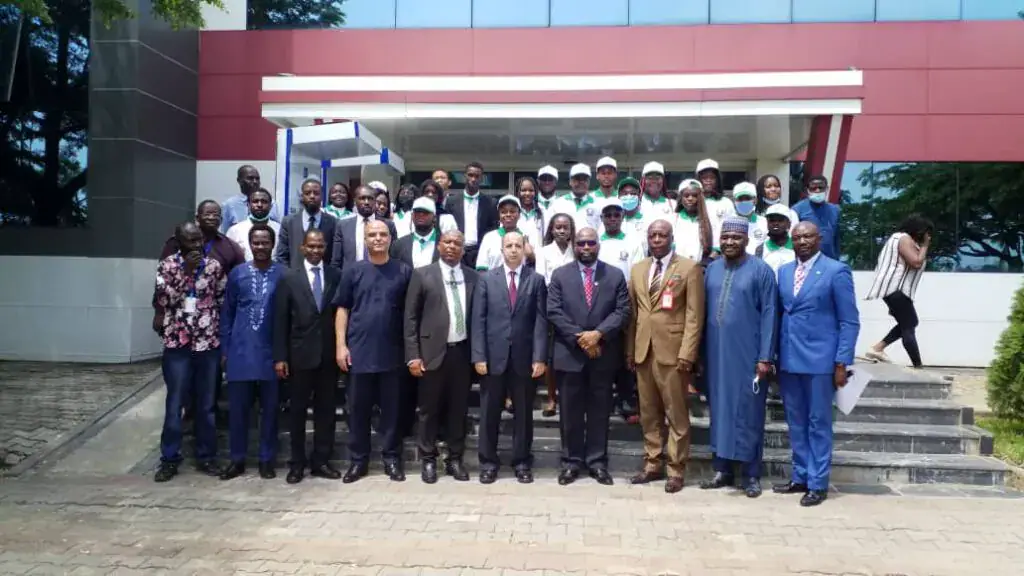
The lecture series was attended by students and lecturers from Nile University of Nigeria, as well as representatives from the University of Lagos, University of Nigeria, and Nasarawa State University, who joined virtually due to COVID-19 protocols. The event featured dignitaries, including the Chairman of the EFCC, Mr. Abdulrasheed Bawa, and the Director General of GIABA, represented by the Director of Policy and Research, Mr. Muazu Umaru.
The push for anti-corruption education in Nigerian universities is a significant step towards combating corruption and financial crimes in the country. By incorporating courses on money laundering and terrorist financing into university curricula, students will be equipped with the knowledge and skills to champion the cause of anti-money laundering. This initiative is expected to have a positive impact on the country's development and growth.
The ICPC and EFCC's efforts to involve academia in the fight against corruption and money laundering are commendable. By working together, these institutions can help create a society that is more aware of the dangers of corruption and financial crimes. The incorporation of anti-corruption courses into university curricula will also help to build a stronger and more effective anti-corruption movement in Nigeria.
The collaboration between the ICPC, EFCC, and GIABA is a testament to the government's commitment to tackling corruption and financial crimes in Nigeria. The National Annual Public Lecture Series on AMF/CFT Awareness is an initiative that will help to raise awareness and promote education on anti-money laundering and corruption. This will ultimately contribute to the country's development and growth.
Key points
- The ICPC and EFCC are pushing for Nigerian universities to incorporate anti-money laundering and corruption courses into their curriculum.
- The initiative aims to equip students with the knowledge and skills to champion the cause of anti-money laundering.
- The collaboration between the ICPC, EFCC, and GIABA is a significant step towards combating corruption and financial crimes in Nigeria.
Reporting sources
- ICPC, EFCC Want Universities to Teach Anti-Corruption · The News Journal