Nigeria's cities are dotted with buildings that have become iconic landmarks. These structures, varying in size and design, have been shaped by the country's history, culture, and economic evolution. From Lagos' old towers and churches to Abuja's grand government buildings and Ibadan's historic Cocoa House, these architectural marvels offer a glimpse into Nigeria's past and present. Many of these buildings have been around for decades, while others are relatively new, reflecting the country's growth and development. They demonstrate how architecture has changed across Nigeria, with different ambitions behind the buildings that have shaped its cities.
One of Nigeria's most recognizable buildings is the NECOM House in Lagos. Completed in 1979, this 32-storey building stands 160.3 meters above Marina, featuring a tall telecommunications spire that gives it a distinctive shape. Originally known as the NITEL Building, it was constructed as a telecommunications center and was a major statement in a rapidly developing city. At the time of its construction, the building's size and design made it a prominent landmark in Lagos. NECOM House remains one of the easiest buildings to identify on the Lagos skyline, symbolizing the city's growth and modernization.
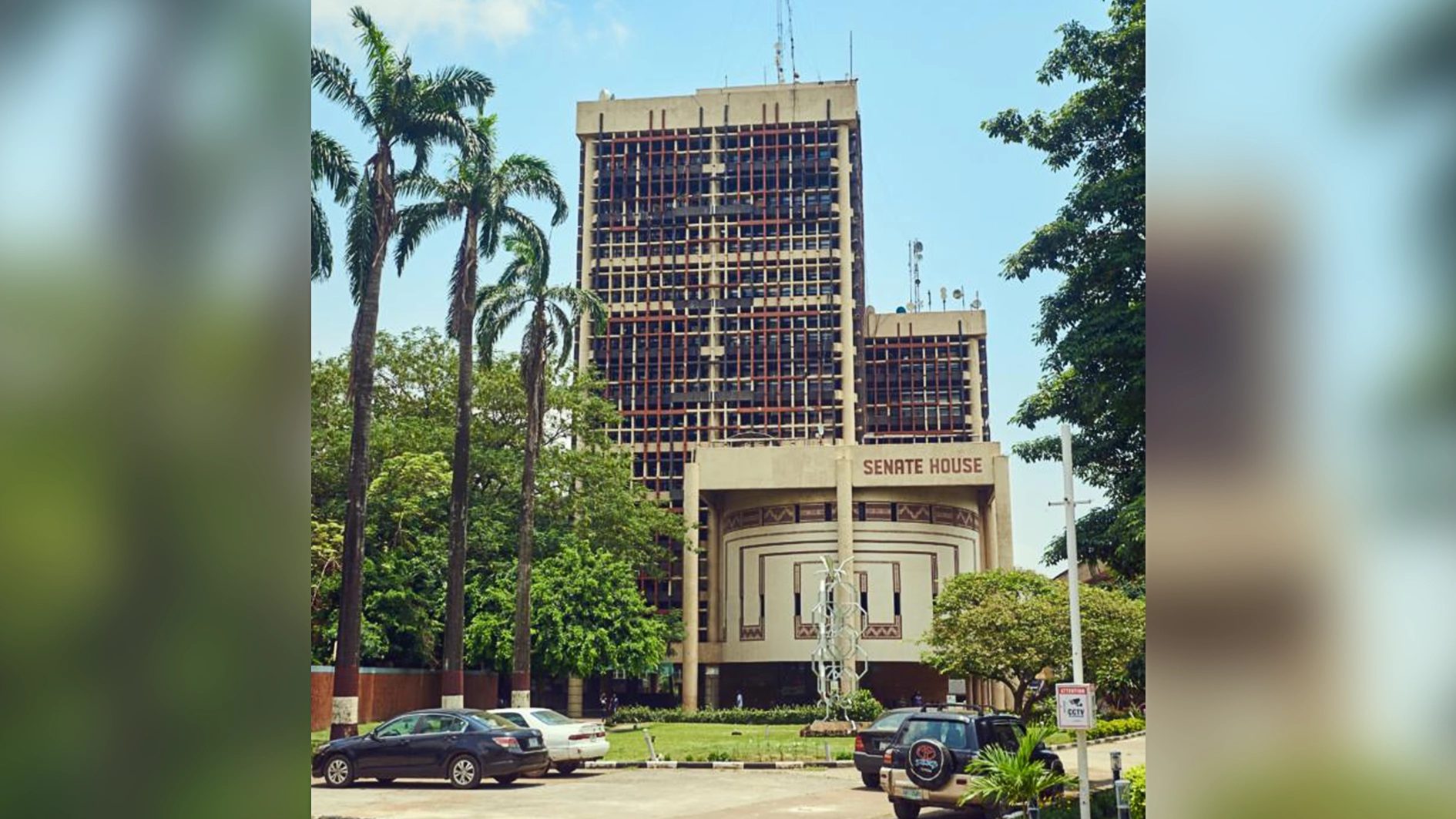
The University of Lagos's Senate Building is another iconic structure that students and visitors find hard to miss. Designed in 1980 and completed in 1985, the 14-storey building features a striking concrete facade with deep external sun-shading elements. The building houses executive offices, administrative spaces, and the university's Senate chamber, showcasing modernist architecture with strong geometric lines and exposed concrete. More than 40 years after its completion, the Senate Building remains one of the most recognizable structures on the UNILAG campus, reflecting the university's commitment to modern design and functionality.
The Cathedral Church of Christ in Lagos is a historic landmark that dates back to the 19th century. The present cathedral, designed in the Norman Gothic style, was laid in 1924 and completed in 1946. Its pointed arches, stonework, stained-glass windows, and tall tower give it a European appearance, standing out in one of Nigeria's busiest commercial districts. The cathedral has been a significant religious and cultural center in Lagos, with its architecture serving as a reminder of the city's rich history. Surrounded by modern offices and high-rise buildings, the cathedral remains a prominent landmark in the city.
The National Theatre in Lagos is one of Nigeria's most recognizable buildings from a photograph. Its huge curved exterior, often compared to a military cap, has been part of the Lagos landscape since the 1970s. Constructed between 1973 and 1975, the building was inspired by the Palace of Culture and Sports in Varna, Bulgaria. The complex includes an auditorium, exhibition halls, cinemas, and other spaces for cultural events, making it a significant cultural hub in Nigeria. The National Theatre has hosted numerous events, including FESTAC '77, and remains an iconic symbol of Nigerian culture.
Abuja's National Mosque is another defining landmark in Nigeria's capital city. Completed in 1984, the mosque features a golden dome and four minarets, standing along Independence Avenue. The complex includes facilities such as a library and conference spaces, making it a significant religious and cultural center. The mosque's central location makes it particularly noticeable, with its dome visible from several parts of Abuja. The National Mosque has become an integral part of Abuja's architectural character, reflecting the city's rich cultural heritage.
Other notable landmarks in Nigeria include the Cocoa House in Ibadan, completed in 1965, which was the first skyscraper in West Africa, and the World Trade Centre, Tower 2, in Abuja, completed in 2017. These buildings, along with others, have shaped Nigeria's cities and demonstrate the country's growth and development. They reflect the country's rich architectural heritage, showcasing a blend of modern and traditional designs. From Lagos to Abuja and Ibadan, these iconic buildings have become an integral part of Nigeria's identity and cultural landscape.
Key points
- NECOM House in Lagos is one of Nigeria's most recognizable buildings, symbolizing the city's growth and modernization.
- The National Theatre in Lagos is a significant cultural hub, hosting numerous events and serving as an iconic symbol of Nigerian culture.
- The National Mosque in Abuja is a defining landmark, reflecting the city's rich cultural heritage and architectural character.