The International Court of Justice (ICJ) on November 19, 2026, ruled that Myanmar had committed genocide against the Rohingya people. This historic decision marks the first time the Court has recognized a state's responsibility for committing genocide. The case was brought to the ICJ by Gambia, a Muslim-majority country in Africa, with the support of the Organization of Islamic Cooperation (OIC). The ICJ's ruling is a significant victory for the Rohingya people, who have faced persecution and violence in Myanmar.
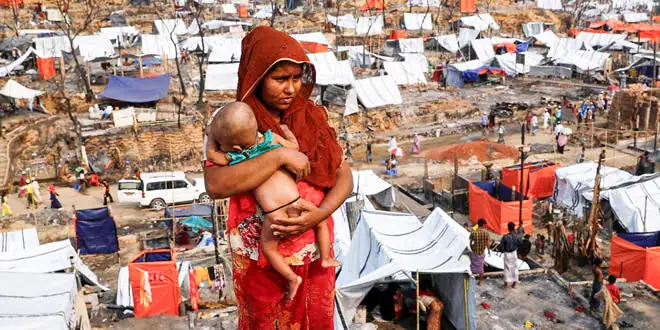
The Rohingya people have faced severe persecution in Myanmar, with thousands killed, villages destroyed, and over 700,000 forced to flee to Bangladesh. The Myanmar military has continued to deny the Rohingya people's right to citizenship, referring to them as "Bengalis." This stance raises concerns about the military's willingness to implement the ICJ's ruling and allow the refugees to return home safely. The ICJ's decision highlights the role of Islamophobia in legitimizing violence against the Rohingya people.
The ICJ's ruling is part of a larger historical context. The colonial conquest, military interventions, and attacks on the sovereignty of predominantly Muslim populations have often been justified by portraying them as a threat to civilization. This rhetoric dehumanizes the targeted populations, criminalizes their resistance, and presents the violence inflicted upon them as legitimate. The situation in Palestine is another manifestation of this logic, where the construction of a "Muslim danger" is used to justify dispossession, mass violence, and political erasure.
The ICJ's decision is a significant step towards holding states accountable for their actions. The Gambia's initiative demonstrates that southern states can mobilize international law to recognize a state's responsibility and give judicial weight to the claims of victims. The struggle against Islamophobia is an integral part of decolonization, and a just and equal international order requires that the lives and sovereignty of Muslim peoples receive the same protection as those of all other peoples.
Osman Mahomed, the current minister of Mauritius, had spoken out against the atrocities committed against the Rohingya people in 2017. In a letter to Aung San Suu Kyi, the de facto leader of Myanmar, Mahomed condemned the persecution and called for immediate intervention. The ICJ's ruling gives new relevance to this correspondence, highlighting the importance of speaking out against injustice and holding leaders accountable for their actions.
The ICJ's decision has significant implications for the Rohingya people. The ruling acknowledges their persecution and paves the way for reparations and a safe return to their ancestral lands. The decision also challenges the discourse that has made their persecution acceptable. The Gambia's action serves as a reminder that peoples who have been marginalized for centuries can demand accountability before international justice.
The situation in Myanmar and Palestine highlights the need for a more nuanced understanding of the complexities of international relations. The ICJ's ruling serves as a reminder that the international community has a responsibility to protect vulnerable populations and hold states accountable for their actions. The struggle for justice and equality is ongoing, and the ICJ's decision is a significant step towards a more just and equitable world order.
Key points
- The ICJ's ruling marks the first time the Court has recognized a state's responsibility for committing genocide.
- The Gambia's initiative demonstrates that southern states can mobilize international law to recognize a state's responsibility and give judicial weight to the claims of victims.
- The struggle against Islamophobia is an integral part of decolonization, and a just and equal international order requires that the lives and sovereignty of Muslim peoples receive the same protection as those of all other peoples.
Reporting sources
- Le jugement sur les Rohingyas confirme les motivations islamophobes · starpress.info