The International Court of Justice delivered a landmark ruling on November 19, 2026, finding Myanmar guilty of committing genocide against its Rohingya Muslim population during the 2017 clearance operations in northern Rakhine State. The 9-6 decision, delivered at the Peace Palace in The Hague, established that Myanmar committed acts under Article II (a), (b), and (d) of the Genocide Convention with intent to destroy a substantial part of the Rohingya population. ICJ President Yuji Iwasawa stated that Myanmar acted with clear intent to destroy a substantial part of the Rohingya during the crackdown.
The ICJ cited credible estimates that between 730 and 2,109 Rohingya children under five died from violence during the clearance operations. The court also referred to an estimate of 10,000 Rohingya deaths during the operations, finding credible evidence backing estimates that the military murdered approximately 10,000 Rohingya civilians — about 1.2 percent of the community — in summer 2017. The court found that decades of discriminatory legislation and a military-sponsored hate speech campaign created an atmosphere conducive to the 2017 violence.
The ICJ found that restrictions on marriages and births in Maungdaw Township, where nearly 500,000 Rohingya lived, plus at least 1,834 rapes during the 2017 operations, established intent to prevent births. The court found Myanmar imposed deliberate measures intended to prevent births within the Rohingya population. The court rejected Myanmar’s argument that its forces conducted legitimate counter-insurgency operations, instead finding that approximately 392 of 993 villages across three townships in northern Rakhine State were partially or completely destroyed during and after the 2017 operations.
The ICJ ruled that Myanmar violated its obligation to prevent genocide under Article I of the Convention. It also found Myanmar violated its obligation to punish genocide and other acts listed under Article III, and that Myanmar failed to enact legislation necessary to give effect to the Genocide Convention. The court found that Myanmar knew or should have known of a serious risk of genocide by non-Rohingya civilians alongside its security forces and manifestly refrained from acting.
The ICJ ordered Myanmar to provide assurances and guarantees that it would not repeat the violations. It ordered Myanmar to investigate all persons reasonably suspected of involvement in the 2017 clearance operations and to prosecute and punish them where warranted. The court also ordered Myanmar to facilitate the safe, voluntary, and dignified return of displaced Rohingya, ensure family reunification, and pay reparations.
The court declined to order Myanmar to grant citizenship to every Rohingya as part of the remedies in this case. It did not set a final compensation figure and reserved the amount and modalities of compensation for a later stage. Myanmar was directed to submit a report within two years. The Gambia will have to return to the court in later proceedings to submit reparations claims on behalf of victims.
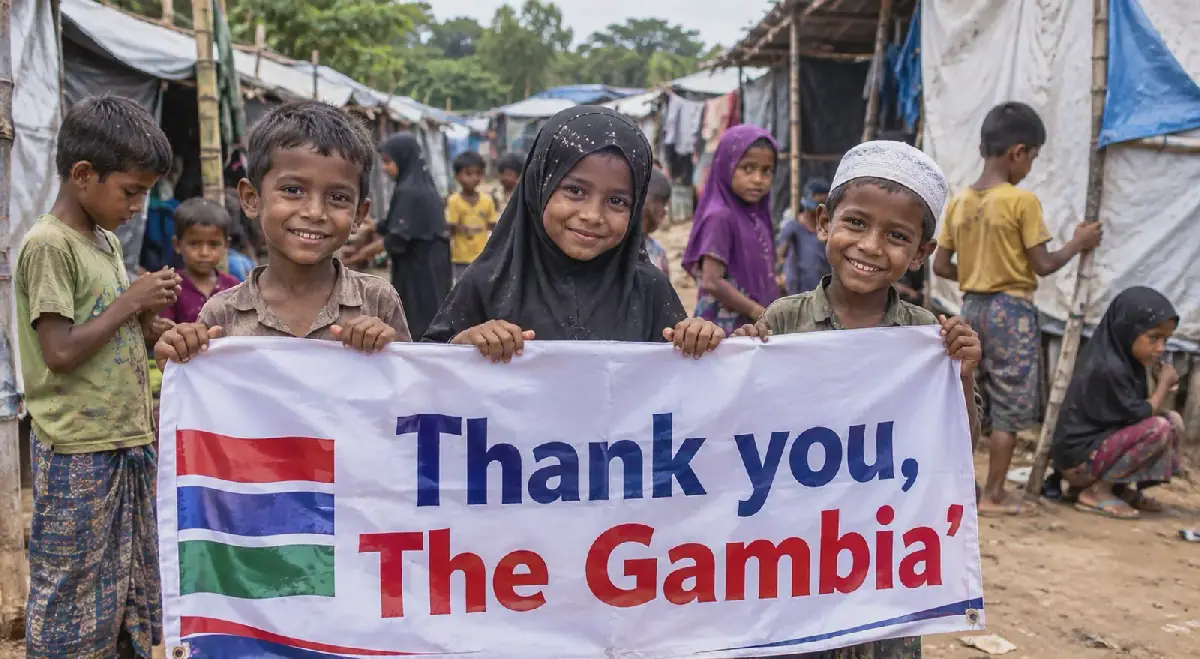
Gambian Attorney General and Minister of Justice Dawda Jallow said the victory belongs to the Rohingya. The January 2020 provisional measures order requiring Myanmar to prevent acts of genocide and preserve evidence preceded the merits ruling. The case was instituted by The Gambia on November 11, 2019, under the Genocide Convention, having filed the case in November 2019 on behalf of the Organization of Islamic Cooperation.
Key points
- The ICJ found Myanmar committed genocide against the Rohingya in 2017, establishing intent through evidence of civilian murders, systematic rape, and birth restrictions.
- The court ordered Myanmar to provide assurances and guarantees that it would not repeat the violations and to pay reparations to the Rohingya.
- The Gambia will have to return to the court in later proceedings to submit reparations claims on behalf of victims.
Reporting sources
- ICJ Finds Myanmar Committed Genocide Against Rohingya, Orders Reparations, Return · West Africa News Agency