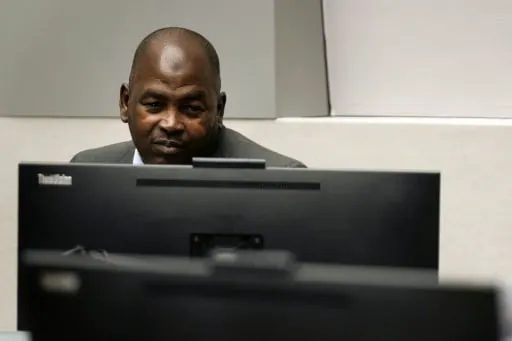
The International Criminal Court is scheduled to hand down its verdict on Wednesday against Mahamat Said Abdel Kani, a 56-year-old former rebel commander from the Central African Republic. Said faces seven counts of war crimes and crimes against humanity for atrocities allegedly committed during the country's civil war in 2013. He was a top commander of the mainly Muslim Seleka rebel group that ousted President Francois Bozize, plunging the country into a sectarian conflict.
Said allegedly ran the Central Office for the Repression of Banditry detention centre in the capital Bangui, where horrific acts of torture and deprivation were inflicted on prisoners. ICC judges confirmed the charges against Said, citing allegations of prisoners being whipped with horsehide whips or sticks with metal wires, burned, or having their ears pulled with pliers and partially ripped off. A frequently used torture method was "arbatachar", where prisoners' hands, elbows, and feet were tied tightly together behind their backs.
Conditions in the prison were dire, with small and overcrowded cells that were hot and dark with no air holes or windows. Prisoners were denied food or water, and some drank their own urine out of thirst. There was a cell dubbed "the hole" directly under Said's office, where people were held in "dreadful conditions". The ICC described this cell as dark and so small that detainees were prevented from lying down, with the floor covered with waste, faeces, and urine due to the absence of access to hygienic facilities.
Said, sometimes known by his subordinates as "Colonel", oversaw the maltreatment of prisoners and personally participated in the beating of at least one prisoner. He has pleaded not guilty to all charges, allegedly carried out between April and August 2013. Then-chief prosecutor Karim Khan told judges it was "as straightforward a case as is likely to come before this court". Khan alleged that Said encouraged, facilitated, and participated in the beatings and mistreatment.
The Seleka overthrow of Bozize sparked a catastrophic civil war in the country, with thousands of civilians losing their lives and war crimes alleged on both sides. Bozize set up militias dominated by Christians and animists, known as "anti-Balakas", to regain power. French troops under a UN mandate helped the government secure the main cities from 2014. The country has stabilised since a peace agreement was signed in Khartoum in 2019.
President Faustin-Archange Touadera has won three terms in office, touting his efforts to steady the nation after decades of conflict. The ICC has previously convicted top anti-Balaka figures for war crimes, including ex-sports minister Patrice-Edouard Ngaissona and former MP Alfred Yekatom. Yekatom was sentenced to 15 years behind bars for 20 war crimes and crimes against humanity, while Ngaissona received 12 years for 28 counts of war crimes and crimes against humanity.
The ICC, set up in 2002, is the world's only independent tribunal capable of prosecuting those accused of the world's worst crimes. The court's verdict on Said will be a significant development in the country's efforts to hold accountable those responsible for atrocities committed during the civil war. The ICC's work in the Central African Republic is ongoing, as the country continues to rebuild and recover from years of conflict.
Key points
- The International Criminal Court is set to deliver its verdict on Mahamat Said Abdel Kani, a former Central African Republic rebel commander accused of war crimes and crimes against humanity.
- Said faces seven counts of war crimes and crimes against humanity for atrocities allegedly committed during the country's civil war in 2013.
- The ICC has previously convicted top anti-Balaka figures for war crimes, including ex-sports minister Patrice-Edouard Ngaissona and former MP Alfred Yekatom.