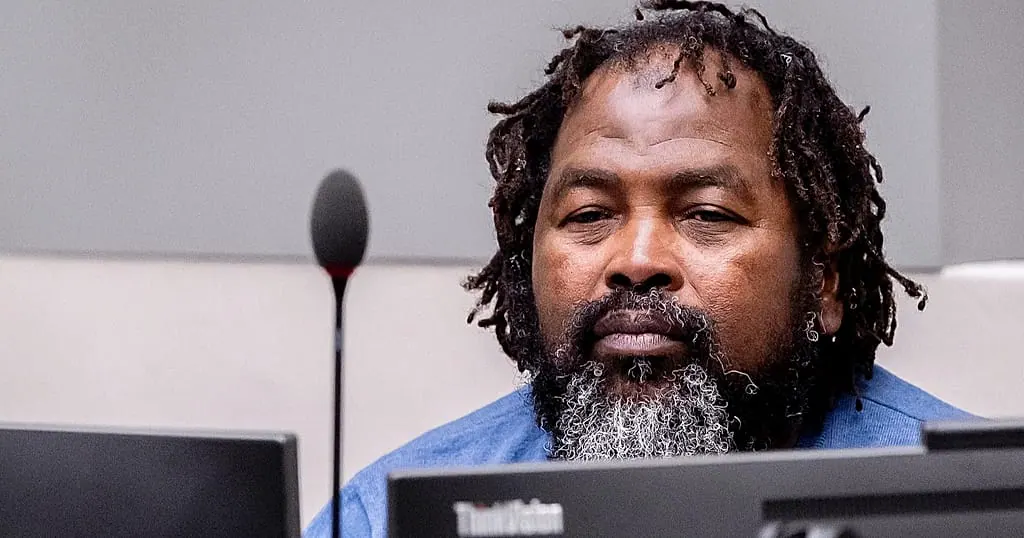
The International Criminal Court convicted Mahamat Said Abdel Kani, a former Seleka rebel group commander, of crimes against humanity on Wednesday. The conviction stems from his role in abusing and torturing prisoners at a detention facility in the Central African Republic's capital, Bangui. Presiding Judge Miatta Maria Samba described the inhumane conditions detainees endured, including cramped cells with bullet holes and blood, and whipping until they soiled themselves.
During the trial, witnesses testified about the harsh conditions at the detention center. They described being confined in a windowless room under the floorboards of Said's office. The charges date back to fighting between the predominantly Muslim Seleka rebels and a mainly Christian militia called the anti-Balaka over a decade ago. Said, wearing blue jeans and a sweater, remained expressionless for most of the hour-long hearing.
The verdict was welcomed by victims and human rights organizations. Marius Olivier Trésor Poussinga, who was tortured at the detention center, told The Associated Press that the verdict is an "international recognition" of Said's crimes. He added that he can now sleep easier knowing that the court has acknowledged his suffering. The country's justice minister, Arnaud Djoubaye Abazène, also welcomed the verdict, stating that justice cannot be reversed in the Central African Republic.
Human rights organizations have praised the conviction as a significant milestone in the fight against impunity. Lewis Mudge, Central Africa director at Human Rights Watch, called the conviction a "significant milestone" but warned that the country still faces serious challenges. He emphasized the need for increased support for both international and domestic justice efforts to end the accountability gap that fuels recurring cycles of violence.
The International Criminal Court's investigation into crimes in the Central African Republic is likely coming to an end. In 2022, then-chief prosecutor Karim Khan announced he was closing the court's 15-year investigation, citing limited resources. Khan was removed from his post in July over allegations of sexual misconduct. The court has previously convicted two senior anti-Balaka leaders and acquitted former Congolese vice president Jean-Pierre Bemba on appeal.
A specially created court in the Central African Republic has also prosecuted defendants for war crimes and human rights abuses. The Special Criminal Court was established to try crimes committed during the coups and violence that the country has experienced since 2003. The court has indicted over 30 people, nearly all of whom are in custody, including former President François Bozizé, who is being tried in absentia.
The Special Criminal Court faces possible closure due to a lack of funding. The Trump administration withdrew US funding last year, and supporters are urging the United Nations and the European Union to help extend the court's mandate and provide funding. Amnesty International's regional director for West and Central Africa, Marceau Sivieude, warned that closing the court would be catastrophic for justice in the Central African Republic.
Key points
- The International Criminal Court convicted Mahamat Said Abdel Kani of crimes against humanity for abusing and torturing prisoners in the Central African Republic.
- The conviction is a significant milestone in the fight against impunity, but the country still faces serious challenges.
- The Special Criminal Court in the Central African Republic faces possible closure due to a lack of funding.