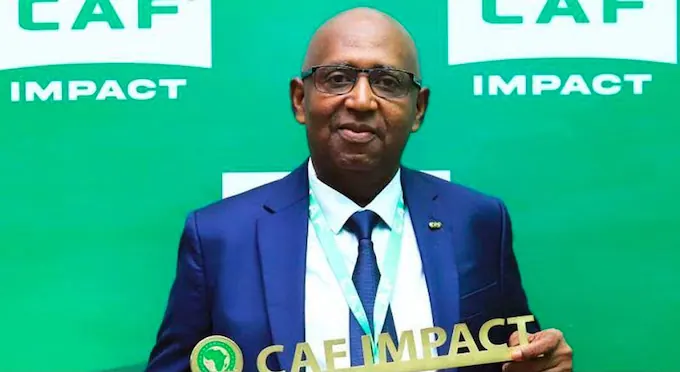
Following the CAF Strategy Conference in Cape Verde from October 7-9, 2026, Ibrahima Blasco Barry, Secretary-General of the Guinean Football Federation (FEGUIFOOT), has unveiled his priorities for transforming Guinean football. These priorities include enhancing training, optimizing national team performance, restructuring grassroots football, and modernizing governance. Barry emphasizes the need for profound structural reforms and synergy among all stakeholders in the sector. He notes that the challenge for FEGUIFOOT is to convert Guinea's talent pool into consistent sporting success.
Barry places formation at the center of his strategy, advocating for reinforced coach training, development of international-standard academies, promotion of school and amateur football, and special attention to women's football. These elements will form the foundation for better youth guidance and a system ensuring continuous progress. Beyond individual talents, Barry stresses preparing national teams through scientific approaches, including technical data analysis, personalized medical and athletic monitoring, and meticulous planning.
Restructuring grassroots football is another priority, with Barry emphasizing the need for regular local championships, better-structured professional clubs, and modern infrastructure. He insists that Guinea's ambitions cannot rely solely on national teams but must be built on credible championships, organized clubs, and effective governance. This vision aligns with efforts to create a sustainable football system.
To achieve these goals, Guinea will leverage technical and financial support programs from the Confederation of African Football (CAF) and FIFA. However, Barry notes that successful execution is crucial, and strategic alliances among public authorities, clubs, leagues, academies, the private sector, and international partners are necessary. He emphasizes that FEGUIFOOT cannot succeed alone.
Barry's vision for Guinean football involves building a development model based on a sustainable system that can regularly produce competitive teams. This approach contrasts with relying on sporadic individual successes. He believes that participation in the CAF Strategy Conference has reinforced the Federation's conviction that the future of Guinean football depends on quality training, governance rigor, and modernized working methods.
The Secretary-General highlights that the country's considerable talent pool must be nurtured through strengthened detection, training, and accompaniment mechanisms. He stresses that individual talent is essential but must be part of a coherent collective project founded on continuity, discipline, and performance expectations. This approach aims to ensure Guinean football's long-term success.
Ultimately, Barry's strategy aims to transition Guinean football from potential to tangible, lasting results. By focusing on these key areas and fostering collaboration among stakeholders, the Guinean Football Federation hopes to establish a robust and sustainable football system.
Key points
- The Guinean Football Federation will focus on enhancing training, optimizing national team performance, and modernizing governance to achieve sustainable success.