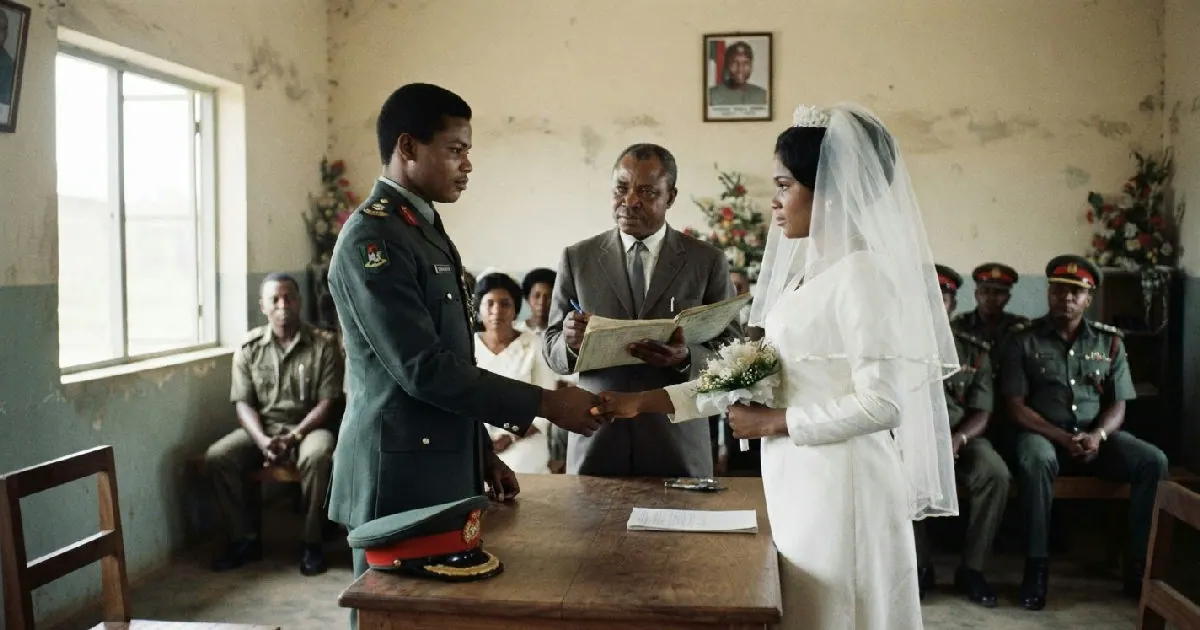
Major Ibrahim Babangida, then 28, and Maria Ndidi Okogwu, almost 21, formalized their union through a civil ceremony at the Marriage Registry in Kaduna on September 6, 1969. This was followed by Islamic marriage rites, reflecting their commitment. The wedding occurred during Nigeria's Civil War, which spanned from 1967 to 1970. Babangida, a Nigerian Army officer, was deeply involved in the conflict, adding gravity to his personal choice. The timing, just months before the war's conclusion in January 1970, underscored the resilience of private life amidst national upheaval.
Ibrahim Babangida first met Maria Okogwu in Kaduna through the Duba family. He recalled her as "stunning" with an "enchanting smile." Their connection deepened over time, continuing through Babangida's military training periods abroad in India and the United Kingdom. The pivotal moment arrived when Babangida, recovering from a battlefield injury at the Lagos University Teaching Hospital, proposed marriage. Maria initially harbored reservations, citing stories about his earlier "man about town" lifestyle. Her skepticism eventually yielded to his persistence, aided by her uncle, Muhammadu King.
Before their marriage, Maria converted to Islam, a requirement set by Babangida. He also assured her he would not take multiple wives, cementing their path forward. The Nigerian Civil War deeply impacted countless lives across the nation. Babangida's autobiography, A Journey in Service, vividly details his military experiences during this time. He recounts returning from the war front to continue wedding preparations, underscoring the personal sacrifices made by soldiers.
The wedding itself occurred while Babangida was still actively engaged in the conflict. He returned to the war front in December 1969, just a few months after his marriage. This narrative of personal commitment during national crisis highlights the complex realities faced by Nigerians. It was a testament to love and hope amidst widespread hardship and displacement. The marriage did not carry direct political weight at the time, but its historical importance lies in its biographical context.
Ibrahim Babangida's military career continued its ascent following his wedding. His path led him to the pinnacle of Nigerian power, profoundly affecting the nation's trajectory. After the December 1983 military coup that unseated President Shehu Shagari, Major General Muhammadu Buhari took power. Babangida quickly rose through the ranks, becoming Chief of Army Staff in January 1984.
Babangida's own military coup on August 27, 1985, removed Buhari from office, propelling him into leadership as Nigeria's Head of State. He governed until August 1993, stepping aside amid intense political turmoil following the annulled June 12 election. During his leadership, Babangida's administration introduced significant economic reforms, such as the Structural Adjustment Programme. These policies aimed to reshape Nigeria's economy, leaving a lasting impact on the nation's fiscal landscape.
As Babangida assumed power, Maryam Babangida stepped into the national spotlight as First Lady. She established a prominent public role, redefining the position during the military era. Her most enduring legacy remains the Better Life Programme for Rural Women, formally launched in September 1987. This initiative aimed to empower rural women, encouraging their participation in economic activities and addressing their social challenges. The programme brought critical attention to the plight of women in rural communities.
Key points
- The wedding between Ibrahim Babangida and Maria Ndidi Okogwu occurred during Nigeria's devastating Civil War, highlighting the resilience of private life amidst national upheaval.
- Babangida's military career continued its ascent following his wedding, leading him to become Nigeria's Head of State in 1985.
- Maryam Babangida's legacy as First Lady includes the Better Life Programme for Rural Women, which empowered rural women and addressed their social challenges.