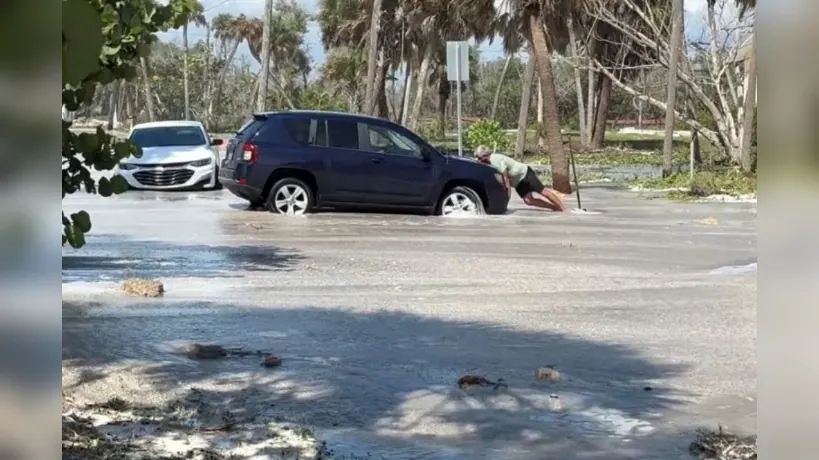
Hurricane Isaias struck the eastern and southern United States on Friday, making landfall as a Category 2 storm. The National Hurricane Center reported that the storm's eye made landfall near Destin, Florida, with maximum sustained winds of 169 kilometers per hour. The storm brought strong winds, heavy rainfall, and flooding to several states, including Alabama and Florida. This marks the first hurricane of the 2026 Atlantic hurricane season, which is unusually late.
The storm prompted emergency declarations in Florida, Alabama, and Georgia, with mandatory evacuations ordered for coastal and low-lying areas. Florida Governor Ron DeSantis urged residents to prepare and stay off the roads, citing the threat of flooding and storm surges. The US administration approved federal protection measures to coordinate relief efforts and address damage. President Donald Trump stated that White House officials were closely monitoring the storm's progress.
The storm's impact was felt across the region, with over 697,000 homes and businesses losing power in Florida, Alabama, and Georgia. The storm's strong winds, which reached speeds of up to 180 kilometers per hour in some areas, caused widespread damage. According to PowerOutage.us, nearly 380,000 people in Florida and over 210,000 in Alabama were left without electricity.
The storm's formation is considered exceptional, as it is the first hurricane to form in the Atlantic hurricane season after more than four months. This late formation is attributed to the El Niño climate phenomenon in the Pacific Ocean, which led to changes in wind patterns and ocean temperatures. The storm's unusual formation has drawn comparisons to a similar event in 1905.
The storm's economic impact was significant, with the energy sector affected by the suspension of oil and gas production in the Gulf of Mexico. The Bureau of Oceanic and Atmospheric Research reported that 63% of oil production and 57% of natural gas production were suspended. Major companies such as Shell and Chevron evacuated their personnel from offshore platforms and rigs.
As the storm continues to move northward, weather centers warn of the risk of flash flooding, secondary tornadoes, and coastal flooding. Residents are advised to stay in shelters and safe areas until the storm passes. The storm's impact is expected to be felt in several states, including Georgia and Tennessee.
The US government has deployed resources to support relief efforts, with the Federal Emergency Management Agency coordinating response efforts. The storm's aftermath will likely require significant recovery efforts, with damage assessments and relief efforts ongoing.
Key points
- The storm's late formation is attributed to the El Niño climate phenomenon in the Pacific Ocean.
- The storm caused widespread power outages, affecting over 697,000 homes and businesses.
- The storm's economic impact was significant, with the energy sector affected by the suspension of oil and gas production.