Around 125,000 years ago, southern Saudi Arabia was home to a vast freshwater lake in the Mundafan basin, surrounded by lush vegetation, grasslands, and diverse wildlife, including hippopotamuses, giant long-horned buffalo, camels, gazelles, and ostriches. The area was vastly different from the barren desert that exists today.
A recent study published in the journal Science reveals that Middle Paleolithic humans left behind thousands of stone tools and microscopic traces of plants, resins, and animal tissues along the shores of this ancient lake. The study suggests that some of these tools were components of composite hunting weapons, potentially coated with poisonous substances extracted from the Acokanthera schimperi plant, known for producing highly toxic compounds used to poison hunting weapons.
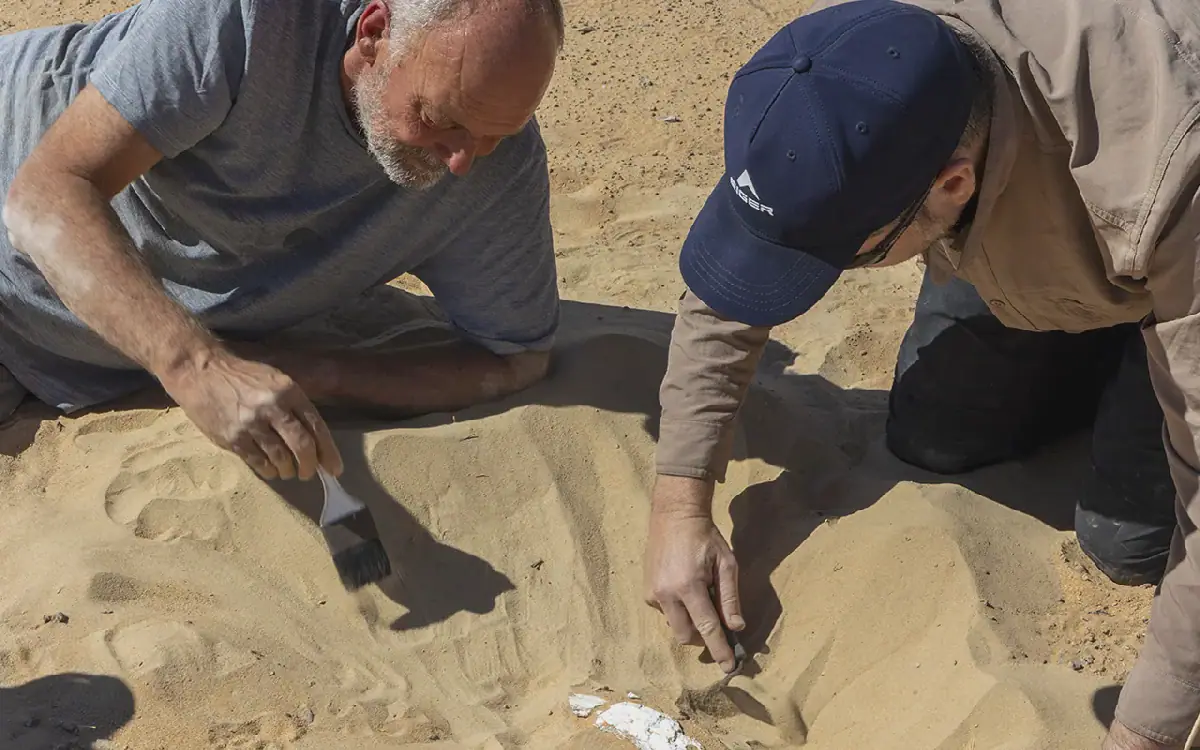
The research team, led by Professor Chris Clarkson, combined geological, archaeological, and biological evidence from the 'Uruq Aljelibah site on the southwestern edge of the ancient Mundafan basin to reconstruct the ancient lake and its surroundings. Using satellite imagery, field surveys, sediment dating, fossil analysis, and microscopic examinations of stone tools, the team found that the lake covered approximately 340 square kilometers and reached a maximum depth of around 29 meters.
The lake's relatively low salinity and stable conditions could have supported a diverse aquatic ecosystem, providing resources for human communities. The team documented over 500 plant and animal fossils across 130 locations, including 132 hippopotamus bone fragments, remains of extinct buffalo, camels, Arabian oryx, and gazelles, as well as over 100 fragments of ostrich eggshell.
Researchers collected 5,511 stone artifacts, many produced using the Levallois technique, a sophisticated method of preparing stone cores to produce flakes of predetermined shapes. Some stone points displayed fractures consistent with the impact of striking a target, while others preserved traces of resin and plant fibers near their bases, suggesting attachment to wooden shafts.
Chemical analyses identified plant-derived compounds associated with toxic cardiac glycosides on several stone points, linked to the Acokanthera schimperi plant. Other tools carried traces of plants such as juniper, colocynth, and ferns. The combination of independent clues strengthens the interpretation that these weapons may have been deliberately treated with poison.
The findings suggest that life around the ancient lake involved more than hunting, with evidence of plant processing, toolmaking, and the collection of food and raw materials. The lake functioned as an ecological hub where hunting, toolmaking, and plant processing took place, challenging the traditional view that the Arabian Peninsula's wetter periods were important mainly for creating green corridors.
Key points
- The study reveals that the Arabian Peninsula's wetter periods created productive landscapes where humans could live, repeatedly exploit local resources, and develop complex technologies.