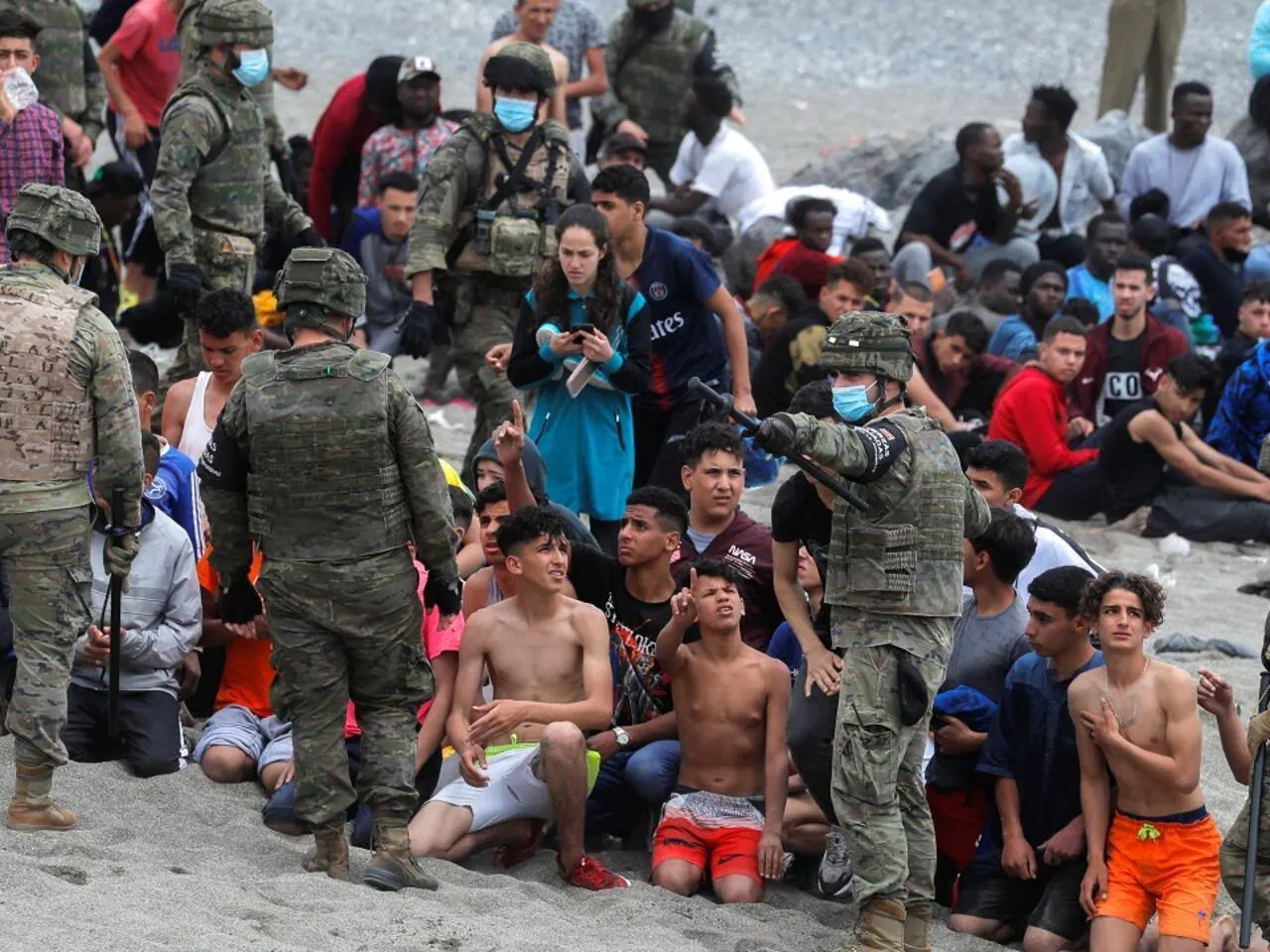
A large number of Moroccan migrants who crossed into the Spanish enclave of Ceuta in July have begun to return home voluntarily. According to reports from the Spanish media, many of these individuals had gathered at the border with Morocco after crossing the "Tarajal" fence. The migrants had embarked on this journey in late July, but it appears that many are now choosing to return to Morocco.
The decision to return home comes after Spanish authorities informed the migrants at the Temporary Foreigner Care Center (CATE) that their requests for international protection would not be processed. This decision has significant implications for the migrants, as it affects their legal status. The situation has been exacerbated by difficult circumstances, including homelessness and a lack of financial resources, which have been compounded by the onset of rain and the exhaustion of their financial means.
Spanish Minister for Territorial Policy and Democratic Memory, Ángel Víctor Torres, has praised the successful transfer of over 1,000 individuals from the "Trampoline" beach to authorized reception centers. The operation, which took place on Sunday, was completed without major security incidents and was carried out with "efficiency and precision." Torres emphasized that the authorities will continue to work to restore normalcy to the city and provide adequate facilities for those in need.
According to reports, around 600 Moroccan migrants have chosen to return home voluntarily after opting not to proceed with the registration and identification process at the CATE center. Some individuals have been transferred to the CATE center near the Tarajal border crossing to complete the necessary procedures, while others have chosen to return to Morocco via the border.
Official data from the Spanish Interior Ministry indicates that approximately 10,000 individuals have returned to Morocco since August 10. This represents an average of over 200 cases per day, as part of the Spanish authorities' plan to manage the large influx of migrants into Ceuta in late July. Despite this, the reception centers in Ceuta remain under significant pressure, with over 6,000 adults and 2,500 minors currently accommodated.
The situation in Ceuta remains complex, with many individuals still living in makeshift conditions or hiding in private spaces within the city. The exact number of people in these situations is unclear, highlighting the ongoing challenges faced by the authorities in managing the migration crisis.
The Spanish government has been working to address the migration crisis in Ceuta, with a focus on providing adequate facilities and support to those in need. The authorities have also been working to restore normalcy to the city and ensure public safety.
Key points
- Hundreds of Moroccan migrants have chosen to return home voluntarily after Spain rejected their international protection requests.
- The situation in Ceuta remains complex, with many individuals still living in makeshift conditions or hiding in private spaces within the city.
- Approximately 10,000 individuals have returned to Morocco since August 10, as part of the Spanish authorities' plan to manage the large influx of migrants into Ceuta.