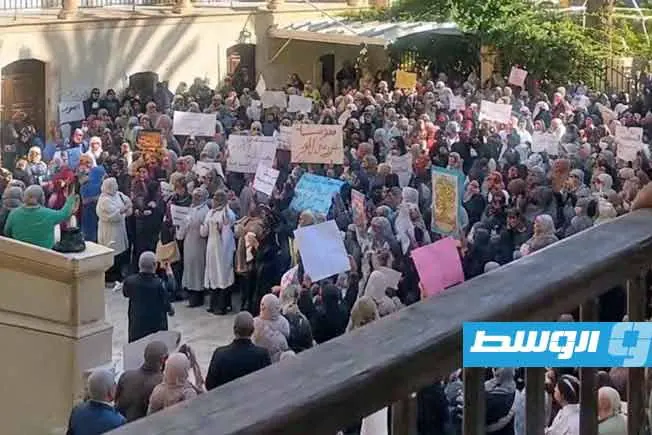
Hundreds of teachers in Libya staged a protest in front of the Education Ministry in Tripoli on Sunday, October 4, 2026. They carried signs demanding that authorities meet their demands and chanted "Libya, Libya, Libya." This is the fourth consecutive week of protests and school closures. The protests come as the Ministry of Education continues to listen to the teachers' demands.
The protests are a result of the teachers' union sending a message to Prime Minister Abdul Hamid al-Dbeiba, requesting that he implement their demands and fulfill promises made to them. The union announced a general strike in all Libyan schools, which has continued due to the government's inaction on the teachers' demands. The teachers are seeking unified salary scales, payment of financial differences due under Law No. 4, and comprehensive health insurance for themselves and their families.
The teachers also want to be paid a teaching allowance and have their employment contracts regularized. Prime Minister al-Dbeiba has called for a unified salary scale to address the disparities between public sectors in the country, emphasizing the need for social justice among employees. The issue has garnered international attention, with some describing the teachers' strike as a new wave of turmoil in Libya.
The strike has united the country, which has been divided for years. The teachers' demands are considered essential to improving their living conditions and providing better education to Libyan students. The government has been urged to take immediate action to address the teachers' concerns and prevent further escalation of the situation.
The protests have had a significant impact on the education sector, with schools closed for several weeks. The Libyan government has been criticized for its handling of the situation, with some accusing it of neglecting the needs of teachers and students. The situation remains tense, with no clear resolution in sight.
The international community has expressed concern over the situation, with some countries calling for a peaceful resolution to the crisis. The Libyan government has been urged to engage in dialogue with the teachers' union and find a solution that meets the demands of the teachers while ensuring the continuity of education.
The protests in Tripoli are a reflection of the broader challenges facing Libya, including economic instability and a lack of infrastructure. The government faces pressure to address the needs of its citizens, including teachers, who play a critical role in shaping the country's future.
Key points
- Libyan teachers are demanding better pay and improved working conditions.
- The protests have entered their fourth week, with schools closed and no clear resolution in sight.
- The international community has expressed concern over the situation, calling for a peaceful resolution to the crisis.