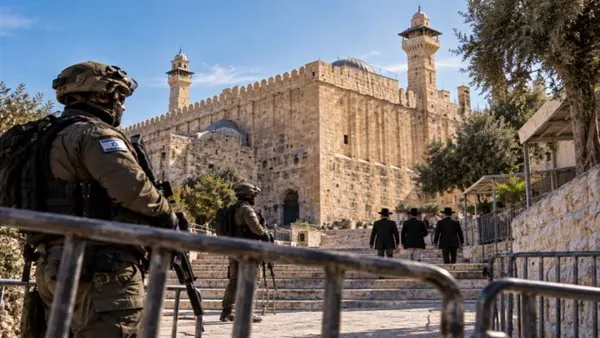
Hundreds of Israeli settlers stormed the Al-Ibrahimi Mosque in Hebron, West Bank, on Tuesday, September 29, 2026. The group, led by Israeli Minister Itamar Ben-Gvir and other far-right leaders, conducted a tour of the mosque's facilities. Israeli forces had increased their presence in the old city of Hebron, closing streets and neighborhoods to facilitate the settlers' visit.
The Israeli military closed the Al-Ibrahimi Mosque to Palestinians, preventing worshippers from accessing the site. The mosque's administrators and custodians were also barred from entering the premises. This marks the 100th time the call to prayer has been forbidden at the mosque. The incident has exacerbated tensions in the region, with many Palestinians expressing concern over the increasing presence of Israeli settlers and military personnel.
The storming of the Al-Ibrahimi Mosque has drawn widespread criticism from Palestinians and other observers. The mosque is considered a sacred site by Muslims and is a significant cultural and historical landmark in Hebron. The incident has raised concerns about the potential for further escalation and violence in the region.
Israeli forces have maintained a heavy presence in Hebron's old city, with snipers positioned on rooftops and checkpoints established throughout the area. The city has been effectively divided, with separate areas for Israeli settlers and Palestinian residents. This has severely restricted the movement of Palestinians, who are required to obtain permits to access certain areas.
The incident has sparked condemnation from Palestinian leaders and officials. The director of the Al-Ibrahimi Mosque has denounced the storming of the site, describing it as a "provocation" and a "violation of the sanctity of the mosque." The incident has also raised concerns about the role of far-right Israeli leaders in promoting tensions and violence.
The Israeli government has faced criticism for its handling of the situation in Hebron and other parts of the West Bank. The continued presence of Israeli settlers and military personnel in these areas has contributed to an atmosphere of tension and uncertainty. The incident has highlighted the need for a renewed focus on finding a peaceful resolution to the Israeli-Palestinian conflict.
The Al-Ibrahimi Mosque has been a focal point of tensions between Israelis and Palestinians for many years. The site is considered a sacred place of worship by Muslims and is also revered by Jews as the Tomb of the Patriarchs. The incident has underscored the complexities and challenges of managing this sensitive site and the need for greater understanding and cooperation between the two communities.
Key points
- Israeli settlers, led by far-right minister Itamar Ben-Gvir, stormed the Al-Ibrahimi Mosque in Hebron, prompting closure of site to Palestinians
- The incident has exacerbated tensions in the region, with many Palestinians expressing concern over the increasing presence of Israeli settlers and military personnel
- The Al-Ibrahimi Mosque has been a focal point of tensions between Israelis and Palestinians for many years