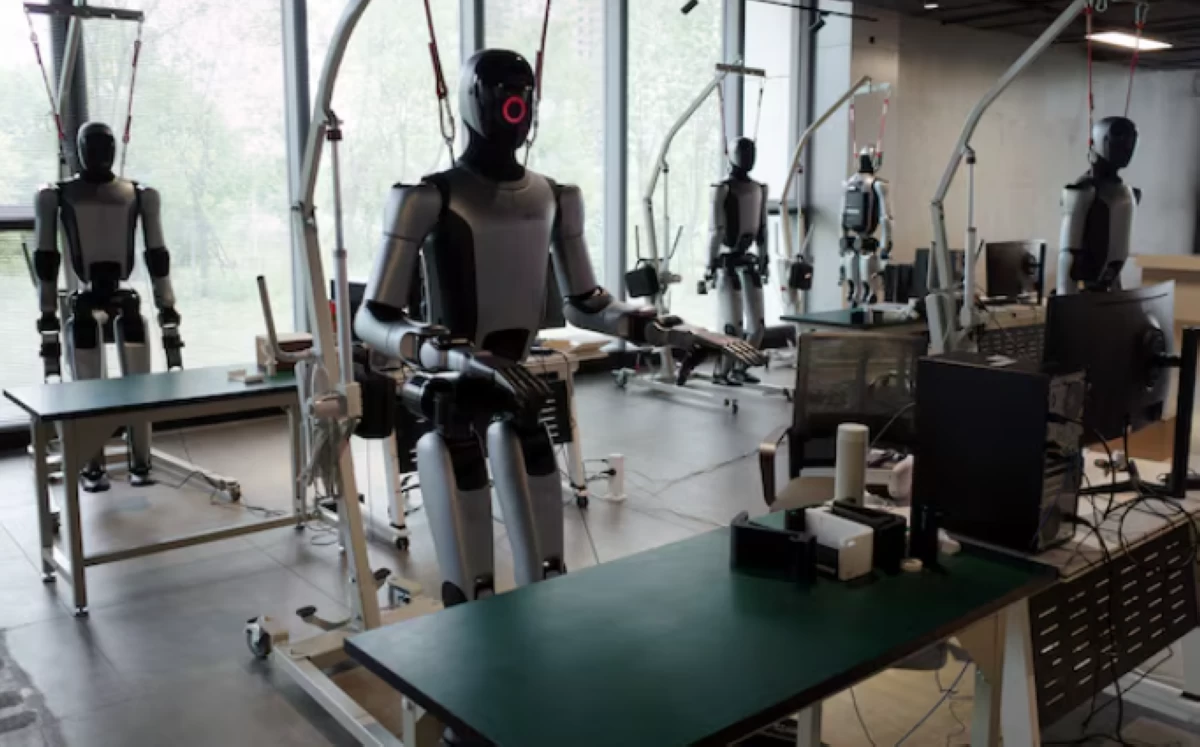
The International Federation of Robotics (IFR) reported that approximately 7,000 humanoid robots were sold worldwide in 2025 for industrial and professional service applications. This number is significantly lower than expected, especially when compared to the projected massive commercial boom in the coming years. The IFR, based in Frankfurt, provides industry-wide benchmarks for a sector attracting substantial venture capital and generating high-profile viral demonstrations.
According to the IFR, a humanoid robot is defined as a machine with a human-like appearance that operates autonomously in environments designed for humans. Notably, legs are not a strict prerequisite for a robot to be classified as humanoid. The IFR's dataset offers one of the first comprehensive benchmarks for the sector. Susanne Bieller, Secretary General of the IFR, stated that humanoids currently represent a "tiny fraction" of the global robotics market.
In comparison to humanoid robots, the IFR reported that around 542,000 conventional industrial robots were installed globally in 2024. Additionally, an estimated 199,000 professional service units were deployed across transportation, hospitality, and cleaning. The IFR is set to publish its full 2025 industrial and service robotics figures on September 24.
Early adoption of humanoid robots has centered on AI research and pilot projects. Bieller clarified that many of the humanoid units sold in 2025 were purchased by research institutions and technology firms to gather physical data for training advanced artificial intelligence models. Major automotive manufacturers, among the earliest commercial adopters, are currently testing humanoids in limited operational trials.
The Frankfurt-based IFR, which has published global automation statistics for three decades, began tracking humanoid robots specifically for the first time alongside its larger datasets for standard industrial and professional service units. The IFR's metrics are based on reported figures from global suppliers and national trade associations, excluding consumer and military humanoids.
Despite the current modest sales, future growth projections for humanoid robots remain aggressive. Bank of America Global Research estimates that humanoid robot shipments will reach 90,000 units this year and climb to 1.2 million by 2030. The IFR's data provides a benchmark for the rapidly evolving sector.
The IFR's classification of humanoid robots is distinct from other types of robots, with medical robots categorized separately. As the sector continues to develop, the IFR's data is expected to provide valuable insights into the growth and adoption of humanoid robots in various industries.
Key points
- Humanoid robot sales reached 7,000 worldwide in 2025.
- The IFR defines humanoid robots as machines with a human-like appearance that operate autonomously in human-designed environments.
- Aggressive growth projections estimate humanoid robot shipments will reach 1.2 million by 2030.