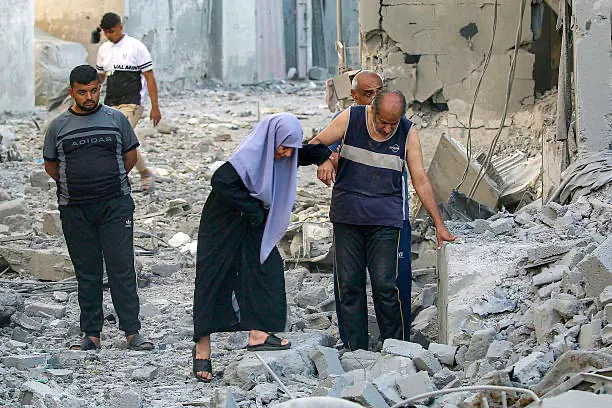
The humanitarian crisis in Gaza continues to deteriorate as hundreds of thousands of displaced families struggle with inadequate housing, while healthcare facilities face severe shortages of fuel and operating supplies. Local authorities and humanitarian organizations are warning about the risks associated with damaged buildings, some of which pose a direct threat to the lives of residents and displaced persons.
The Ministry of Social Development in Gaza has cautioned that the crisis of housing for displaced persons is worsening, with many tents and shelters deteriorating, and a persistent shortage of necessary supplies. The ministry has requested the urgent delivery of 200,000 new tents and 300,000 plastic tarps to meet the immediate needs of displaced families. According to ministry estimates, between 1.2 and 1.5 million displaced people currently live in overcrowded and exposed camps and shelters.
The Ministry of Social Development estimates that 70 to 80 percent of existing tents and shelters have been damaged or significantly degraded after prolonged use and exposure to the elements. This situation reduces the ability of families to protect themselves from rain, wind, and weather fluctuations. Authorities estimate that nearly half a million temporary housing structures are needed, including 200,000 tents and 300,000 tarps, to ensure a minimal level of protection for displaced populations.
The crisis is further highlighted by recent humanitarian assessments from the United Nations. According to the UN Office for the Coordination of Humanitarian Affairs (OCHA), nearly 1.98 million people, or 94 percent of Gaza's population, are in need of shelter and non-food item assistance. Some 58 percent of the population faces critical or catastrophic needs, while 84 percent of households experience severe restrictions on their living conditions.
UN assessments of 178,632 housing units in Gaza have shown that 107,941 homes, or nearly 60 percent, have been destroyed, severely damaged, or rendered uninhabitable. Meanwhile, basic repairs by humanitarian partners since the start of the year through August have only covered 627 units. The situation is particularly concerning, as some families are forced to live in damaged buildings due to a lack of alternatives.
The government media office in Gaza has attributed the collapse of the "Al-Saada" building, which resulted in over 21 Palestinian martyrs and dozens of injuries, to the Israeli occupation. The office stated that the building was directly bombed on October 9, 2023, causing significant structural damage. The office has warned of the risk of collapse of dozens of other cracked or severely damaged buildings, threatening residents, displaced families, and people in their vicinity.
In response to the crisis, the government media office has announced an emergency plan to evacuate and demolish 255 cracked and threatened buildings. The plan, led by the Ministry of Public Works and Housing, involves sending official notifications to owners of dangerous buildings, installing warning signs, and providing temporary housing solutions for affected families. However, the plan faces challenges, including a lack of financing, vehicles, and heavy equipment necessary for evacuation and demolition.
Key points
- Nearly 1.98 million people in Gaza are in need of shelter and non-food item assistance.
- 107,941 homes in Gaza have been destroyed, severely damaged, or rendered uninhabitable.
- Authorities estimate that nearly half a million temporary housing structures are needed to ensure a minimal level of protection for displaced populations.