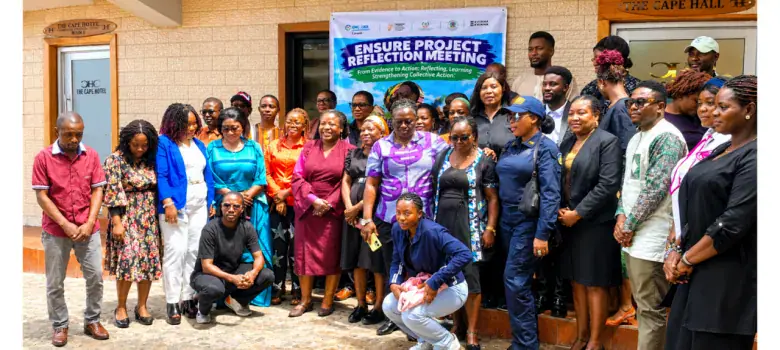
Human rights groups and officials gathered in Monrovia, Liberia, for a two-day reflection meeting to assess the impact of the ENSURE Project, which aimed to protect women human rights defenders. The project, which ran from November 2024 to October 2026, was funded by the International Development Research Centre (IDRC), the Embassy of Ireland, and other donors. The meeting, hosted by the Kvinna till Kvinna Foundation (KTK), brought together stakeholders to share experiences and discuss the challenges facing women activists in Liberia.
The ENSURE Project focused on research, advocacy, safety and security, and cross-border solidarity. It produced two country-specific research reports, identified gaps in legal and institutional protection, and developed advocacy plans. Project Lead Beatrice Newland said the project's main achievements included sharing research findings across six Liberian counties, engaging stakeholders on the proposed Human Rights Act, and delivering physical and digital security training for defenders. The project also facilitated exchanges between activists in Liberia and Sierra Leone, strengthening collaboration between the two countries.
KTK Country Director Korto Williams emphasized that the challenges facing human rights defenders are not ending, despite the project's conclusion. She described the work as a personal commitment and journey for many, rather than a nine-to-five job. Williams urged partners to strengthen systems, partnerships, and leadership to sustain the project's gains. She also thanked donors and partners for their support, including the IDRC, the Embassy of Ireland, and civil society partners.
The Embassy of Ireland's representative said Dublin's partnership with Liberia is based on the conviction that democracy is strongest when every citizen can participate in public life and when rights defenders can work with confidence and security. The representative commended KTK and the Nunn-Lai Research and Consulting Firm for convening the meeting and recalled an August policy dialogue that examined risks to defenders. The representative asked, "What has changed because of this work, and what must come next?"
Deputy Minister for Research, Policy and Planning at the Ministry of Gender, Children and Social Protection Curtis V. Dorley said protecting women and girls remains a national priority. He pointed to persistent violence and discrimination, including rape, child marriage, and female genital mutilation. Dorley also flagged technology-facilitated violence as a growing threat, citing online bullying, internet scams, and cyber fraud. He called for public awareness, effective enforcement of relevant laws, and accessible reporting mechanisms.
Dorley commended the Legislature for passing the Data Protection and Cybersecurity Act but urged advocates to push for the Women and Girls Protection Bill, which remains pending. He said the bill is vital to strengthening legal safeguards and the national response to gender-based violence. The Ministry, he said, remains committed to working with stakeholders to strengthen protection mechanisms, improve services for survivors, and promote women's leadership.
The meeting continues with participants expected to discuss how to sustain the project's gains after its conclusion. The project's lessons, including the need for flexibility, coordination, and context-specific approaches, will inform future efforts to protect women human rights defenders. Evidence-based advocacy and sustained partnerships, stakeholders agree, are essential to protecting defenders and advancing policy reform.
Key points
- The ENSURE Project's conclusion marks a critical juncture for women's rights advocacy in Liberia, as stakeholders must now sustain the project's gains without donor support.
- The project's research findings and advocacy plans have contributed to a growing body of evidence on the challenges facing women human rights defenders in Liberia.
- Stakeholders are calling for strengthened systems, partnerships, and leadership to protect women human rights defenders and advance policy reform.