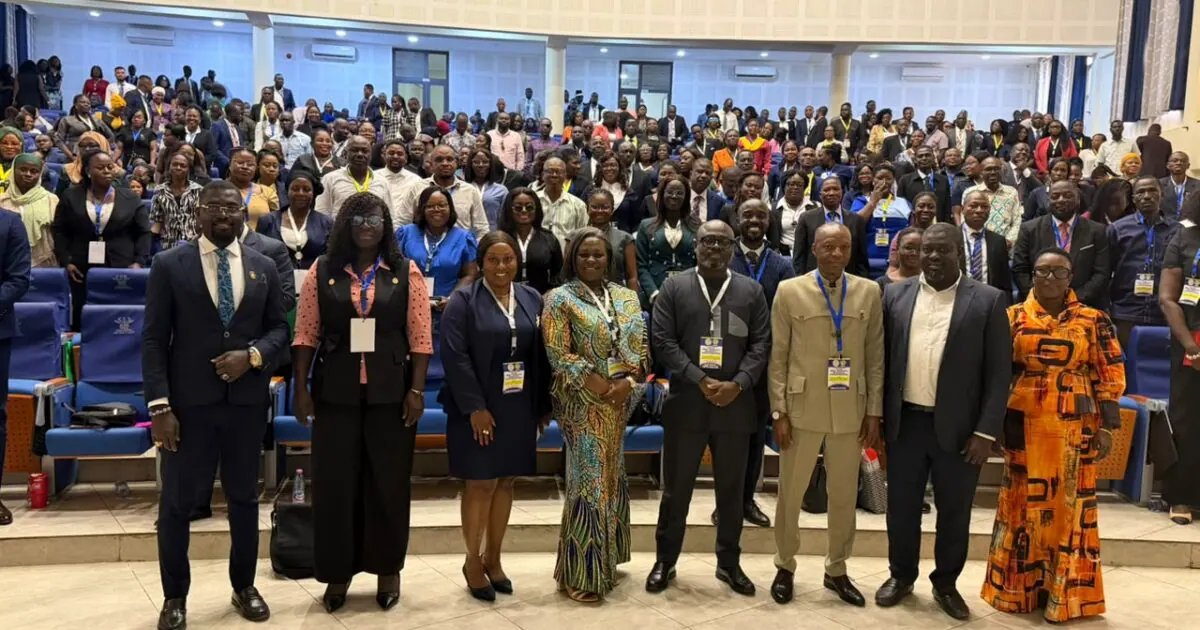
The Head of Ghana's Local Government Service, Professor Lord Mensah, has called on human resource practitioners to embrace the digital revolution to improve service delivery and efficiency. He made this statement at the 2nd Annual General Conference of the Human Resource Practitioners of Local Government Service–Ghana (HRPLGS-G) held in Kumasi. The conference brought together human resource managers from various Metropolitan, Municipal, and District Assemblies to discuss challenges and ways to improve human resource management.
Professor Mensah warned that human resource managers relying on analogue methods risk being left behind as the public service increasingly adopts digital systems. He emphasized the importance of staff reporting to work on time, remaining at post during official working hours, and being productive enough to meet leadership expectations and service demands. This, he believes, is crucial for the service to move forward.
Professor Mensah also stressed the need for accurate and credible information for decision-making. He noted that inaccurate data could negatively affect management decisions, particularly with the introduction of new digital systems. Inaccurate data can lead to wrong information and affect decision-making, which can have severe consequences for the service.
The Public Service is developing software that requires reliable data from human resource practitioners to support effective planning and decision-making. This software aims to enhance the service's overall performance and efficiency. Human resource practitioners play a critical role in providing this data, and their role in advancing Ghana's decentralization agenda cannot be overstated.
The conference also featured the election of new executives for the Human Resource Practitioners of Local Government Service–Ghana. The President and Convener of the Association, Mr. Vivien Akumiah, called on the government to invest more in capacity building and training for Local Government Service staff. Inadequate funding has hindered the service's ability to provide regular training and professional development opportunities for its personnel.
Human resource practitioners operate across Ghana's 276 Metropolitan, Municipal, and District Assemblies and play a vital role in advancing the country's decentralization agenda. The Association's president noted that with adequate training and capacity building, human resource practitioners can contribute significantly to Ghana's development. The government is urged to prioritize this aspect to ensure the service's effectiveness.
The 2nd Annual General Conference provided a platform for human resource managers to share ideas and best practices in human resource management. The conference aimed to equip practitioners with the necessary skills and knowledge to meet the challenges of the digital revolution and improve service delivery. The outcome of the conference is expected to have a positive impact on Ghana's Local Government Service.
Key points
- Human resource practitioners in Ghana's Local Government Service must adopt digital systems to enhance efficiency and improve service delivery.
- The Public Service is developing software that requires reliable data from human resource practitioners to support effective planning and decision-making.
- Inadequate funding has hindered the Local Government Service's ability to provide regular training and professional development opportunities for its personnel.