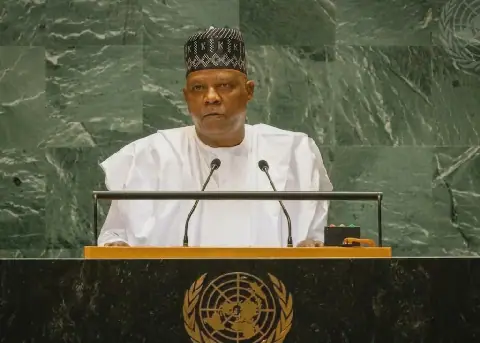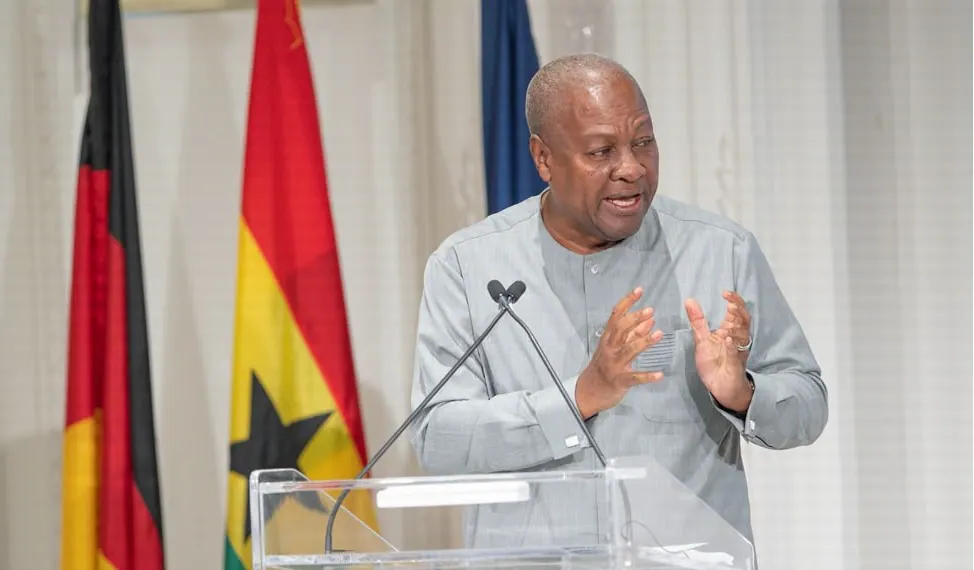
Former Ghanaian President John Dramani Mahama has called for the remains of enslaved Africans currently housed in museums worldwide to be returned to their homelands for dignified burial. In an address at the 81st United Nations General Assembly Meeting in New York, Mahama emphasized that human remains should not be treated as collectibles or specimens. He highlighted the historical significance of African artifacts and human remains that were taken by colonial powers and are now stored in museums globally.
Mahama painted a vivid picture of Africa's rich cultural heritage, describing how history was once lived among the people, carved into sacred wood, cast in bronze artifacts, and forged in iron. He noted that this history was torn from its homes and scattered across the globe through punitive expeditions and conquests. The former President emphasized that Africa's history, memory, and identity have been held far from the hands that created them for generations.
The Ghanaian leader shared specific examples of the looting of African artifacts, citing the 1874 British attack on the city of Kumasi, where the Palace of the Asantehene was looted. He noted that a century and a half later, in 2024, a portion of that heritage, including a sacred Pomponsuo sword, was returned to Ghana. Mahama stressed that these artifacts belong to living traditions, active institutions, and communities that still exist today.
Mahama also highlighted the heartbreaking case of King Badu Bonsu II of Ahanta, who was executed and decapitated by Dutch colonial authorities in 1838. His head was preserved in a jar of formaldehyde for 170 years before being rediscovered by a Dutch journalist in 2002 and finally returned to Ghana in 2009. The former President emphasized that human remains are not collectibles, but rather ancestors, fathers, mothers, kings, and elders who deserve respect and dignified burial.
In March of this year, the UN General Assembly adopted Ghana's Resolution 80/250, which declared the trafficking of enslaved Africans a grave crime against humanity and called for the prompt and unhindered restitution of cultural property, sacred artifacts, and national archives. Mahama described this resolution as an indispensable moment of global truth, but stressed that truth is not a destination, but rather a starting line for action.
To move from acknowledgement to action, Ghana convened a High-Level Consultative Conference in Accra, which brought together leaders from Africa, the Caribbean, and the African diaspora to discuss the next steps towards reparatory justice. The conference resulted in the adoption of the Accra Next Steps, a commitment to reparatory justice that provides a blueprint for implementation. Mahama unveiled three pillars of the "Next Steps" for attaining the global Reparatory Justice agenda.
The former President's call for the dignified treatment of human remains and the return of African artifacts has significant implications for museums and cultural institutions globally. As the world moves towards greater awareness and acknowledgement of historical injustices, Mahama's message emphasizes the need for action and implementation to address these wrongs. The return of human remains and cultural artifacts can be seen as a fundamental test of shared human dignity.
Key points
- - Human remains found in museums globally should be given dignified resting places, not kept as collectibles. - The UN General Assembly adopted Ghana's Resolution 80/250, declaring the trafficking of enslaved Africans a grave crime against humanity. - Ghana's High-Level Consultative Conference resulted in the adoption of the Accra Next Steps, a commitment to reparatory justice.