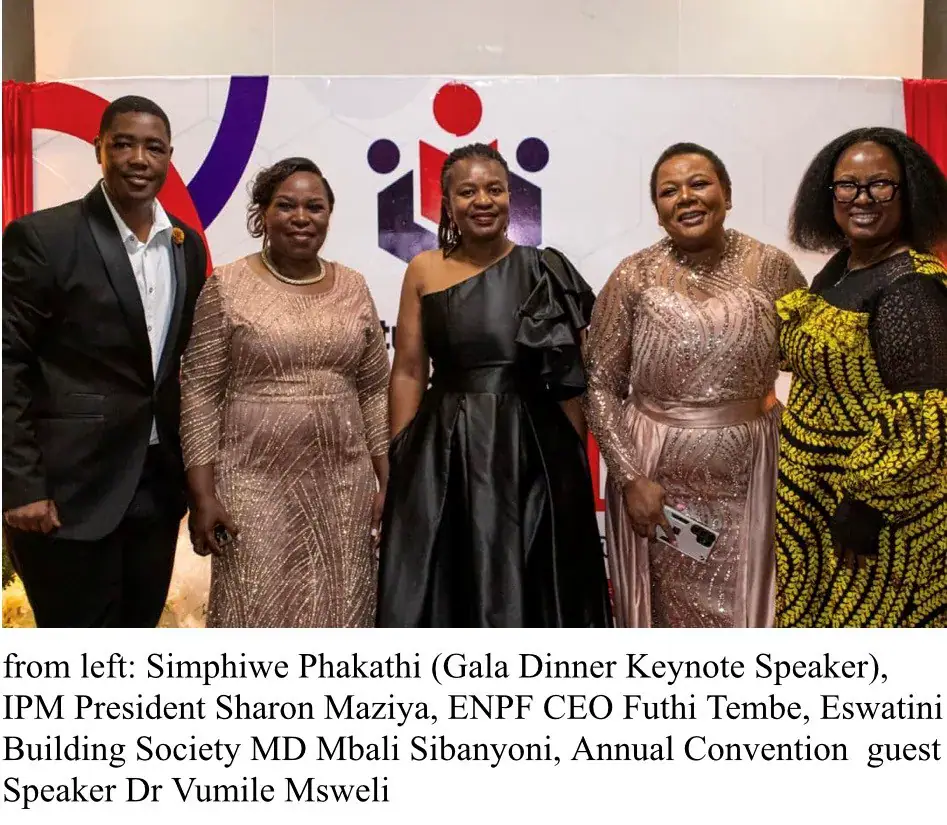
A recent gathering of local and international Human Resources practitioners in Eswatini has highlighted the crucial role of people in driving national and organizational growth. The Institute of People Management's (IPM) Annual Convention, held under the theme "Empowering People, Transforming Workplaces: HR Driving Sustainable Growth in Eswatini," brought together HR practitioners, business leaders, and thought leaders to discuss the importance of human capital. The convention emphasized that Human Resource management is no longer just a support function but a key driver of sustainable growth.
The IPM President, Sharon Maziya, challenged practitioners to take a more strategic role in their organizations, encouraging them to rethink leadership, education, and the future of work in Eswatini and beyond. The IPM is the region's premier HR and people management professional body, championing professionalism and equipping HR experts for strategic impact. The convention's message was clear: a country's growth depends on how well it develops and deploys its people.
The business case for human capital was presented by Futhi Tembe, CEO of the Eswatini National Provident Fund, who stated that investments in people should be measured and managed like any other investment. This view was supported by Sabelo Myeni, CEO of SA IPM, who noted that organizations that invest in development and a strong employee value proposition will be better equipped to retain their best people in a competitive talent market that now crosses borders.
The convention also explored ways to create workplaces where people can thrive, perform, and stay. Discussions included practical and human sides of preparing employees for retirement, with Emmanuel Zvada of Third Eye Africa addressing the planning for knowledge and skills that are lost when long-serving staff retire. The future of the profession was also a key topic, focusing on how performance can be optimized in the age of AI.
The role of technology in enhancing human strengths rather than replacing them was a significant discussion point. The aim is for organizations to combine technology with human capabilities to achieve better outcomes. This approach is seen as crucial for sustainable growth and competitiveness in a rapidly changing work environment.
The convention concluded with a panel discussion that provided delegates with practical ideas to implement in their own organizations. The discussions and lessons learned during the convention underscored the importance of human capital in driving growth and the need for strategic investment in people.
Key takeaways from the convention include the need for organizations to invest in employee development, create a strong employee value proposition, and plan for the future of work. By prioritizing human capital, organizations and countries can achieve sustainable growth and remain competitive in a rapidly changing global environment.
Key points
- Human capital is a critical driver of national and organizational growth in Eswatini.
- Organizations must invest in employee development and create a strong employee value proposition to retain top talent.
- The future of work requires a strategic approach to human capital, combining technology with human strengths.
Reporting sources
- Human Capital, the driver of national and organizational growth: Business Leaders · swazidailynews.com