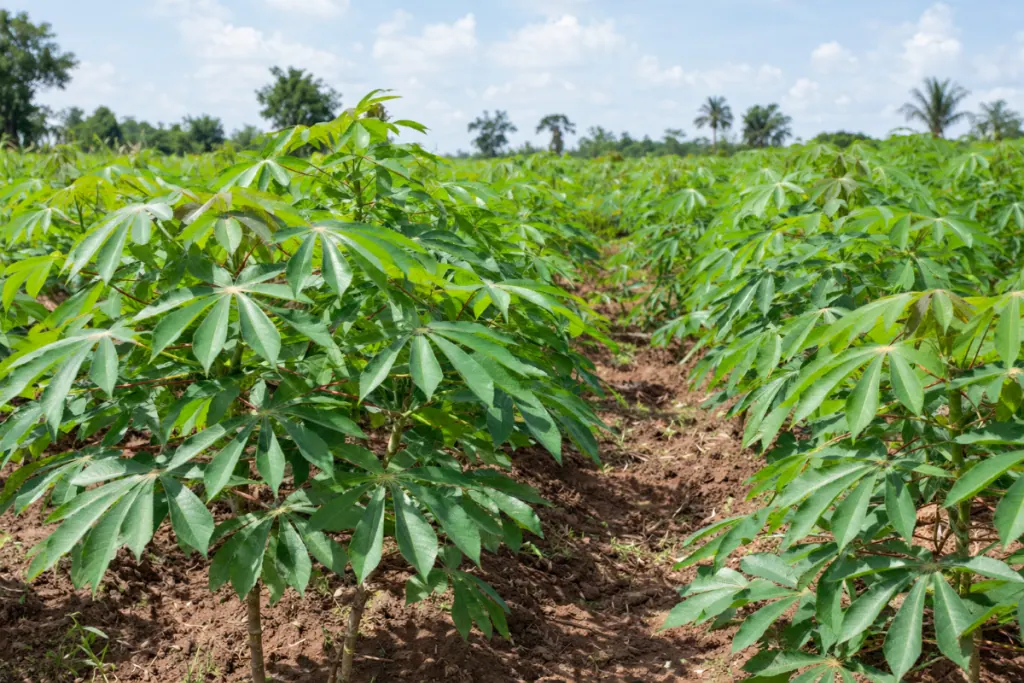
Cassava is a crucial crop in Nigeria, serving as a backbone for food security and agribusiness. The demand for cassava products, such as garri, fufu, and lafun, remains high. However, many local growers face challenges during harvest season, resulting in low yields and poor-quality tubers. To address this issue, experts emphasize the importance of proper soil preparation. According to the International Institute of Tropical Agriculture (IITA), selecting the right farmland is essential for a successful cassava harvest.
The first step in preparing the soil is to choose the right farmland. Cassava thrives in deep, well-drained sandy-loam or loamy soil. Farmers should avoid heavy clay soils, which can become waterlogged and cause root rot. Gently sloping or flat terrain is ideal, as it prevents severe gully erosion and makes land clearing and mechanization easier. Once the farmland is selected, the next step is to clear and destump the plot. This involves removing top vegetation, bushes, shrubs, and dense grasses down to soil level without stripping away precious topsoil.
After clearing the plot, the next step is to deep plough the soil to break compacted layers. This process involves loosening the soil to a depth of at least 20-30 centimeters to create a conducive environment for cassava roots to grow. Years of foot traffic, heavy rain impact, and natural settling can create a hard underground crust known as a hardpan, which can hinder root growth. Ploughing shatters this barrier, allowing root tubers to penetrate freely into the earth and draw moisture during dry spells.
Harrowing is another crucial step in soil preparation. Ploughing can leave behind massive dirt clods that can create air pockets around newly buried cassava stems. Harrowing breaks these clods down into a fine, crumbly bed, ensuring good soil-to-stem contact and accelerating bud sprouting. This process also exposes latent weed seeds, dormant pests, and beetle larvae to direct sunlight, killing them off naturally before the crop establishes.
Enriching the farmland with organic matter is vital for healthy cassava yields. Incorporating well-cured cow dung, poultry droppings, or compost directly into the soil before making ridges can enhance soil structure, retain moisture, and deliver slow-releasing potassium. Organic manure is essential for tuber bulking, and mixing it evenly into the harrowed field ensures that developing roots encounter rich nutrients as they grow.
Making high ridges or mounds is also essential for cassava farming. Planting cassava flat on unprepared ground can lead to losses due to sudden floods. Raised beds or ridges elevate the crop above standing surface water, providing adequate space for tubers to expand horizontally and vertically. Ridging also streamlines pest management, makes weeding faster, and slashes labor costs during harvest.
Finally, testing and correcting soil acidity is crucial for optimal cassava growth. Cassava tolerates mildly acidic soils, but extreme acidity can lock away essential plant nutrients. If the farmland has been exhausted by continuous monocropping or excessive chemical use, applying agricultural lime or wood ash can balance the soil pH and activate soil microorganisms. By taking these preliminary steps seriously, farmers can set their farm up for a bountiful harvest and guarantee heavy, rot-free tubers when harvest day arrives.
Key points
- Choosing the right farmland and clearing and destumping the plot are essential steps in preparing the soil for cassava farming.
- Deep ploughing and harrowing can help break compacted layers and create a conducive environment for cassava roots to grow.
- Enriching the farmland with organic matter and making high ridges or mounds can enhance soil structure and promote healthy cassava yields.