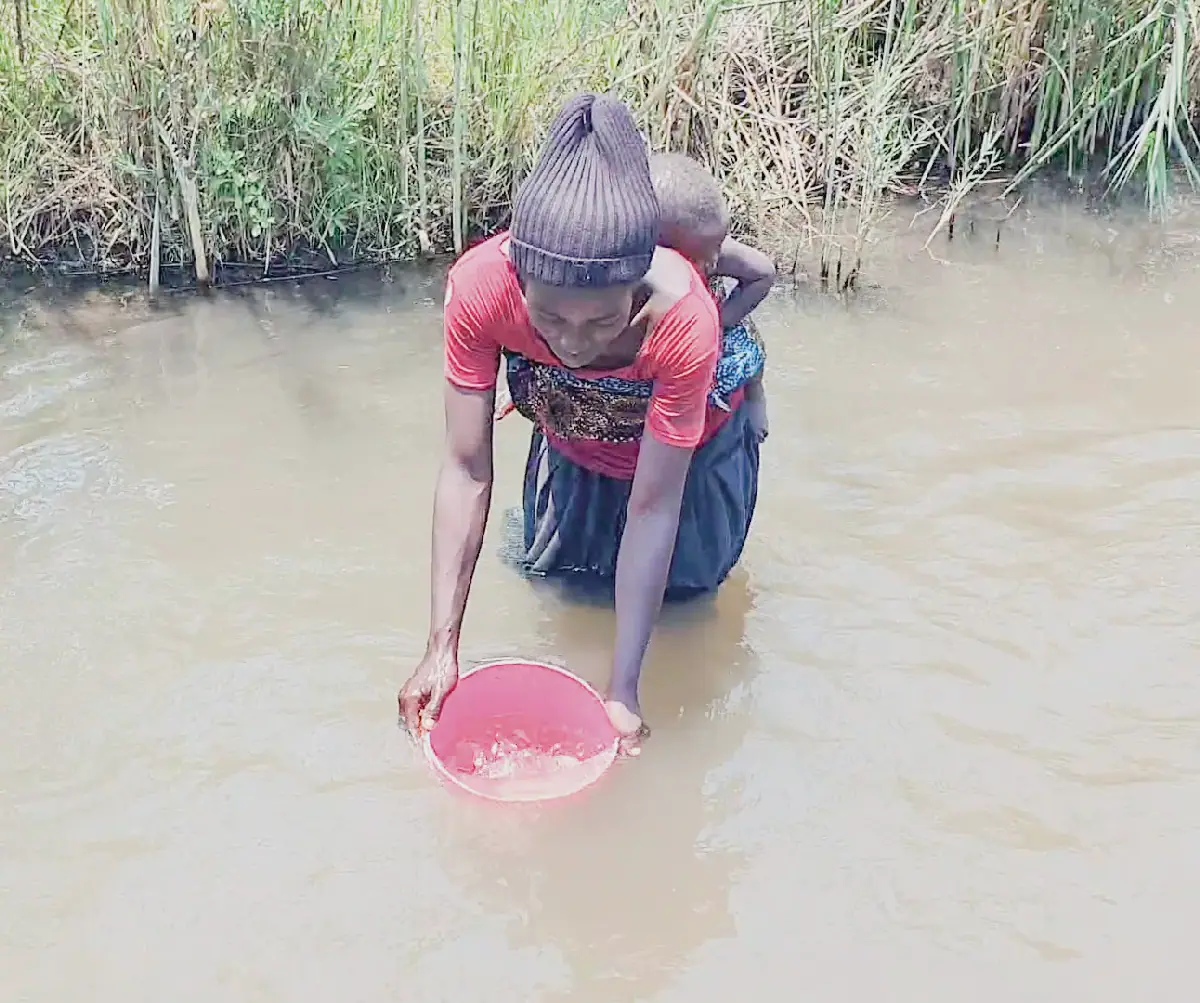
The lives of hundreds of people, including women and children, in Lanchi Village, Nsanje District, Malawi, are at risk due to a lack of potable water. The community of 264 households relocated to the area in 2025 after flash floods washed away their houses. Despite the relocation, they still rely on M’bwazi River for drinking water. The situation has become a health concern, especially for women and young girls, who have to fetch water from the river multiple times a day.
Ireen Wayisoni, a mother of two, is one of the women affected by the situation. She has to make three trips a day to fetch water from the river for drinking, washing, and bathing. Wayisoni expressed her concerns about the safety of the water, stating that it is not safe for consumption. The nearest borehole is kilometres away in another village, leaving the community with no choice but to use the river water. This has resulted in health risks, including the spread of waterborne diseases.
The community's fears are justified, as Lanchi Village registered nine cholera cases in 2025, linked to the use of untreated water from M’bwazi River. Village Head Lanchi described the situation as worrisome, stating that his people have been using the river as their only source of water since relocating. He appealed to the government and other stakeholders to urgently assist the community with a safe water source. The community's situation highlights a critical gap in Malawi's relocation and climate adaptation strategy.
Health rights activist Maziko Matemba described the development as regrettable, stating that the community should be supported with a safe water source. Matemba appealed to councillors and the Member of Parliament to discuss the issue during the Full Council Meeting to protect lives. He also urged civil society and youth groups to speak out to ensure the district council prioritises people living in relocation sites. The crisis in Lanchi exposes a dangerous gap in Malawi's relocation and climate adaptation strategy.
The situation in Lanchi Village undermines several global and national commitments, including Sustainable Development Goal (SDG) 6, which calls for universal access to clean water and sanitation, and SDG 3 on good health and well-being. The community's situation is a result of the government's failure to provide a safe water source, leaving them exposed to health risks. The community's resilience has been compromised, and their situation requires urgent attention.
Nsanje District was heavily affected by flash floods in 2025, which damaged hundreds of hectares of crop fields and left thousands of families without homes. While the government and partners celebrated relocating people from low-lying areas as a climate adaptation success, they left behind a critical component: water. The community's situation highlights the need for a comprehensive approach to relocation and climate adaptation.
Ireen Wayisoni's only request is simple: "Give us a borehole. We don’t need much; we just need clean water." The community's situation requires urgent attention, and their voices need to be heard. The government and stakeholders must take immediate action to provide a safe water source to the community to prevent further health risks and protect lives.
Key points
- The community of 264 households in Lanchi Village, Nsanje District, Malawi, is without a safe water source.
- The lack of clean water has resulted in health risks, including the spread of waterborne diseases.
- The situation undermines several global and national commitments, including Sustainable Development Goal (SDG) 6 and SDG 3.