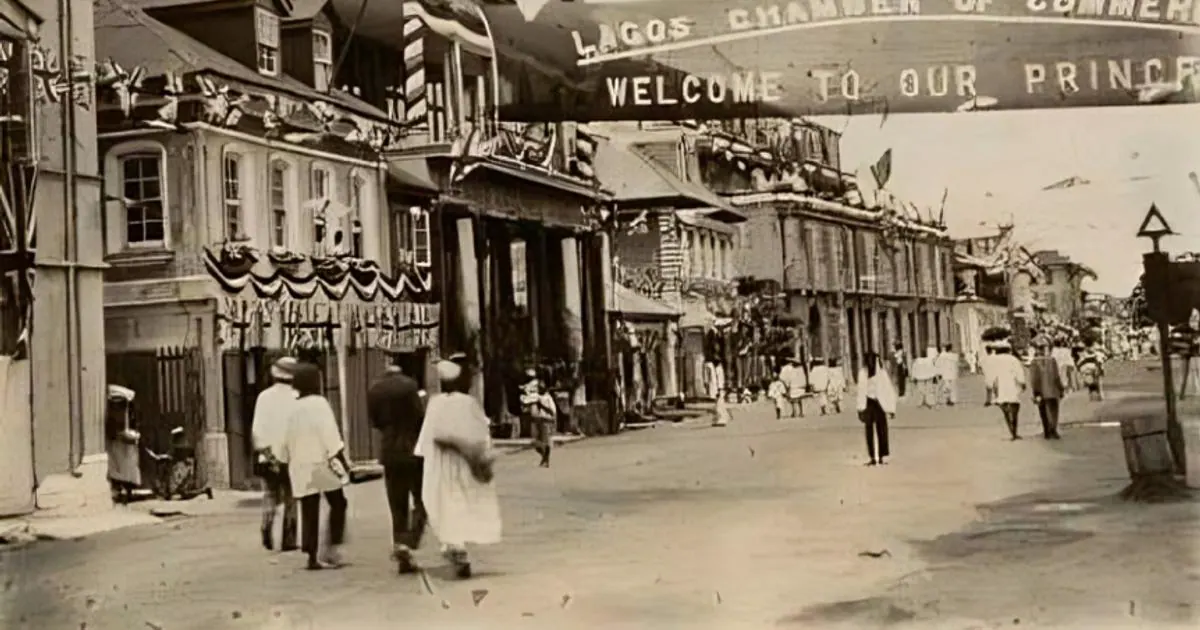
Lagos stands as Nigeria's historic first capital city, showcasing its journey from Eko settlement to Africa's economic powerhouse. The city was originally known as Oko before becoming Eko, a Bini word meaning "war camp." On January 1, 1914, Lagos officially became Nigeria's first capital city after the British colonial government merged the Northern and Southern Protectorates into one country known as Nigeria. This move was part of the famous amalgamation carried out by Lord Frederick Lugard.
The land was originally called Oko before it became known as Eko. The Awori people, a Yoruba subgroup, were among the first settlers of present-day Lagos. They initially settled around Oke Ata near Abeokuta before moving south in search of better farmland. According to historical accounts, an Ifa priest instructed the group to follow a bowl placed on the Ogun River. Wherever the bowl sank would become their new home.
The history of Lagos also has strong links with the ancient Benin Kingdom. Historical accounts say that after reports of an unpleasant encounter involving Awori people and traders from Benin, the Oba of Benin sent an expedition to Lagos. However, instead of fighting, the Awori welcomed the expedition leader, Ado. They reportedly admired him so much that they asked him to stay and rule them.
By the 19th century, Lagos had become an important trading centre, including a major location in the transatlantic slave trade. After Britain declared its mission to end slave trading and promote legitimate commerce, it sought greater control over Lagos. At the time, Lagos was facing a leadership crisis between Oba Akintoye and Prince Kosoko. Prince Kosoko had taken over the throne from Oba Akintoye, forcing Akintoye to flee to Abeokuta.
The disagreement eventually led to a British naval attack on Lagos in December 1851. The British forces defeated Kosoko's supporters, forcing him and his allies to escape to Epe. Oba Akintoye was restored to the throne on January 1, 1852, and a treaty to end slave trading was signed. Following years of increasing British influence, Lagos was officially annexed by Britain on August 6, 1861.
When Nigeria became independent in 1960, Lagos remained the federal capital. The city was also made a state on May 27, 1967, during the military administration of General Yakubu Gowon, following the creation of 12 states across Nigeria. For several years, Lagos carried two responsibilities, it was both the federal capital and the capital of Lagos State.
Today, Lagos may no longer be Nigeria's political capital, but the city has remained the country's commercial heartbeat, attracting millions of people chasing opportunities and survival every year. Despite being Nigeria's smallest state by landmass, Lagos has grown into Africa's entertainment hub and one of the world's largest megacities. The federal government eventually relocated the nation's capital to Abuja on December 12, 1991, due to concerns about Lagos' overcrowding, congestion and its position as a coastal city.
Key points
- Lord Frederick Lugard merged the Northern and Southern Protectorates on January 1, 1914, making Lagos Nigeria's first capital city.
- The city was originally known as Oko before becoming Eko, a Bini word meaning "war camp."
- Lagos remained Nigeria's federal capital after independence in 1960 until the government moved it to Abuja in 1991.