The story of Aliko Dangote, Africa's largest cement producer, offers valuable insights into how the continent can create its next industrial champion. In 2003, former Nigerian President Olusegun Obasanjo asked Dangote why he was importing cement instead of producing it in Nigeria. Dangote's response was that importing cement was more profitable. This brief exchange highlights one of the fundamental reasons Africa's industrialisation has progressed slowly. Entrepreneurs respond to economic incentives, and when importing finished products is easier and more profitable than manufacturing them locally, investment will naturally flow towards imports.
Nigeria's government responded to the challenge by changing the economic incentives, making cement importation less attractive while creating more favourable conditions for domestic production. The government partnered with Dangote, and Obasanjo became personally interested in the success of Dangote's Obajana cement project, receiving regular updates on its construction. The government understood that the factory's success would create jobs, reduce imports, conserve foreign exchange, and strengthen Nigeria's productive capacity. Dangote, for his part, accepted an enormous commercial risk by borrowing heavily and investing on an unprecedented scale.
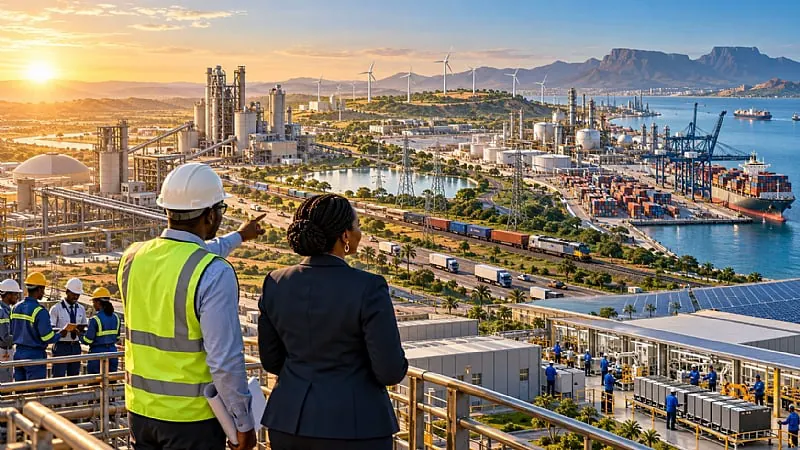
Dangote's decision to build a large factory helped transform Dangote Group into Africa's largest cement producer and a major force in fertiliser and petroleum refining. The company's success demonstrates what becomes possible when African businesses are encouraged to build for continental rather than local markets. The company also recognised that a large factory cannot operate in isolation and had to help build the ecosystem necessary for the investment to succeed. This included reliable access to limestone, electricity, transport, ports, technical expertise, and distribution networks.
The lesson from Dangote's experience can be summarised in five essential elements: incentives, partnership, risk, scale, and ecosystem. These principles are not exclusive to cement or petroleum and are equally relevant to renewable energy, battery manufacturing, electricity transmission, climate technology, agro-processing, and green industrialisation. Africa frequently asks where its globally competitive renewable-energy companies are, but a more important question is whether African countries have created the conditions from which such champions can emerge.
In many countries, importing solar panels remains more profitable than manufacturing or assembling them locally. Importing batteries is often easier than developing domestic production capacity. Investors may find it less complicated to construct a small energy project than to establish a large platform capable of serving several countries. If these economic conditions remain unchanged, Africa will continue to export raw materials while importing the technologies required for its energy transition.
Creating the next generation of African industrial champions will require deliberate policies that reward production, governments that actively remove barriers to investment, financial institutions prepared to support long-term industrial projects, and entrepreneurs willing to accept calculated risks. Governments must provide consistency because no investor will commit billions of dollars to a factory if trade, taxation, or industrial policies can change without warning.
Public support must be tied to clear performance requirements, including job creation, technology transfer, local sourcing, competitiveness, and regional expansion. The objective should not be to protect inefficient businesses permanently but to give capable African enterprises a realistic opportunity to develop the scale, skills, and infrastructure required to compete internationally. Africa already understands how industrial champions are created, and the challenge now is whether Africa has the courage and discipline to apply those lessons again—this time to the industries that will shape the continent's future.
Key points
- The Dangote story offers a blueprint for creating Africa's next industrial champion through visionary public policy, committed entrepreneurship, and long-term investment.
- Economic incentives favouring imports over local manufacturing have hindered Africa's industrialisation, but changing these incentives can drive growth.
- Creating Africa's next industrial champion will require deliberate policies, government support, and entrepreneurs willing to accept calculated risks.