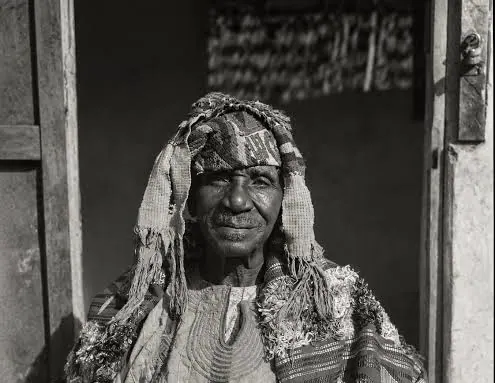
In 1914, Anglican clergyman Thomas Adesina Jacobson Ogunbiyi founded a “Christian Ogboni Society” in colonial Lagos. This was not a direct continuation of the ancient Yoruba institution. Instead, it represented a surprising and calculated adaptation of traditional practices for a new Christian and colonial era. Ogunbiyi, born in 1867, became an influential figure within educated Lagos society. He sought to bridge his Christian faith with African cultural identity during a period of intense cultural negotiation.
Traditional Ògbóni, also known as Òṣùgbó, was deeply embedded in Yoruba society before 1914. It was a vital part of indigenous political authority, religion, law, and community life across various kingdoms. Members exercised considerable influence, handling dispute resolution and judicial proceedings. They maintained customary norms, ensuring social order within many communities. Their responsibilities also included participating in relations between rulers and other centers of authority.
The institution’s structure varied significantly across Yorubaland. Its role in Ìjẹ̀bú communities, for instance, involved selecting and removing rulers, demonstrating significant political power. A key symbol was the edan, paired male and female copper alloy figures connected by a chain. This sacred object represented authority, oath-taking, and the moral obligations placed upon members. Traditional Ogboni was a complex system, intertwining elements that modern societies often separate into distinct religious, governmental, and legal spheres.
Early 20th-century Lagos was a dynamic colonial city, attracting merchants, professionals, and a burgeoning African elite. While Christianity had taken root, its relationship with indigenous culture remained contentious among converts. African Christians grappled with profound questions about their cultural identity. They debated how conversion should affect their participation in traditional institutions and customary practices. Thomas Adesina Jacobson Ogunbiyi belonged to this generation, navigating indigenous Yoruba customs, Christian mission institutions, and British colonial structures.
In December 1914, Ogunbiyi and a group of associates officially formed the Christian Ogboni Society in Lagos. Prominent figures joined him, including Prince Orisadipe Obasa, who became the first Oluwo, and his wife, Princess Charlotte Blaize Obasa, the first Iya Abiye. The founding ceremony took place at Holy Trinity Anglican Church in Ebute Ero, central Lagos. The society’s ideals focused on Christian fellowship, morality, mutual assistance, and disciplined association, aiming for a new form of communal bonding.
The Christian Ogboni Society underwent significant evolution in the decades following its establishment. About twenty years later, it began transitioning into the Reformed Ogboni Fraternity. This change reflected a broadening of its identity beyond its initial Christian-specific focus. Its membership expanded, accommodating a wider range of religious backgrounds, including those who were not Christian. The fraternity gained official recognition on June 17, 1943.
The Reformed Ogboni Fraternity describes itself as a fraternal organization, emphasizing principles like human fellowship, morality, charity, and justice, open to diverse nationalities and reli. It offered a distinct alternative to colonial tax systems and other European structures. This transformation from Christian Ogboni Society to Reformed Ogboni Fraternity occurred gradually, representing a strategic shift rather than a simple act of renaming, reflecting the evolving needs of its members.
Key points
- The Christian Ogboni Society was founded by Thomas Adesina Jacobson Ogunbiyi in 1914 as a blend of traditional Yoruba practices and Christian tenets.
- The organization evolved into the Reformed Ogboni Fraternity, gaining official recognition in 1943.
- The Reformed Ogboni Fraternity emphasizes human fellowship, morality, charity, and justice, open to diverse nationalities and religious backgrounds.