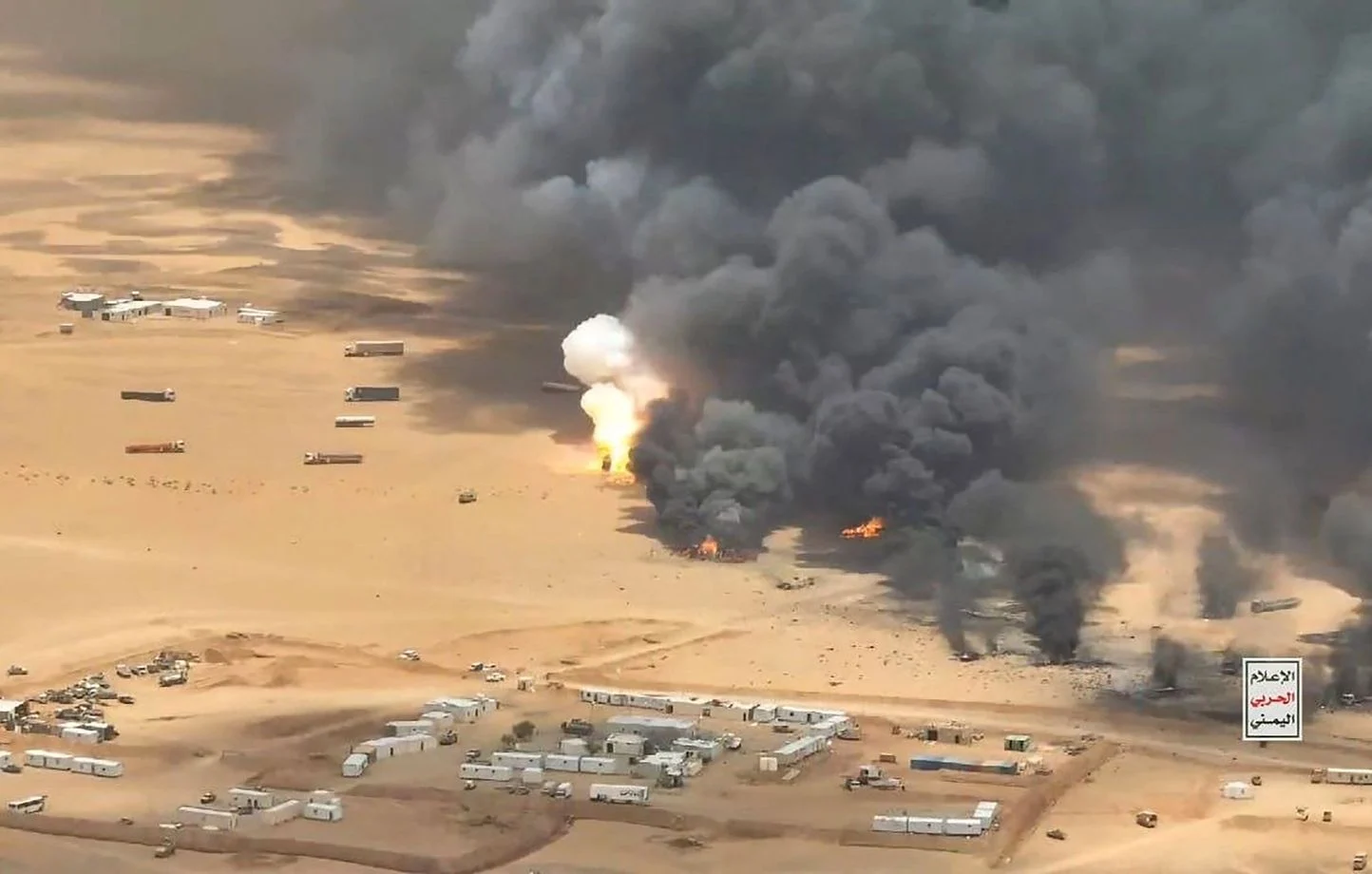
The Houthi movement in Yemen claimed on Wednesday that it had launched a new wave of missile and drone strikes against Riyadh's international airport, marking the second consecutive day of attacks. According to the group's military spokesperson, Yahya Saree, the attack was precise and caused flight disruptions. The airport's operations were suspended temporarily following the strike.
Saudi Arabia confirmed that it had intercepted a missile in the northern part of the capital, where the airport is located, and reported that the attacks had been repelled. Flight tracking website Flightradar24 documented regular disruptions to air traffic at the airport. The Houthi movement warned airlines that Saudi airspace was not safe, potentially escalating tensions in the region.
This latest attack follows a similar claim by the Houthis on the previous day, when they said they had targeted the same airport as well as an Aramco oil refinery in Rabigh. The renewed Houthi attacks come amid a resurgence of conflict in Yemen, which had been relatively calm since a truce was agreed in 2022. Fighting intensified in July, and the situation appears to be deteriorating.
The Houthi movement has made significant gains in recent months, seizing control of Yemen's entire Red Sea coastline in September. This has strengthened their grip on the strategic Bab el-Mandeb strait, a vital shipping lane for international trade heading to the Suez Canal. The development has raised concerns about the security of global maritime trade.
In response to the Houthi advances, government forces backed by Riyadh have launched a counter-offensive. While they claim to have made gains on several fronts, military sources have not reported any significant changes on the ground. The conflict is being closely watched by regional and international powers, given its potential impact on global security and trade.
The conflict in Yemen has also drawn in other regional players. Turkey, Pakistan, and Saudi Arabia have agreed to implement a defense pact signed in August, which includes the rapid deployment of military forces for defensive purposes. This development could potentially alter the dynamics of the conflict and lead to further escalation.
The ongoing conflict in Yemen has significant implications for regional and global security. With the Houthi rebels continuing to launch attacks on Saudi targets, and the Saudi-led coalition pushing back, the situation remains volatile. The international community is watching closely, as the conflict's progression could have far-reaching consequences for the Middle East and beyond.
Key points
- The Houthi rebels' claims of launching precise missile and drone strikes on Riyadh's international airport have led to flight disruptions and heightened tensions in the region.
- The conflict in Yemen has led to a resurgence of violence, with the Houthi rebels making significant gains and the Saudi-led coalition launching a counter-offensive.
- The regional implications of the conflict are significant, with Turkey, Pakistan, and Saudi Arabia agreeing to implement a defense pact that could alter the dynamics of the conflict.