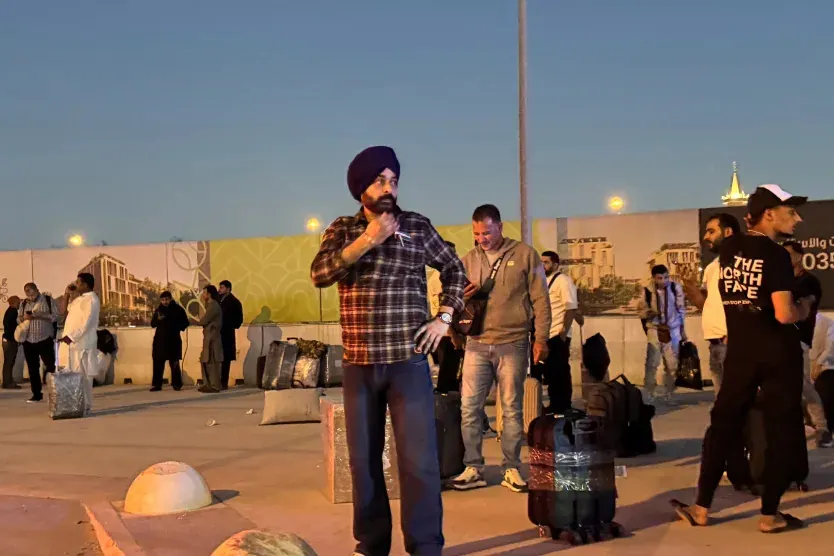
A devastating missile attack on Riyadh's King Khalid International Airport on Saturday, carried out by Yemen's Houthi militants, resulted in the deaths of at least 12 people and injured hundreds more. The attack, which struck a terminal building, was the third missile strike on the airport this week, prompting its closure until at least late Sunday and the cancellation of over 600 flights. The victims included nationals from several countries, including Saudi Arabia, Bangladesh, the United States, Egypt, Jordan, Syria, Palestine, and Sudan.
The Houthi group, backed by Iran, has been engaged in a longstanding conflict with Saudi Arabia, which has been supporting Yemen's internationally recognized government. The attack has exposed vulnerabilities in Saudi Arabia's defense capabilities, despite its efforts to contain the conflict on its southern border through military force and diplomacy. The incident has also raised concerns about the safety of air travel in the region, with several countries, including the US, UK, Spain, and Canada, warning their citizens against using the airport.
US President Donald Trump responded to the attack by stating that he was considering joining Saudi strikes against the Houthis in Yemen, having previously resisted Saudi requests for direct military intervention. Trump said he would speak with Saudi Crown Prince Mohammed bin Salman following the attack and that a decision on potential US involvement would be made soon. The US Secretary of State, Marco Rubio, condemned the attack, citing its disregard for innocent civilian life.
The Houthi group has claimed responsibility for the attack, with a senior official, Nasr al-Din Amer, stating that they had "shut down Riyadh international airport." The group has also warned airlines and travelers against using Saudi airports and airspace, citing their vulnerability to targeting. A Houthi military statement reiterated this warning, stating that Saudi Arabia would bear responsibility for any failed attempts to intercept missiles.
The attack has been widely condemned, with UN Special Envoy for Yemen Hans Grundberg describing it as a "grave escalation" that poses a serious threat to regional security. United Nations Secretary-General António Guterres also condemned the strike, stating that attacks on civilians and civilian infrastructure are a violation of international law. The incident has sparked concerns about the escalation of the conflict and its impact on regional stability.
The civil war in Yemen has intensified in recent months, with the Houthis launching a series of missile attacks against Saudi infrastructure, including oil refineries. The conflict has also led to a humanitarian crisis, with many civilians affected by the fighting. The Saudi-backed Yemeni government has struggled to retake ground lost to the Houthis, and the conflict threatens Saudi Arabia's broader ambitions to become an international destination for business and tourism.
The incident has highlighted the complexities of the conflict in Yemen and the challenges faced by Saudi Arabia in containing the Houthi threat. Despite its efforts to pursue peace talks with the Houthis and restore diplomatic relations with their backer, Tehran, Saudi Arabia has faced a series of miscalculations that have left it exposed to further conflict. The escalation of the conflict has significant implications for regional security and stability.
Key points
- The Houthi missile attack on Riyadh's King Khalid International Airport resulted in 12 deaths and hundreds of injuries.
- The attack exposed vulnerabilities in Saudi Arabia's defense capabilities and raised concerns about air travel safety in the region.
- The incident has sparked international condemnation and highlighted the complexities of the conflict in Yemen.