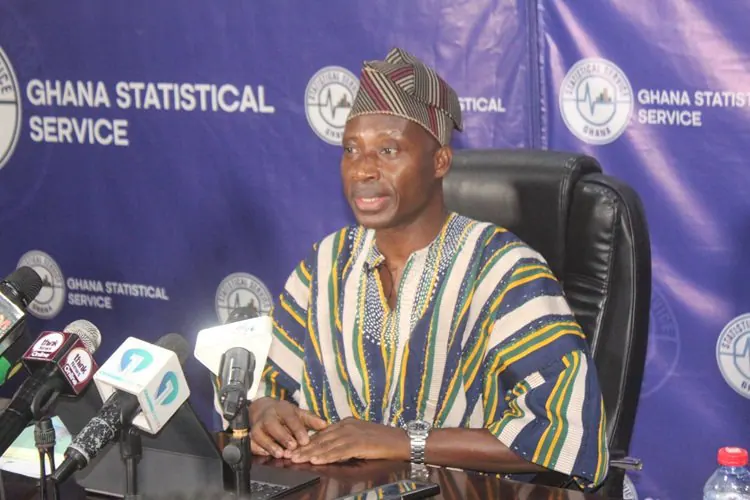
Ghana had substantial accommodation capacity, but demand for rooms weakened between March and June 2025, according to the Ghana Statistical Service (GSS). The 2025 Accommodation Unit Survey (AUS) captured in the Accommodation Occupancy Report showed that about five million room-nights were available each month during the period. This substantial capacity indicates that the country's accommodation industry was well-equipped to handle a high volume of guests.
However, monthly occupied room-nights declined from 2.14 million in March to 1.99 million in June. The decline represented about seven per cent in monthly totals and approximately four per cent on an average daily basis. This downward trend in room occupancy rates suggests that the industry faced challenges in attracting and retaining guests during the period.
National room occupancy remained relatively stable, rising slightly from 41.7 per cent in March to 41.9 per cent in April before falling to 39.7 per cent in May and recovering marginally to 40 per cent in June. This meant that, on average, only four out of every 10 available rooms were occupied during the period. The relatively low occupancy rates indicate that the industry had room for improvement in terms of attracting more guests.
Bed occupancy was comparatively higher, increasing from 47.3 per cent in March to 49.2 per cent in May before dropping to 46.2 per cent in June. The findings revealed significant differences in performance across accommodation types, establishment sizes, and regions. This variation in performance suggests that some segments of the industry were more resilient to the decline in demand than others.
Hotels accounted for approximately 71 per cent of available rooms, making them the backbone of the country’s accommodation industry. However, their room occupancy rates remained relatively low, ranging from 32.4 per cent to 34.9 per cent. In contrast, hostels recorded considerably higher room occupancy rates of between 92.9 per cent and 96.1 per cent, while bed occupancy ranged from 96.1 per cent to 98.3 per cent.
The Central and Western regions recorded some of the highest occupancy rates, with the Central Region reaching 56.8 per cent in June, while the Western Region maintained rates above 50 per cent throughout the period. In contrast, the Eastern, Bono East, and North East regions recorded occupancy rates below 25 per cent, highlighting the uneven distribution of demand across the country.
Domestic travellers remained the main source of demand, with between 1.78 million and 1.86 million domestic guests recorded monthly, compared with 23,000 to 30,000 foreign guests. The survey, which covered March to June 2025, formed part of a nationwide panel study conducted monthly from November 2024 to October 2025. It drew a nationally representative sample of 1,085 establishments from a frame of 9,602 registered and unregistered accommodation establishments across all 16 regions.
Key points
- The Ghanaian accommodation industry had substantial capacity but faced a decline in room demand between March and June 2025.
- The industry's room occupancy rates were relatively low, with hotels experiencing rates between 32.4 per cent and 34.9 per cent.
- Domestic travellers were the main source of demand, while foreign guests generally stayed longer.