South African political analyst Peter Attard Montalto has expressed concern that hope alone may be misleading the country's political landscape. He notes that many people are starting to hope for a better future rather than expecting it based on rational analysis. This phenomenon is particularly evident in discussions around the ANC's elective conference next year and the potential candidacy of Patrice Motsepe. While outsiders believe the party should choose a leader who can maximise electoral prospects, insiders consider a range of factors, including institutional manoeuvring and regional power-broking.
The insider-outsider gap is also apparent in the situation surrounding Fikile Mbalula, who was considered a strong contender for the ANC leadership. However, a closer inspection has revealed that Mbalula's control of the party machinery was "paper-thin" and not as sustainable as thought. This has led to a re-evaluation of his chances of securing the top job. Attard Montalto's comments highlight the complexities of South African politics and the need for a more nuanced understanding of the factors at play.
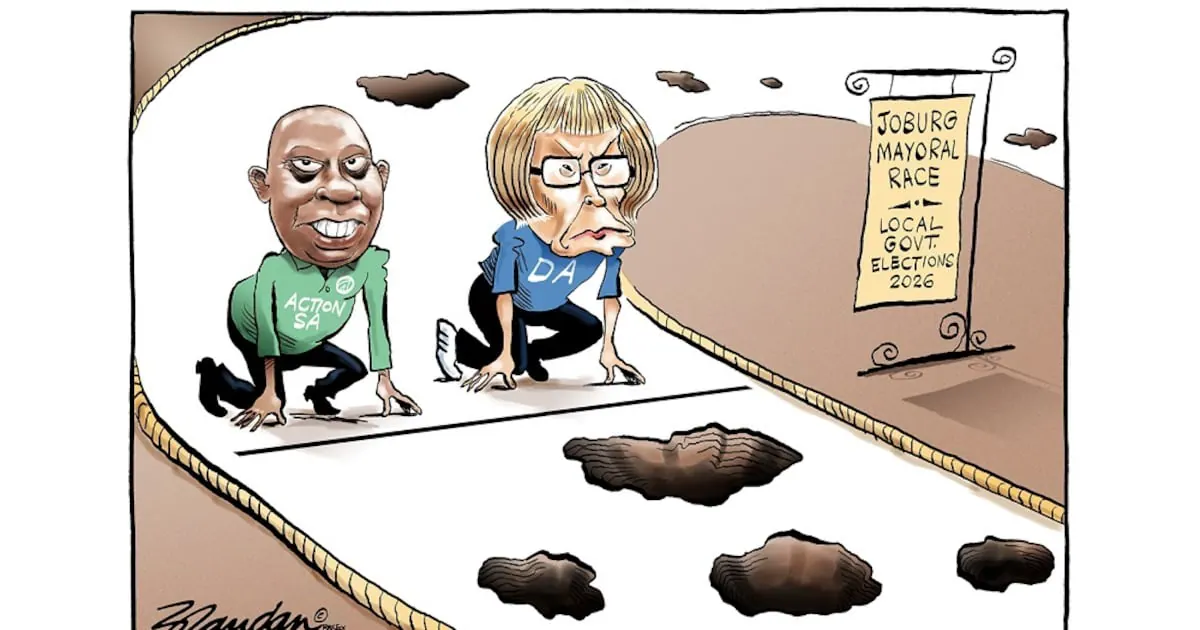
The issue of hope versus reality is also relevant in the context of Johannesburg's future. Attard Montalto warns that hope may be causing a severe miscalculation of the probabilities of a shift from the status quo in the city's politics. Recently, there was an overestimation of the DA's chances of achieving a majority in the upcoming election, followed by expectations of a straightforward coalition. However, recent polling has revealed a more challenging reality, with the DA facing an uphill battle to emerge as the biggest party.
The combination of personalities, particularly between the leaders of ActionSA and the DA in Johannesburg, may not be conducive to a sustainable partnership. Attard Montalto notes that their approaches may be too different to work effectively together. Furthermore, there are concerns about the limited number of people willing to engage in the ongoing battle to save Johannesburg or stand for office. This lack of engagement has contributed to the DA's struggles in Gauteng.
Attard Montalto also criticises the amount of money being spent on voter activation and turnout, estimating that around R1bn was spent in the 2024 elections. He questions the effectiveness of this spending, suggesting that it may be akin to "mud being flung at a wall in the hope that some will stick." This highlights the need for a more strategic approach to voter engagement and a re-evaluation of the impact of such spending.
The analyst argues that hope without a tangible commitment or "skin in the game" can be misplaced and even counterproductive. This can lead to a lack of urgency in addressing structural reforms and the Vulindlela agenda, which aims to drive economic growth. Attard Montalto emphasises that hope should be accompanied by concrete actions and a willingness to engage in the complexities of South African politics.
Ultimately, Attard Montalto's comments serve as a call to action for South Africans to engage more critically with the country's politics and to move beyond hope alone. He encourages a more nuanced understanding of the complexities at play and a willingness to address the challenges facing the country in a more effective and sustainable way. As the country prepares for upcoming elections, his insights highlight the need for a more informed and engaged citizenry.
Key points
- Hope alone may be misleading South Africa's political landscape, leading to a miscalculation of the probabilities of change.
- The insider-outsider gap in understanding South African politics can lead to unrealistic expectations and a lack of engagement.
- A more strategic approach to voter engagement and a re-evaluation of the impact of spending on voter activation and turnout are necessary.