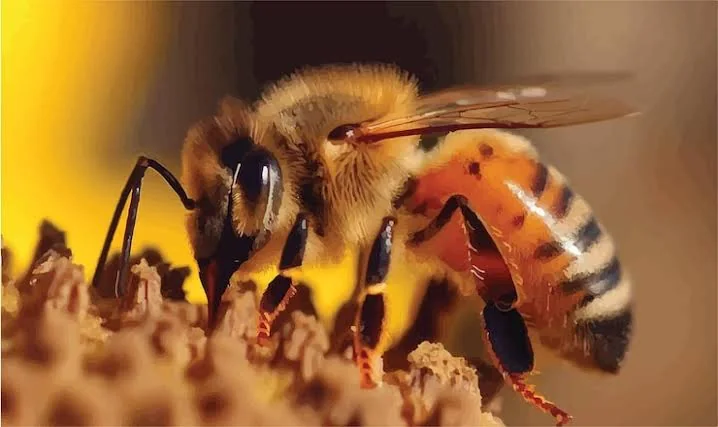
Researchers at Australia's Commonwealth Scientific and Industrial Research Organisation (CSIRO) have made a breakthrough in wound care with a thin film made from honeybee silk. This innovative film has shown promise as a biodegradable wound dressing that naturally degrades as the healing process progresses. The study, published in the Journal of Biomedical Materials Research Part B, highlights the potential of this film to revolutionize wound care.
Laboratory tests have demonstrated that the honeybee silk film is safe and well-tolerated, with no interference in the normal wound-healing process. Most of the material breaks down gradually within the wound, reducing the need for dressing removal that can disturb new tissue. This property makes it an attractive alternative to traditional wound dressings, which often require manual removal and can cause further trauma to the wound.
The protein structure of the honeybee silk can be altered in the lab without compromising its strength, flexibility, or biodegradability. This opens the door to added functions, such as sensing infection markers and releasing antimicrobial agents directly into the wound. Future versions of the film could be engineered to provide more than just simple coverage, moving beyond traditional wound dressings.
The development of "smart" dressings is the next research phase, focusing on preventing infections in chronic wounds. In Australia, an estimated 450,000 people are affected by chronic wounds annually, costing the health system over $6 billion. Biodegradable, responsive dressings could lessen the frequency of dressing changes, benefiting patients in remote areas who travel long distances for specialist care.
The technology is still in the experimental stage and will require further pre-clinical and clinical testing before it can be adopted in routine medical practice. However, the potential benefits of this innovative wound dressing are significant, and researchers are eager to explore its possibilities. If successful, it could transform the way wounds are treated, particularly in remote and underserved areas.
The study's findings have significant implications for Kenya and other countries where access to healthcare is limited. Biodegradable wound dressings could provide a cost-effective and sustainable solution for wound care, reducing the burden on healthcare systems and improving patient outcomes. Further research is needed to explore the film's potential in various settings.
As researchers continue to develop and refine the honeybee silk film, they are optimistic about its potential to revolutionize wound care. With its biodegradable properties, flexibility, and potential for added functions, this innovative film could become a game-changer in the medical field. Ongoing research and testing will be crucial in determining its safety and efficacy in various applications.
Key points
- The honeybee silk film is a biodegradable wound dressing that naturally degrades as the healing process progresses.
- The film's protein structure can be altered to sense infection markers and release antimicrobial agents directly into the wound.
- The technology has the potential to transform wound care, particularly in remote and underserved areas.